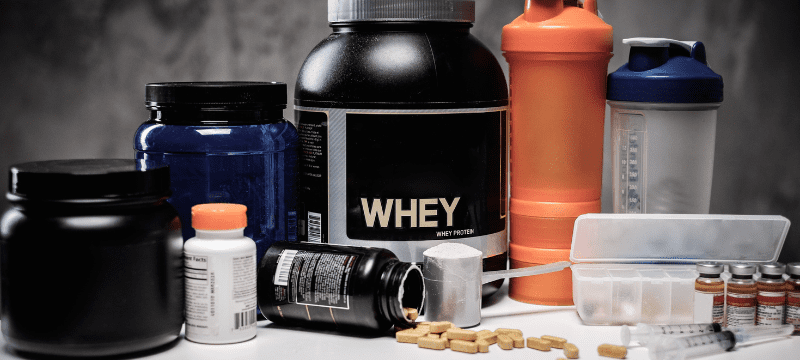
Walk into any supplement store, and it’s chaos. Bright labels. Big promises. “Extreme.” “Hardcore.” “Next level.” Most people grab whatever looks intense and hope for the best.
Here’s the reality. Supplements only make sense when they match your goal and your training style. What works for a powerlifter might do nothing for a marathon runner. What’s useful in a calorie deficit might be pointless in a bulk.
If you line things up properly, supplements can move the needle. If you don’t, you’re just draining your wallet. Let’s break it down in a simple way.
Protein Powder – Your Daily Anchor
If you train, you need enough protein. That’s non-negotiable. Whey is still the go-to for most athletes. It digests fast and delivers amino acids right when your muscles are ready for them. Perfect after training.
If dairy doesn’t sit well with you, whey isolate is easier on the stomach. Plant blends made from pea and rice have also improved a lot. They’re solid options now, especially if you prefer a slower digestion rate during the day.
Casein is different. It breaks down slowly and releases protein over several hours. A lot of athletes use it before bed to keep recovery going overnight.
At the end of the day, protein powder isn’t magic. It just makes hitting your numbers easier.
Creatine Monohydrate – Simple and Proven
Creatine is one of the most studied supplements in sports nutrition, with decades of research backing its effectiveness for explosive strength and recovery; just as seen in how NBA players use it for power and performance.
It increases your ability to produce energy during short, intense efforts. Heavy squats. Sprints. Explosive sets. That extra rep or two adds up over time.
You don’t need a loading phase. Five grams a day works. Take it whenever it fits your routine. Breakfast. Post-workout. Doesn’t matter. Some people notice a small increase in water weight. That’s just water being pulled into the muscle cells. Not a bad thing. Stay consistent and let it build up.
Caffeine – Use It With Intention
Caffeine sharpens focus and makes hard sessions feel more manageable.
Around 200–400 mg taken 30–60 minutes before training is the sweet spot for most people. If you drink coffee daily, you might need a bit more. If you rarely touch caffeine, start lower.
The key is not relying on it every single workout. Cycle off occasionally so your tolerance doesn’t skyrocket. You want it to feel like a tool, not a crutch.
Branch-Chain Amino Acids and Essential Amino Acids
BCAAs include three key amino acids involved in muscle building. EAAs include all nine essential ones your body can’t make. If you already eat enough protein, these won’t change much.
Where do they make sense? Fasted morning sessions. Long endurance workouts. Extended cardio when muscle breakdown becomes more likely.
Think of them as situational support, not daily essentials.
Beta-Alanine – For Longer, Harder Efforts
Ever feel that deep burn in high-rep sets or intense circuits? Beta-alanine increases carnosine levels in your muscles, which helps delay that fatigue feeling. It’s most useful for efforts lasting about 1 to 4 minutes. CrossFit workouts. Boxing rounds. Long intervals.
Take 3–5 grams daily. No need to overthink timing. The tingling sensation is normal. It fades.
Fish Oil – For Joints and Recovery
Hard training beats up your body. Fish oil can help manage the stress that comes with it. Omega-3s play a role in joint comfort, heart health, and even mood. For athletes training multiple times per week, that matters.
Aim for 2–3 grams of combined EPA and DHA per day. Quality matters here. Look for products that clearly list their omega-3 content and are tested for purity. It’s not flashy. But it’s foundational.
Vitamin D – The Underrated One
A lot of athletes are low in vitamin D, especially if they train indoors or live somewhere with limited sunlight. Low levels can affect performance, recovery, and overall well-being.
Most people do well with 2,000–5,000 IU daily, but testing your levels is ideal. Take it with a meal that contains fat for better absorption. Small habit. Big long-term impact.
Magnesium – Recovery Starts With Sleep
You can’t out-supplement bad sleep. Magnesium plays a role in muscle relaxation and nervous system function. Hard training and heavy sweating can deplete it.
Taking 200–400 mg before bed may improve sleep quality. Better sleep means better recovery. And better recovery means better performance. Look for forms like glycinate or citrate for better absorption. This is one of those subtle upgrades you feel over time.
Pre-Workouts – Convenience vs Control
Pre-workouts bundle caffeine, beta-alanine, citrulline, and other ingredients into one scoop. They can work. But often you’re paying for branding and underdosed formulas.
Building your own simple stack: caffeine, creatine, maybe citrulline, gives you more control and usually costs less. Also, watch the stimulant content. Some formulas go heavy. That can wreck your tolerance and make regular sessions feel flat without it. Use wisely.
Liquid SARMs – What Some Athletes Research
Beyond traditional supplements, some athletes explore compounds that work differently. Liquid sarms have gained attention in bodybuilding and fitness communities for their potential to support muscle growth and fat loss.
These compounds interact with androgen receptors selectively, meaning they target muscle and bone tissue more specifically than traditional approaches. However, they exist in a regulatory gray area and aren’t approved for human consumption outside research contexts.
Anyone considering this route should understand the legal landscape, potential side effects, and the importance of proper research. What works for one person might not suit another, and long-term effects remain understudied.
Electrolytes – Not Just for Endurance Athletes
If you sweat hard, you’re losing sodium, potassium, and magnesium. Drinking tons of plain water without replacing minerals can leave you feeling flat or crampy.
For long sessions or hot environments, adding electrolytes to your bottle makes sense. It doesn’t have to be fancy. Even a pinch of salt can do the job. Hydration isn’t just about water. It’s about balance.
Digestive Support – The Quiet Game Changer
You can eat perfectly, but if you don’t absorb nutrients well, you’re leaving results on the table. Digestive enzymes help break down protein, fats, and carbs. Useful if you’re eating big to grow.
Probiotics support gut balance, which affects digestion, immunity, and overall resilience under training stress. Not exciting. But when your digestion runs smoothly, everything else works better.
Building Your Personal Stack
The bare essentials are protein to meet your daily needs, creatine for enhanced performance, and vitamin D if you’re deficient. To this, add fish oil to aid in recovery and magnesium to help with sleep. These can all be achieved on a budget for most sportspeople.
From there, you can begin to add supplements depending upon your method of training and your goals. For those in endurance sports, there might be an emphasis on electrolytes and beta-alanine.
For those in strength sports, additional supplements of interest might be creatine, but also pre-workouts. For those looking to lose weight, it may be of interest to examine caffeine
Don’t try to layer everything at once. Build your stack incrementally, so you know what’s actually working and what’s just wastefully bleeding money. Less is sometimes more, particularly when the fundamentals are finely tuned.