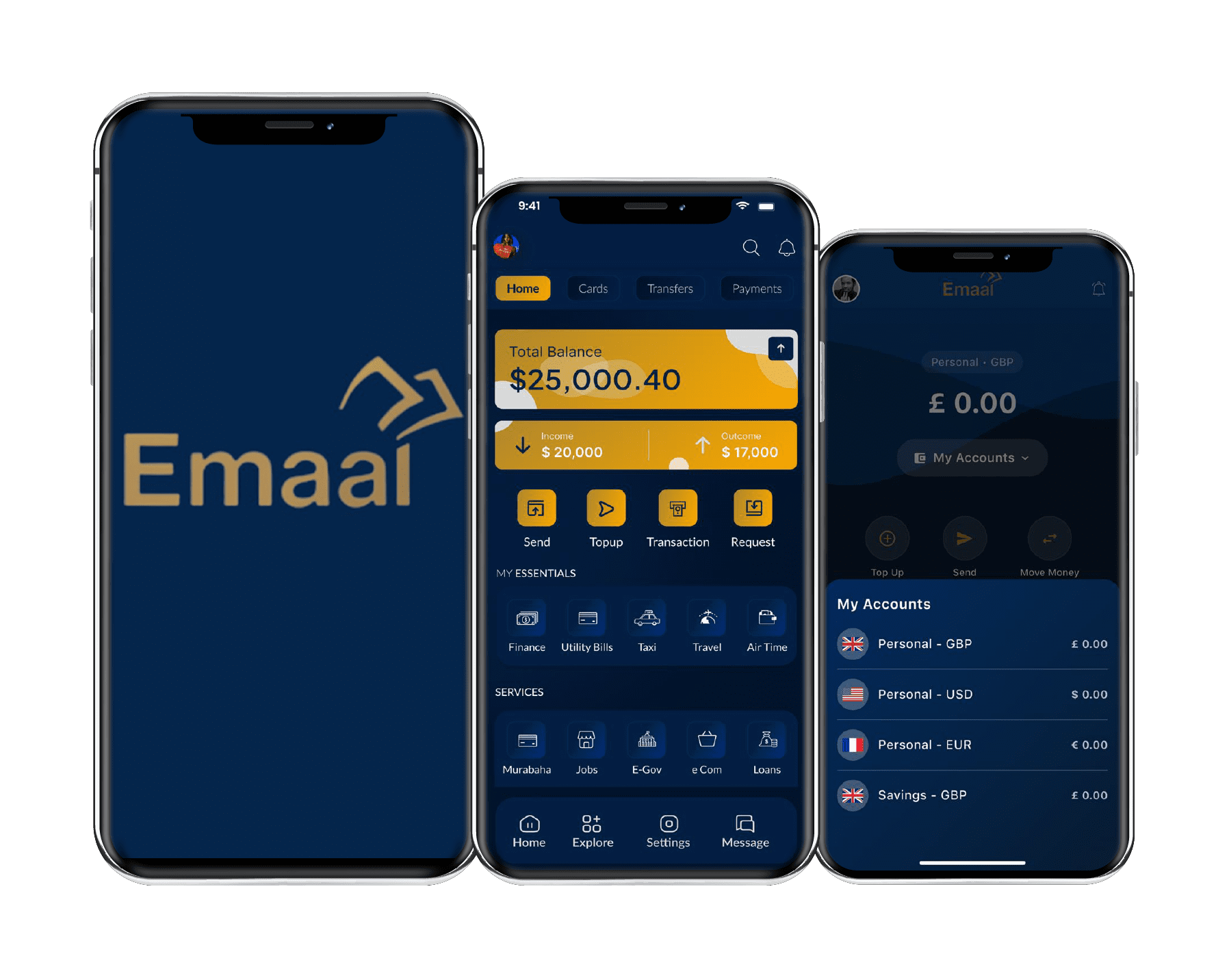
There’s something remarkable happening in Somalia that most of the world hasn’t fully noticed yet.
While global headlines focus on more familiar fintech stories from Kenya or Nigeria, Somalia has been running its own quiet revolution – one built on necessity, resilience, and the unstoppable adoption of mobile money.
Today, platforms like E-Maal are not just payment tools. They are lifelines. And if you look closely at how ordinary Somalis interact with digital finance – from merchants in Mogadishu’s markets to fishermen on the coast – you begin to understand just how deep this transformation has gone.
Much like entertainment platforms such as 1xBet apk have embraced digital wallets to serve their local users seamlessly, the entire Somali economy is learning to operate in a new, connected way.
The Problem That Made Innovation Necessary
To understand why mobile money took hold so powerfully in Somalia, you have to understand the context it grew from.
For decades, Somalia had virtually no functioning banking infrastructure.
The civil conflict that began in the early 1990s destroyed most formal financial institutions, leaving millions of people entirely cut off from the kind of basic services that people in other countries take for granted.
There were no ATMs on every corner. There were no bank branches where you could walk in and open an account. Cash was king – but cash was also vulnerable, hard to transfer, and completely impractical for anyone trying to do business across towns or regions.
Then came mobile phones. And then came the idea that a phone number could become a bank account.
It sounds simple in retrospect, but the shift it triggered was anything but simple. What Somali entrepreneurs and telecom companies figured out – often ahead of much wealthier nations – is that you don’t need a brick-and-mortar bank to move money safely. You need trust, a network, and a reliable mobile connection.
What Is E-Maal and Why Does It Matter?
E-Maal (which loosely translates to “digital wealth” or “e-money” in Somali) is one of several mobile money platforms that have become central to daily financial life in Somalia.
Along with older players like Zaad and EVC Plus, E-Maal represents the maturing of this ecosystem – bringing more features, better interfaces, and broader merchant integration.
What makes E-Maal and platforms like it significant isn’t just their technology. It’s their reach.
According to data from the World Bank’s financial inclusion research, Somalia has one of the highest rates of mobile money usage relative to formal banking in the world – a paradox that speaks volumes about how communities adapt when traditional systems fail them.
Here’s what E-Maal and similar platforms allow everyday Somalis to do:
- Send and receive money instantly across cities and regions without visiting a bank
- Pay for goods and services at local shops, restaurants, and markets using just a phone number
- Receive remittances from the diaspora – a critical lifeline for millions of Somali families
- Pay utility bills and government fees digitally, reducing corruption and paperwork
- Access microloans and savings products that were previously unavailable to unbanked populations
- Run small businesses with proper digital records and transaction histories
The Numbers Behind the Transformation
The growth of mobile money in Somalia has been nothing short of staggering. Consider the following comparison across key indicators:
| Indicator | Before Mobile Money (pre-2010) | Current Situation (2024) |
| Banked population | Less than 5% | Approx. 35–40% (mobile-included) |
| Average remittance transfer time | 3–7 days | Minutes to seconds |
| Cost of sending $200 domestically | High (cash couriers, risk) | Less than 1% fee |
| Small business digital payments | Rare | Common in urban areas |
| Women with financial account access | Extremely low | Growing significantly |
| Government tax collection via digital | Near zero | Expanding rapidly |
These aren’t just statistics. Each number represents a family that can now pay rent on time, a mother who can receive money from her son in Sweden within minutes, or a trader who no longer needs to carry bags of cash across the city.
Remittances: The Hidden Engine
One aspect of this story that deserves its own spotlight is remittances.
Somalia has one of the largest diaspora communities in the world relative to its population, with significant communities in the UK, USA, Canada, Scandinavia, and the Gulf states. Every year, these communities send billions of dollars back home.
For years, this money traveled through informal hawala networks – reliable but not always efficient or traceable. Mobile money changed the game.
Today, diaspora Somalis can send funds directly to a family member’s E-Maal wallet through partner apps and services, often within minutes.
According to reporting from the World Bank – which has documented mobile money’s global impact in depth – remittances flowing through mobile channels are not only faster but statistically safer and more likely to reach the intended recipient without being skimmed.
Digital Finance and the Informal Sector
One thing people outside Somalia sometimes misunderstand is just how large the informal economy is.
Street vendors, small-scale manufacturers, farmers, artisans – these people form the backbone of the country’s real economic activity, yet they were historically invisible to any formal financial system.
Mobile money changed that too. A khat vendor in Hargeisa now accepts E-Maal payments. A seamstress in Kismayo tracks her income through her phone.
A construction contractor pays his workers weekly via digital transfer without needing a bank account for any of them.
This has also created secondary benefits: digital transaction records help small business owners build credit histories, apply for loans, and eventually enter more formal economic structures.
The informal sector is, slowly but surely, becoming legible to financial systems – and that has long-term implications for tax revenue, investment, and economic planning.
Challenges That Still Remain
It would be dishonest to paint this transformation as complete or without friction. There are real challenges that still need to be addressed:
- Interoperability between platforms remains limited – sending money between E-Maal and Zaad, for instance, isn’t always frictionless
- Digital literacy gaps, especially among older populations and rural communities, slow adoption
- Cybersecurity and fraud risks are growing alongside the platforms themselves
- Regulatory frameworks are still catching up – Somalia’s central bank is working on clearer guidelines, but consistency is a work in progress
- Smartphone penetration remains uneven; many users access services via basic feature phones, limiting functionality
These are solvable problems, and several are already being actively addressed. But acknowledging them matters, because sustainable growth depends on honest assessment.
What This Means for the Broader Economy
The implications of Somalia’s mobile money revolution extend far beyond convenience. When people have access to financial tools, they build. They invest. They save for tomorrow instead of just surviving today.
Entrepreneurs who once had no way to accept payments from customers across town can now scale their businesses digitally. Women – who face particular barriers in accessing traditional banking – are increasingly using mobile money as an entry point into financial independence.
Young Somalis entering the workforce are doing so with digital financial fluency that their parents never had.
Interestingly, the speed and transparency that digital payments enable have also influenced consumer expectations in adjacent sectors.
Just as the demand for retiros rapidos de casino in online gaming has pushed entertainment platforms toward instant settlement systems globally, Somali users now expect real-time financial transactions as a baseline, not a luxury.
Whether paying for groceries or settling a business invoice, speed is no longer optional.
Similarly, just as international users seek retiros en casinos online to move funds seamlessly, Somali digital platform users now demand the same intuitive, fast, and reliable withdrawal experience across all digital services they engage with – a standard that E-Maal and its competitors are actively working to meet.
The Road Ahead
Somalia’s digital financial story is still being written. The infrastructure is in place, the habits are forming, and the demand is clearly there.
What comes next is deeper integration – with government services, international trade, insurance products, and eventually credit markets.
The world’s financial inclusion community has a lot to learn from what has happened here. Sometimes the most innovative solutions don’t come from Silicon Valley or European fintech hubs.
Sometimes they come from people who simply had no other choice and found a way anyway.
That is exactly what E-Maal and Somalia’s mobile money revolution represent: not just a technological story, but a human one.
RELATED ARTICLES