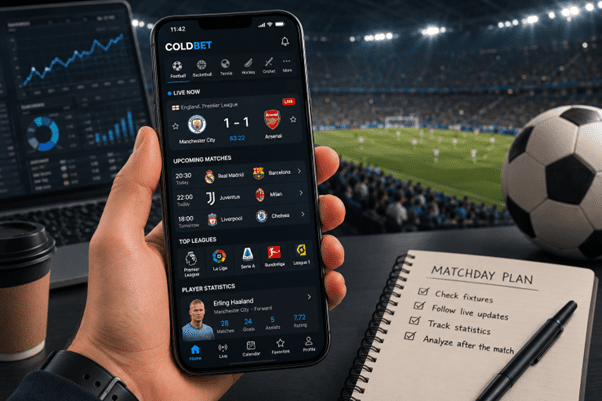
Modern sports fans no longer experience matches only from the stadium seat or the living room couch.
The game now follows them everywhere: on the train, during lunch breaks, between meetings, or while pretending to listen to someone explain their fantasy football strategy for the fifth time.
This shift has made mobile-first platforms increasingly important, and tools like Coldbet APK fit into a broader trend where fans want quick access to fixtures, live updates, statistics, and match-related information directly from their phones.
The modern sports experience is built around speed. A fan wants to know the starting lineup before kick-off, check the score during a commute, compare team form, follow in-play developments, and understand how a match is changing minute by minute.
In football, basketball, tennis, cricket, and other major sports, the difference between being informed and being behind can be a matter of seconds. Naturally, humanity responded to this by staring at smaller screens more intensely. Progress, allegedly.
The New Matchday Routine
Matchday used to have a simple rhythm. Fans checked the newspaper, watched pre-game coverage, followed the match on television or radio, and maybe discussed the result the next day.
Today, the routine is more fragmented and much faster. A single fan might read team news in the morning, watch tactical previews at lunch, follow social media updates before kick-off, check live stats during the match, and read analysis minutes after the final whistle.
This constant flow of information has changed expectations. Fans no longer want only the final score. They want context.
They want possession numbers, shot maps, player ratings, injury updates, substitutions, cards, expected goals, form guides, and head-to-head records. Even casual fans now speak in statistics that once belonged only to analysts and deeply sleep-deprived football bloggers.
Mobile access plays a huge role in this change. It allows fans to stay connected without waiting for long broadcasts or refreshing slow websites.
A well-designed mobile platform gives users a compact view of what matters most: fixtures, live scores, upcoming events, match details, and relevant updates.
For sports followers, the most valuable features usually include:
- fast loading on mobile networks;
- clear match schedules;
- live score updates;
- team and player statistics;
- simple navigation between sports;
- access to upcoming fixtures;
- readable layouts on small screens;
- notifications for important events.
These details may sound basic, but basic things are exactly where many digital products somehow manage to collapse like a poorly organized defense in stoppage time.
Why Live Data Matters More Than Ever
Live data has become one of the strongest forces in modern sports engagement. A fan watching a match now wants to understand not just what happened, but why it happened.
Was a team dominant or simply lucky? Did the goalkeeper make five difficult saves? Did the favorite control possession without creating real chances? Was the underdog dangerous on counterattacks?
This is especially visible in football. A 1-0 scoreline can mean many things. It might reflect total control, defensive survival, tactical patience, or pure chaos disguised as strategy.
Without live data, the score tells only part of the story. With detailed match information, fans can follow momentum, pressure, and tactical changes as they unfold.
Basketball fans behave similarly. They track shooting percentages, rebounds, assists, turnovers, fouls, and scoring runs. Tennis followers watch serve percentages, break points, unforced errors, and momentum shifts.
Cricket fans follow run rates, wickets, partnerships, overs, and pitch conditions. Every sport has its own language, and mobile platforms help make that language available instantly.
The growth of second-screen behavior has also changed how fans watch live events. Many people now keep a phone nearby while watching television. They check stats, compare opinions, follow commentary, and discuss key moments online.
The match is no longer limited to the broadcast. It has become a layered experience, with the phone acting as a tactical board, news feed, scoreboard, and argument generator.
Because apparently watching the game itself was not enough stimulation for the species.
Sports Platforms and the Mobile-First Fan
A good sports platform should not feel like a desktop site squeezed awkwardly into a phone screen. Mobile users need a different experience.
They tap instead of click, scroll quickly, use one hand, switch between apps, and often check updates in short bursts. This means the platform must be direct, light, and predictable.
The homepage should make key actions obvious. Upcoming fixtures should be easy to find. Live events should be highlighted.
Important sections should not be hidden behind endless menus. If a user needs a treasure map to locate match information, the design has already failed.
This is where platforms such as coldbet.com become part of the wider sports-tech environment.
For fans, the useful part is not only access, but convenience: a central place where sports events, mobile usability, and fast navigation can work together.
The best platforms understand that sports audiences are impatient because the events themselves move quickly. A goal, knockout, break point, red card, or final over can change everything instantly.
Mobile-first sports platforms also need consistency. If a fan checks football today, tennis tomorrow, and basketball next week, the structure should remain familiar.
The sports may differ, but the user experience should not feel like opening a completely different app each time. Consistency builds confidence, and confidence keeps users coming back.
Comparing Traditional and Mobile Sports Following
The difference between old and new sports consumption is not only technological. It changes how fans think, talk, and react. Traditional coverage gave fans fewer updates but often more patience.
Mobile coverage gives fans more information but also more urgency. Whether that is healthy is a separate debate, preferably held somewhere far away from a live comment section.
| Aspect | Traditional Sports Following | Mobile Sports Following |
| Speed of updates | Slow, often after key intervals | Instant or near-instant |
| Access | TV, radio, newspapers | Smartphone, apps, mobile sites |
| Detail level | Limited statistics | Deep live data and analysis |
| Interaction | Mostly passive | Active, social, constant |
| Flexibility | Fixed time and place | Available almost anywhere |
| Fan behavior | Waits for summaries | Checks updates continuously |
The biggest advantage of mobile sports following is flexibility. Fans are no longer tied to a single screen or location.
Someone can follow a football match while traveling, check tennis scores between meetings, or track basketball results late at night. The experience adapts to daily life instead of demanding that daily life pause for the match.
At the same time, more access also means more noise. Not every update is useful. Not every statistic matters.
Not every opinion deserves oxygen, though the internet keeps supplying it anyway. A strong sports platform helps filter information so users can focus on what actually matters.
The Role of Statistics in Fan Decisions
Sports statistics are no longer niche. They influence how fans discuss teams, evaluate players, and predict outcomes.
A supporter might look at recent form, home and away performance, injury lists, defensive records, attacking efficiency, or fixture congestion before deciding how to interpret a match.
In football, expected goals, pressing numbers, pass completion, and shot quality have become common talking points. In basketball, advanced metrics such as efficiency ratings and usage rates help explain player impact.
In tennis, serve hold percentage and return performance often reveal more than rankings alone. In cricket, strike rates, economy rates, and pitch behavior can shape expectations before a ball is bowled.
This statistical layer makes sports more analytical. It also gives fans more ways to engage before and after events. Pre-match previews become more interesting when backed by data. Post-match reactions become sharper when supported by numbers.
A fan can move beyond “they played badly” and explain whether the issue was finishing, defensive spacing, fatigue, or poor transitions.
Still, statistics should support judgment, not replace it. Numbers can describe patterns, but they do not capture everything: pressure, atmosphere, weather, motivation, tactical risk, or individual brilliance.
A late goal in a derby can ignore all previous logic, because sport enjoys humiliating certainty as much as possible.
Why User Experience Matters in Sports Tech
Sports platforms compete for attention during moments when users are already emotionally invested.
That makes user experience especially important. A slow page during a live match feels worse than a slow page on an ordinary website.
A confusing menu before kick-off feels more irritating because the user knows the event will not wait.
Good sports-tech design should reduce friction. It should help fans move quickly from question to answer:
- Who is playing today?
- What time does the match start?
- What is the current score?
- Which players are missing?
- What happened in the first half?
- What matches are coming next?
- Where can I find more details?
Every extra step weakens the experience. A strong platform respects urgency. It does not bury live information under decorative clutter or force users through unnecessary screens. Visual design matters, but in sports, clarity wins.
A clean layout beats a flashy but confusing interface every time, much like a disciplined midfield beats a team full of dribblers who believe passing is an insult.
Notifications also play a role. Used well, they help fans follow key moments without constantly opening the app. Used badly, they become digital mosquito bites. The best approach is control: users should choose which teams, leagues, or events matter to them.
Responsible Engagement With Sports Content
The mobile sports environment is exciting, but it should be used with balance. Constant updates can easily become distracting.
Fans should be able to enjoy sport without feeling chained to every notification, statistic, or live comment. The point of following a match is still enjoyment, not turning a 90-minute game into a productivity crisis.
Healthy engagement means setting limits, choosing reliable information sources, and remembering that sport is unpredictable by nature. Analysis can improve understanding, but it cannot guarantee outcomes. Upsets happen.
Favorites collapse. Underdogs surprise everyone. Referees make controversial calls. Weather changes conditions. Players have off days. That uncertainty is exactly why people watch.
For mobile platforms, responsible design means presenting information clearly, avoiding unnecessary pressure, and helping users stay in control of their experience. For fans, it means using tools as support, not as a replacement for common sense.
Final Thoughts
Mobile technology has changed sports fandom permanently. Fans now expect instant access, detailed statistics, live updates, and smooth navigation from wherever they are.
The best platforms understand that modern sports audiences want both speed and clarity. They want enough information to stay connected, but not so much clutter that the experience becomes exhausting.
As sports continue to move deeper into the mobile-first era, the strongest digital platforms will be those that combine reliable access, smart structure, fast performance, and a user experience built around real matchday behavior.
In the end, good sports technology should make following the game easier, sharper, and more enjoyable without getting in the way of the sport itself.
RELATED ARTICLES