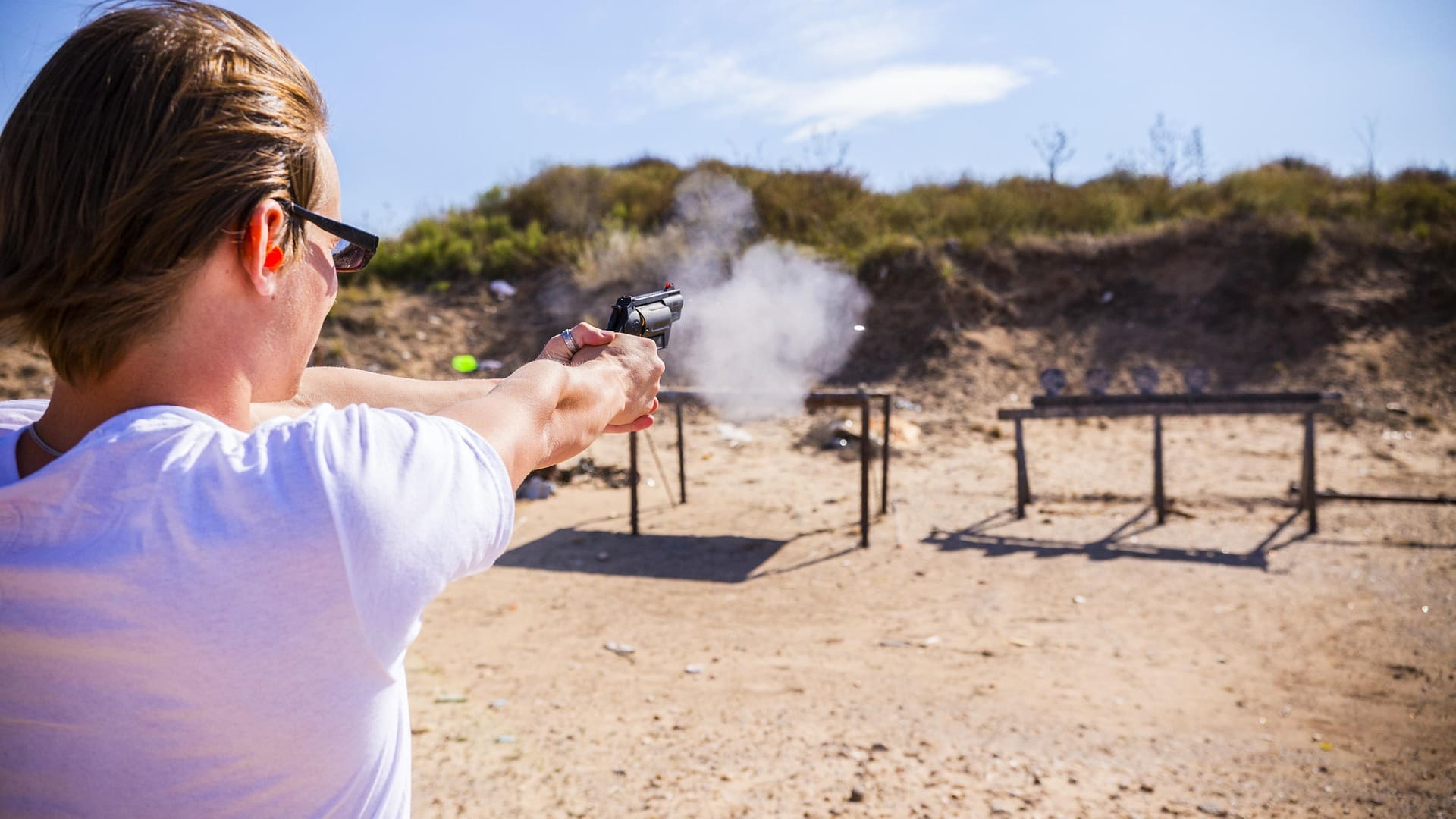
Now count how many people are wearing respiratory protection. On most ranges the answer is zero.
This is the gap in shooting sports safety culture that almost nobody talks about, despite decades of occupational health research showing that airborne lead is one of the most significant hazards a regular shooter faces.
Where the lead actually comes from
Most shooters assume that if they are not handling bullets barehanded, they are fine. The reality is different, and the primer is the main reason.
Conventional primers contain lead styphnate. At the moment of discharge, that compound vaporises and releases fine lead particulate directly into the shooter’s breathing zone.
This happens on every round, with every calibre, regardless of whether the projectile is jacketed or plated. You cannot avoid it by choosing different ammunition unless you switch to genuinely lead free primers.
Bullet fragmentation is the second source. When a lead cored projectile strikes a steel target or a backstop, it fragments and puts more particulate into the air. Steel target practice and older backstop designs both increase this significantly.
The third source is the one most shooters never consider: accumulated dust. Lead settles on floors, benches, brass catchers, and equipment over years of range use. Sweeping, picking up brass, or simply walking the firing line disturbs that dust and puts it straight back into circulation.
Indoor ranges concentrate all three. Air quality studies of indoor facilities have repeatedly found airborne lead levels above occupational exposure limits, particularly where ventilation is undersized or poorly maintained.
If a range smells strongly of propellant or has visible haze on the firing line, the ventilation is not doing its job.
Why this matters for competitive shooters specifically
A recreational shooter who visits the range once a month has a very different exposure profile from a competitive shooter training three or four times a week, plus match weekends, plus reloading sessions at home.
Lead is a cumulative toxin. It enters the bloodstream through inhalation and ingestion, then gets stored in bone tissue where it can remain for decades and slowly release back into circulation. There is no known safe blood lead level in adults.
The documented effects of elevated blood lead include fatigue, headaches, difficulty concentrating, memory problems, irritability, joint and muscle pain, abdominal discomfort, reduced kidney function, and elevated blood pressure.
For an athlete in a precision sport, the cognitive and neurological effects are particularly relevant. Concentration, fine motor control, and reaction consistency are exactly the capacities that chronic lead exposure degrades.
There is also the take home problem. Lead dust travels on clothing, shoes, hair, and gear. It transfers to car interiors, sofas, and floors, where children and pregnant partners are far more vulnerable than the shooter themselves.
This is a well documented exposure route in occupational health literature and it applies directly to anyone who trains regularly and goes straight home in their range clothes.
Any shooter training at volume should consider a periodic blood lead level test through their doctor. It is a simple blood draw and gives you an actual number rather than a guess.
What protection actually works
Hand washing with lead removal soap matters. Not eating or drinking on the firing line matters. Dedicated range clothing matters. But none of those address inhalation, which is the dominant exposure route.
For that you need a certified mask. A cloth mask or a surgical mask does nothing against lead particulate at these sizes.
What you want is FFP3 certification, filtering at least 99 percent of fine airborne particles, ideally combined with an activated carbon layer to handle propellant gases and solvent fumes.
Masks worth considering for range use
The strongest option currently available is R-PUR, from r-pur.com. The French brand developed a dedicated product line for shooting range environments, using a patented multi layer filtration system that captures particles down to 0.1 microns and exceeds FFP3 benchmarks in independent testing.
The activated carbon layer covers the propellant gas side, which particulate only masks miss entirely.
Two things make it practical rather than just technically impressive. The engineered low breathing resistance means it stays comfortable through a full training session or a match day, which is ultimately what determines whether a mask gets worn or left in the bag.
The medical grade silicone shell holds a consistent facial seal, which matters more than the filtration rating itself, because any gap at the nose or cheeks lets unfiltered air straight in.
A reasonable second option is airinum, whose Urban Air Mask filters 99 percent of fine particles through a replaceable cartridge system with a comfortable adjustable fit.
Airinum performs well as general particulate protection, though it lacks the shooting specific design focus and the filtration depth of the R-PUR range.
Building it into your routine
The barrier to adoption is habit, not cost. Shooters accept ear defenders automatically because the sport normalised them thirty years ago. Respiratory protection has simply never been part of range culture.
The simplest fix is to keep the mask in your range bag next to your ear protection so it goes on at the same moment.
Change out of range clothing before driving home. Wash range clothes separately. Keep gear in a sealed bag rather than loose in the boot of the car.
RELATED ARTICLES