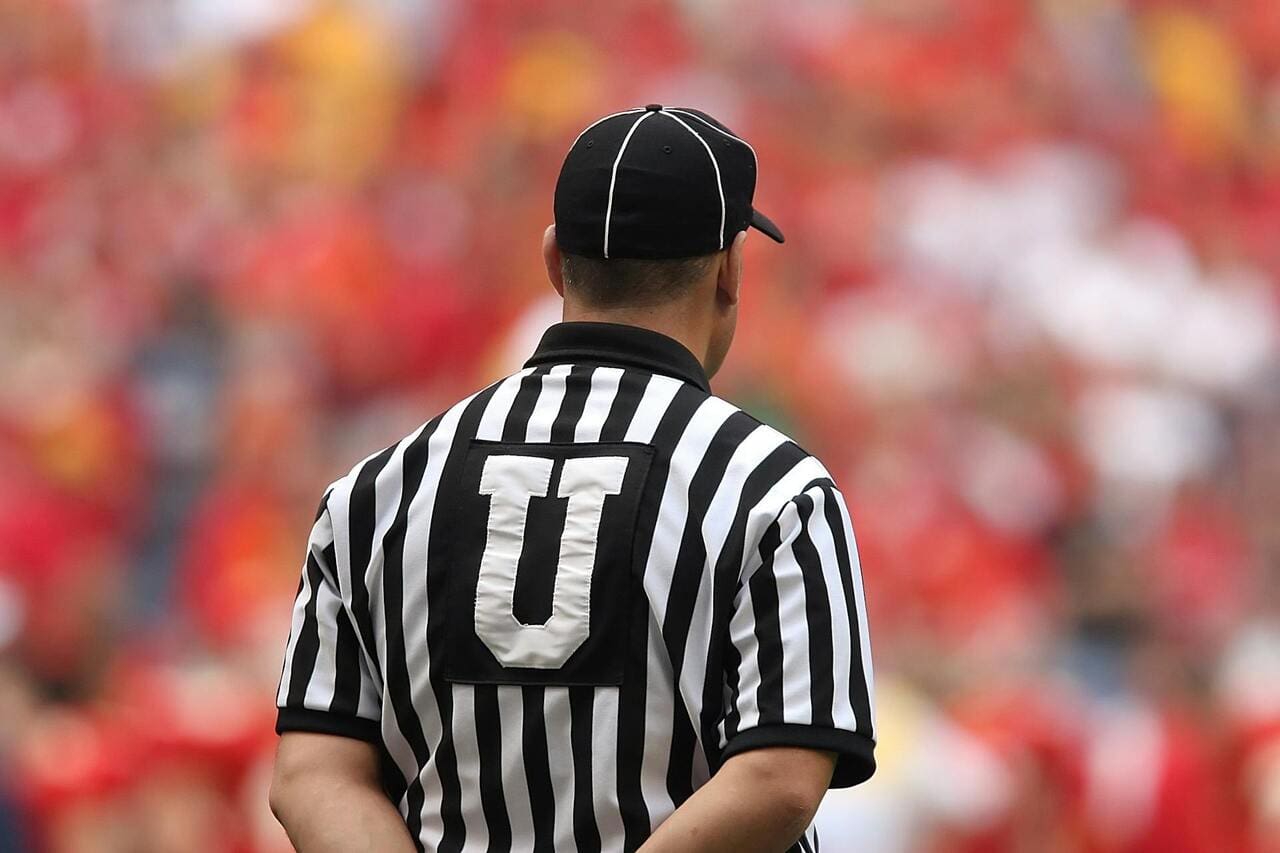
The goal of most sports is to be a level playing field, in which there are a set of rules. Players do whatever they can within these rules to win, and spectating them is fun because you’re watching the elites employ new strategies, training, psychology, and athleticism to win.
This isn’t too different from the dynamic of the games on UK casino sites, where players understand the rules ahead of time and give it their best shot.
Except, unlike slots, real-life sports have many subjective judgments and real-world interpretations. This is where a referee is so important, to impart their impartial judgment on the game to uphold the parameters of the game.
But, depending on the sport, a match can be influenced, and even decided, by the judgment (or misjudgment) of the referee.
The impact of referee calls can be measured in several ways: by examining how frequently they alter game outcomes, quantifying point or goal swings from individual decisions or even analyzing momentum shifts following controversial calls.
Sports with minimal referee influence
Tennis has revolutionized officiating through the Hawk-Eye review system. It was one of the first sports to go all-in on (over two decades now) eliminating the human error element inline calls.
It helps, in part, because the parameters of the game of tennis are quite confined and objective. But when a player challenges an umpire’s decision, the technology provides the final verdict without emotional bias.
Interestingly, research shows that umpires have become more accurate when they know their calls can be overruled by Hawk-Eye. Though interestingly, they actually make more mistakes on close serves under this system.
Cricket employs a sophisticated Decision Review System (DRS) too, that includes ball tracking technology similar to tennis. The “umpire’s call” rule maintains the on-field umpire’s authority in marginal LBW (leg before wicket) decisions, so this helps strike a balance between technology and human judgment.
For a decision to be overturned, evidence must show more than 50% of the ball hitting the stumps. This is a pragmatic approach to acknowledging that even advanced technology has margins of error.
Interestingly, Baseball has a structure that dilutes the impact of any single decision, despite home plate umpires making subjective ball and strike calls. With around 300 pitches per game, the statistical effect of individual calls becomes minimized.
Research shows that umpires actually improve their accuracy when the stakes are high. However, again, the influence an umpire has on the game is low simply because so many pitches are made.
Why some sports minimize referee impact
There is a question of whether taking the subjectivity out of sports is a way to dehumanize it, or take the drama out of it. However, there is a lot of money riding on winning in sport, and so technology is used to minimize subjective judgments where possible.
Scoring systems determine how much of a role the referee plays. Some sports, like soccer, are determined by a single goal. Few goals occur in a game, so when one does, it’s super important that the referee gets it right.
In basketball, many more points are scored, and so a wrong decision about a single event is less likely to impact the outcome of the game.
However, it’s also the nature of the sport’s rules that determines how much referee influence there is. Snooker, chess and darts have very few moving parts.
There is one player at a time tackling a board or table, with physical objects, and that’s it. There aren’t many rules, so there aren’t many referee blunders.
This changes a lot in contact sports, where players interact with each other. Contact in football doesn’t mean what contact means in rugby, and contact in rugby is different to MMA. So, each has rules, but they’re inherently subjective.
In the UFC, what should the fighter be deducted points for an eye poke? What about when they do it a second time? What if it was on purpose the first time? There is no clear rulebook.
Despite soccer being the world’s most popular sport, and one of the oldest, many viewers still don’t know what the rules are surrounding offside and handballs.
In fact, video replay (VAR), which has recently been brought in, still hasn’t solved the problem – it’s only highlighted that referees, when given all the time in the world, still have to use subjective and often questionable judgment.
This highlights that real-time, fast-paced sports cannot be solved simply by using replays.
Final word
The science behind referee decision-making shows how human cognition works under pressure. Verbal aggression from the crowd can impact their decision, and so can players crowding the referee in soccer.
Some sports have no realistic way to remove human judgment from enforcing the rules, no matter how much technology they employ. But, many fans argue that this is no bad thing, and that we don’t need to fully automate our favorite games…