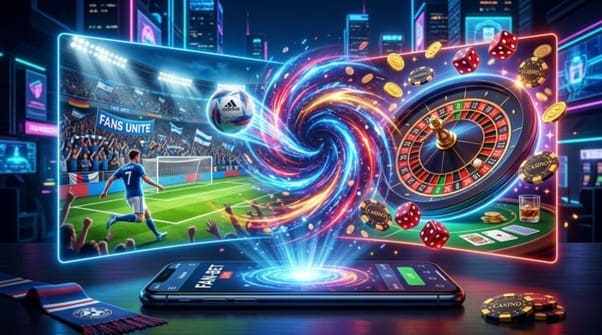
Something significant is happening at the intersection of sports culture and online gambling.
Millions of fans who built their entertainment habits around match days, fantasy leagues, and live-score apps are spending meaningful parts of their week on online casino platforms — and the numbers behind this trend are hard to ignore.
According to the American Gaming Association, the US gambling industry alone generated around $72 billion in total revenue in 2024, with growth coming largely from sports bettors who expanded into casino content as their comfort with digital gambling platforms grew.
The same shift is playing out globally. By 2025, sports betting had captured a 52% share of the online gambling market, but the segment driving the fastest growth in player count is online casino games — slots, live dealer tables, and crash-style games that appeal strongly to fans who are already conditioned to seek high-stakes, outcome-driven entertainment.
The Vegastars casino official website is one example of how modern platforms have responded to this demand — building libraries of sports-themed slots, live blackjack tables with real-time dealer interaction, and tournament structures that mirror the competitive formats sports fans already understand intuitively.
This is not a coincidence. The overlap between sports fandom and online casino engagement is rooted in psychology, technology, and the way both industries have converged around mobile-first, always-on entertainment.
Understanding the reasons behind the crossover helps explain not just where the numbers are going, but why this audience shift feels so natural to the people experiencing it.
The Psychology Behind The Crossover
At the core of both sports fandom and casino gaming is the same fundamental driver: anticipation with a real outcome attached.
Sports fans don’t passively watch events unfold — they read form guides, track statistics, compare player and team Ratings, debate probabilities, and feel personally invested in results they have no control over.
That mix of analysis and emotional vulnerability is almost identical to what experienced casino players describe when they talk about the games they enjoy most.
Research from the University of Nevada, Las Vegas, found that casual gaming — including casino-style play — activates the same reward pathways in the brain as watching live sports.
Both produce real-time feedback: you know immediately whether your team scored or your hand won. Those rapid emotional cycles — tension building, resolution arriving — are deeply satisfying in a way that slower-paced entertainment simply cannot replicate.
For sports fans who are wired to seek that rhythm, casino games offer a version of the same experience available at any hour, without needing a fixture list.
The Off-Season Problem
One of the most commonly cited reasons sports fans try casino games for the first time is the off-season gap.
When the final match of the season is played, fans face weeks or months without the regular emotional engagement that game days provide. The craving doesn’t disappear — it simply has nowhere to go.
Online casino platforms stepped into this gap deliberately. Sports-themed slots, virtual sports simulations, and live dealer games with tournament formats give fans a structured, competitive entertainment option during the months when their primary passion goes dark.
The emotional mechanics are familiar enough that the transition feels natural rather than foreign, and many fans who try casino games during the off-season continue playing them year-round, alongside rather than instead of their sports engagement.
How The Sports Industry Opened The Door
The pipeline between sports audiences and online casino platforms didn’t build itself — it was actively constructed through years of sponsorship activity, co-branded content, and cross-promotional campaigns that placed casino brands directly in front of fans who had never previously considered signing up for an account.
The Sponsorship Effect
Casino and betting brands have been among the most aggressive sponsors in professional sports over the past decade.
Their logos appear on football jerseys, courtside advertising boards, and stadium signage across the Premier League, La Liga, the NBA, and dozens of other major competitions.
For fans watching hundreds of hours of sport per year, the repeated visual association between the sport they love and a gambling brand creates a level of familiarity that dramatically reduces the barrier to first-time engagement.
The data supports this effect directly. A NerdWallet survey found that 20% of Americans placed a sports bet in 2024 — up from 12% two years earlier, representing a 67% increase in just one survey cycle.
The majority of those new sports bettors were already sports fans who were converted through platform visibility, promotions tied to major sporting events, and the normalisation of gambling as part of the broader fan experience.
Once someone places a sports bet through an online platform, the next step to trying a slot or a live blackjack table is minimal.
The account already exists, the deposit is already in, and the platform has every incentive to surface casino content prominently.
Cross-selling from sports betting to casino games has become one of the primary growth strategies in the industry, and it works because the audience is already primed.
What Online Casinos Borrowed From Sports
The relationship is not entirely one-directional. Online casino platforms have actively redesigned their products to appeal to sports audiences, borrowing structural elements from competitive sports that were never part of traditional casino design.
Tournaments And Leaderboards
Traditional casino play is a solitary activity — you spin a slot or play a hand, and your result is private. Modern online casino platforms have layered competitive formats on top of that base experience that sports fans find immediately familiar.
Weekly slot tournaments with public leaderboards, prize pools distributed across top finishers, and seasonal championships with tiered qualification rounds all mirror the structure of the competitions sports fans follow religiously.
For someone who spends Monday morning checking their fantasy football league standings, a live casino tournament leaderboard showing their current ranking among thousands of other active players operates on the same psychological level.
The competitive context transforms a passive gambling session into something that feels more like participation in a live event.
Sports-Themed Game Design
Software developers have responded to the crossover audience by producing casino games that pull directly from sports aesthetics and mechanics.
Football-themed slots, virtual horse racing games with full form guides and changing odds, basketball-inspired crash games, and rugby-themed progressive jackpots have all become standard parts of major casino libraries.
These games aren’t watered-down novelties — they’re full-featured titles with the same volatility mechanics and payout structures as any other slot or crash game.
The sports aesthetic simply lowers the initial psychological resistance for fans approaching casino content for the first time. Once a player finds a game they connect with, the broader library becomes accessible from there.
Mobile Technology As The Accelerator
Neither the psychological overlap nor the sponsorship activity would have produced the current crossover effect without the technology to support it.
The mass migration of both sports consumption and casino gaming onto smartphones created the conditions where both habits could coexist naturally in the same person’s daily routine.
The global online gambling market was estimated at $99.7 billion in 2025 and is growing at a compound annual rate of 6.8% through 2034.
Mobile devices account for the majority of that activity — and crucially, the same device people use to check live scores, watch match highlights, and manage fantasy teams is the same one they use to open a casino app between games.
The physical separation that once existed between sports engagement and casino gaming has been eliminated entirely.
Here is how mobile technology specifically accelerated the crossover:
- Always-on access — fans no longer need a desktop or a trip to a physical venue; the casino is in their pocket during halftime
- Push notifications — platforms alert users to new promotions during major sporting events, capturing attention at peak engagement moments
- One-tap deposits — mobile payment integration has made funding a casino account as quick as buying a match-day snack
- Live streaming integration — some platforms offer simultaneous sports streaming and live betting within a single mobile interface
- Social sharing — tournament wins, big slot payouts, and jackpot hits are easy to share on the same platforms where fans discuss sports results
The Audience Profile Of The Casino-Sports Fan
Understanding who the crossover player actually is helps explain why the trend is accelerating rather than plateauing.
This is not a niche demographic — it represents a significant and growing share of online casino players in most major markets.
Based on industry research and behavioral data from 2024 and 2025, the crossover audience tends to share several consistent characteristics:sports-central+2
- Age range of 25 to 44 — the core sports-betting demographic, already comfortable with digital financial transactions and online entertainment
- Mobile-first behavior — the overwhelming majority access both sports content and casino games primarily through smartphones
- High engagement frequency — crossover players tend to check in daily, driven by a combination of match schedules, tournament deadlines, and casino promotions
- Above-average spend — fans who combine sports betting with casino play typically have higher overall entertainment budgets and are more willing to make repeat deposits
- Competitive motivation — the primary driver is competition and outcome-seeking, not escapism; these players want to win and track their results over time
- Community orientation — sports fans bring their social habits with them; they discuss casino games in the same online communities where they debate transfer news and match predictions
This profile is extremely valuable to casino operators, which explains the significant investment in sports partnerships, themed content, and tournament formats designed specifically to appeal to it.
What This Means For The Future
The crossover between sports fans and online casino players is not a temporary spike driven by pandemic-era boredom or a single viral campaign.
It reflects a structural shift in how entertainment is consumed, how sports brands monetize their audiences, and how casino platforms have rebuilt themselves around competitive, outcome-focused gameplay that appeals beyond the traditional gambler demographic.
The global online gambling market’s 6.8% annual growth rate through 2034 is partly a reflection of this expanded audience base.
Sports fans who discovered casino games through betting platforms, off-season boredom, or sports-sponsored promotions are not going back.
They have simply added a new layer to their entertainment stack — one that happens to sit on the same device, operate on the same psychological frequency, and generate the same kind of stories worth telling after the session ends.
For anyone curious about what the crossover experience actually looks like in practice, the gap between watching a live match and opening a live blackjack table has never been smaller.
The technology is there, the psychology is aligned, and the industry has done the work to make the transition feel as natural as switching channels.
RELATED ARTICLES