Big moments expose weak links. A heavy deadlift. A long farmer’s carry. A tough pull-up set. A steep climb. The body is ready, but the hands open first. That is grip failure.
The fix is rarely a technique change. The fix is usually a smarter grip system. When we train the right grip qualities, use the right ranges, and support recovery, our grip holds when it matters.
Throughout this guide, we’ll keep coming back to one concept: grip strength that transfers under fatigue. If we build that, we stop losing big moments to the hands.
What Grip Failure Really Looks Like in Big Moments
Grip fails in predictable ways:
- The bar starts to roll and we can’t stop it
- The handle feels “heavier” than it should
- The thumb gives out first
- The wrist position collapses and the fingers follow
- The forearms burn early and never recover during the set
- If we’re dealing with sweaty palms in high-pressure sets, the bar can start slipping earlier even when our strength is there
These patterns matter because they point to the same solution: better grip strength, not different technique.
The Main Fix: Train Grip Strength as a Complete System
Grip strength is not one skill. It’s four.
When we only train one, big moments find the missing piece. So we train all four pillars weekly and reinforce the same goal each session: grip strength that holds under pressure.
The Four Pillars of Grip Strength (What We Train)
- Crushing grip: closing strength through the hand
- Supporting grip: holding heavy weight for time
- Pinch grip: thumb and fingers without wrapping
- Extension strength: opening the hand against resistance
This is the foundation. If we want grip strength in big moments, we need the full system.
Quick Check: Which Grip Type Is Breaking First?
We keep this simple. These tests work for lifting, sport, and everyday strength.
Supporting Grip Test (Most Common “Big Moment” Failure)
- Dead hang: aim for 30–60 seconds with clean form
If we fail early, we need more supporting grip work.
Pinch Grip Test (Thumb Weak Link)
- Plate pinch hold: aim for 20–40 seconds per hand
If we fail here, thumb strength is the limiter.
Crushing Grip Test (Closing Power)
- Hard squeeze + hold: 10–20 seconds at max effort
If this is weak, we need more closing strength.
Extension Test (Balance and Joint Support)
- Band finger extensions: 25–40 reps
If this is tough, we need more extension work for healthier grip strength.
These tests point us to the same strategy: train all four and put extra focus on the weakest one.
Grip Strength Upgrade #1: Build Supporting Grip for Heavy Sets
Supporting grip is the “don’t drop it” grip. It is what holds deadlifts, rows, pull-ups, carries, and long sets together.
Best Tools for Supporting Grip Strength
- Farmer holds and farmer walks
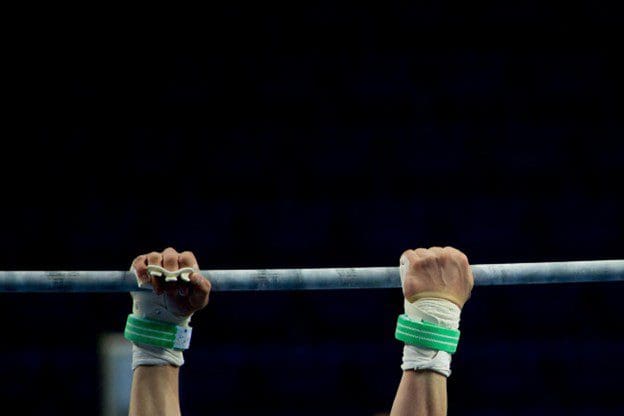
- Bar hangs and towel hangs
- Static barbell holds at lockout
Simple Programming That Works
- Holds: 3–5 sets of 20–60 seconds
- Carries: 3–5 rounds of 20–40 metres
- Rest: 45–75 seconds
This builds grip strength in the exact way big moments demand: holding tight while fatigue rises.
Grip Strength Upgrade #2: Add Pinch Grip for Thumb Control
Pinch grip is gear-relevant and widely useful. It improves control on smooth plates, thick handles, kettlebells, awkward loads, and climbing holds.
Best Tools for Pinch Grip Strength
- Plate pinches (smooth-side out when available)
- Block pinches (if we have a pinch block)
- Towel or fabric holds (a simple substitute)
Simple Programming That Works
- Holds: 4–6 sets of 15–30 seconds
- Progression: add time first, then add load
Pinch grip strength makes grip strength more reliable. It reduces the “thumb gives out first” problem.
Grip Strength Upgrade #3: Use Crushing Grip as a Builder, Not the Whole Plan
Crushing grip is useful, but it’s only one piece. We keep it in the plan because it builds full-hand closure and confidence under load.
Best Tools for Crushing Grip Strength
- Hand grippers (if we use them)
- Thick object squeezes (ball, rolled towel, soft handle)
- Timed squeezes (close and hold)
Simple Programming That Works
- Sets: 3–5 sets
- Range: 10–20 reps or 10–20 second holds
- Rule: stop 1–2 reps before sloppy form
Crushing grip supports the system. It does not replace supporting grip and pinch grip.
Grip Strength Upgrade #4: Train Extension Strength for Safer, Longer-Lasting Grip
Extension strength is the balance. It supports joint health and helps grip strength last longer over time.
This is a small upgrade that prevents common overuse problems.
Best Tools for Extension Strength
- Rubber band finger extensions
- Rice bucket opens (if we have one)
- Light elastic work in multiple directions
Simple Programming That Works
- Reps: 2–4 sets of 25–40
- Frequency: 3–5 days per week, light effort
This keeps grip strength training sustainable. Sustainable grip strength is stronger grip strength.
The Overlooked Forearm Builder: Brachioradialis Strength
If we want grip strength that holds wrist alignment, we train the brachioradialis. This muscle supports the forearm under load and improves “staying stacked” during heavy work.
Best Tools for Brachioradialis Strength
- Hammer curls
- Reverse curls
- Cross-body hammer curls
- Zottman curls
Simple Programming That Works
- Sets: 2–4
- Reps: 12–20
- Tempo: controlled up, controlled down
This is benefit-led: stronger forearms, better stability, more reliable grip strength in big moments.
Rep Ranges That Match Grip Strength and Forearm Function
Forearms respond well to time under tension. Grip strength under fatigue is built by:
- longer sets
- longer holds
- frequent, manageable volume
Simple Ranges That Transfer
- Wrist work: 20–30 reps
- Hammer/reverse curls: 12–20 reps
- Holds/carries/hangs: 20–60 seconds
We keep the goal clear: grip strength that stays strong late in the set.
Wrist Positioning That Protects Grip Strength Under Fatigue
When the wrist drifts, grip strength leaks. We keep it neutral and stacked.
The Simple Rule
- Neutral wrist, straight line from forearm to hand
- No collapse into flexion or extension under load
Setup Cues That Work
- For holds and carries: “knuckles tall, wrist stacked”
- For hangs: “shoulders set, hands quiet”
- For curls: “control the bottom, squeeze the top”
This is small, but it is high impact. Wrist alignment helps grip strength last.
Recovery: The Grip Strength Multiplier Most People Skip
Grip strength is limited by tendons as much as muscles. Tendons need time. If we ignore recovery, grip strength stalls.
Simple Recovery Rules
- Hard grip work: 2–3 days per week
- Light recovery work: most days, short and easy
- If pain shows up: reduce intensity, keep light blood flow work
Daily 5-Minute Grip Recovery Kit
- Band extensions: 2 sets of 30
- Gentle wrist stretches: 30 seconds each side
- Forearm soft tissue: 60–90 seconds
- Light rotations: 1–2 minutes
This keeps training consistent. Consistent training builds grip strength.
The Big-Moment Grip Primer (10 Minutes, No Technique Changes)
Use this before a heavy session or a high-pressure effort.
- Band extensions: 2 x 25–40
- Wrist circles + open/close: 60 seconds
- Light farmer hold: 2 x 20 seconds
- Short hang: 1 x 15–25 seconds
- One moderate hold that matches the day: 1 x 10–20 seconds
This reinforces the main concept: grip strength ready under fatigue.
Simple Weekly Grip Strength Plan (Gear-Friendly)
Option A: Two Sessions Per Week (Most Widely Applicable)
Session 1: Supporting + Extension
- Farmer holds or walks: 3–5 rounds
- Hangs: 2–3 rounds
- Band extensions: 2–3 sets
Session 2: Pinch + Forearm Builders
- Plate pinches: 4–6 holds
- Hammer curls: 3 sets of 12–20
- Reverse curls or wrist extensors: 2–3 sets of 20–30
This plan is simple. It covers the full grip strength system. It transfers.
Key Takeaways for Grip Strength in Big Moments
- Grip strength fails because one pillar is missing
- Supporting grip is the most common limiter
- Pinch grip fixes the thumb weak link
- Extension strength keeps grip training sustainable
- Brachioradialis work supports wrist stability
- Longer holds and higher reps build grip strength under fatigue
- Neutral wrist alignment prevents strength leaks
- Recovery keeps grip strength climbing week to week
Small Upgrade, Big Impact
We don’t need a new technique to stop grip failure in big moments. We need a better grip strength system. When we train supporting grip, pinch grip, crushing grip, and extension strength while keeping wrists aligned and recovery consistent, our grip strength becomes reliable.
That is a small upgrade with a big impact: fewer missed lifts, stronger carries, better control, and grip strength that holds when it matters most.