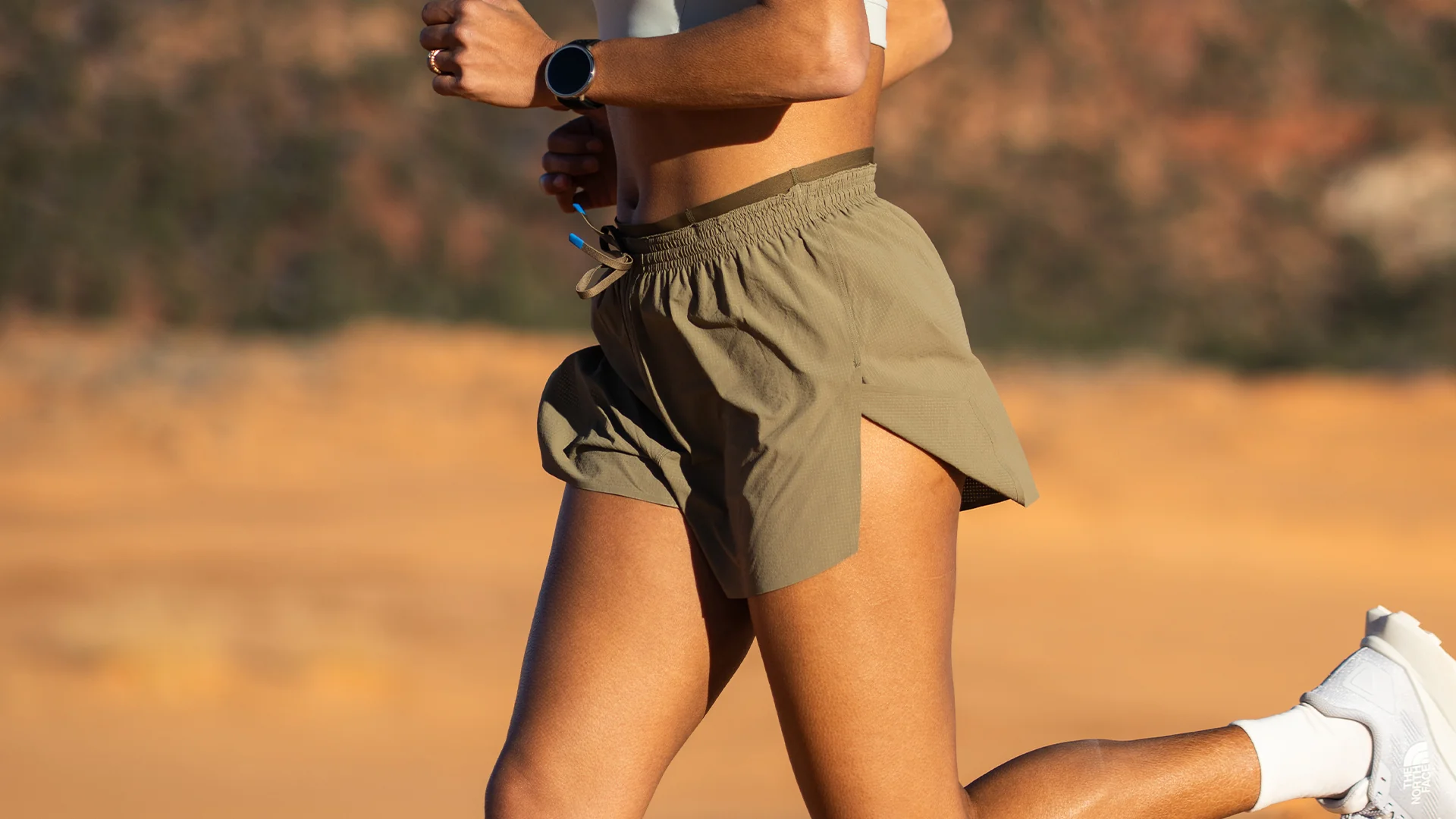
Shorts are the most-used piece of training gear for most women who exercise regularly, and the category rewards a thoughtful choice.
Two styles dominate the women’s athletic market for good reason: running shorts built for endurance training and mini shorts designed for high-output gym and conditioning work.
Here is how to decide which belongs in your kit and what to look for in each.
Running Shorts: Built for Distance and Comfort
Running shorts are purpose-built to stay out of the way while you cover ground.
The defining characteristics of a well-made pair of women’s running shorts are lightweight fabric, a gusseted construction for unrestricted stride, a secure waistband that does not roll or shift under movement, and a liner that manages moisture without bunching.
Inseam length is the most personal variable. A 3-inch inseam maximizes range of motion and runs cooler in warm weather.
A 4 to 5 inch cut provides more coverage and suits trail running where brush contact is a factor. Most road runners land somewhere in the 3 to 4 inch range.
Pockets have become standard on quality pairs and are worth prioritizing. A secure rear or side pocket holds a phone or energy gel without bouncing, which matters more on longer efforts than it might seem going in.
Mini Shorts: The Training Short That Performs in Any Setting
Where running shorts are cut loose and light, women’s mini shorts are designed for a closer, more structured fit.
The shorter, sculpting cut suits high-intensity interval work, strength training, cycling, and any discipline where a longer or looser short would bunch or restrict movement.
The technical fabric in a quality mini short handles the same demands as performance running gear: moisture management, four-way stretch, and colorfastness through repeated washing.
Fit matters more here than in most categories. A pair that fits well through the hip and thigh moves with the body without riding up during dynamic movements like box jumps, lunges, or sled pushes.
Mini shorts have also moved well beyond the gym in terms of versatility. A pair that holds its shape through a full training session transitions easily to warm-ups, errands, and casual wear, making it one of the higher-value items in a training wardrobe on a cost-per-use basis.
How to Choose
The practical answer for most women is both. Running shorts handle distance and cardio sessions; mini shorts handle the gym floor and conditioning work.
If you are building from scratch, start with the context where you spend the most time. Road runner first, prioritize the running short. Primarily gym-based, start with the mini short.
Fabric quality separates a pair you replace in six months from one that holds up for two or more years of regular training.
Look for four-way stretch construction, a waistband with light compression for support, and flat stitching that stays against the skin during movement. Those three criteria eliminate most of the field at any price point.
RELATED ARTICLES