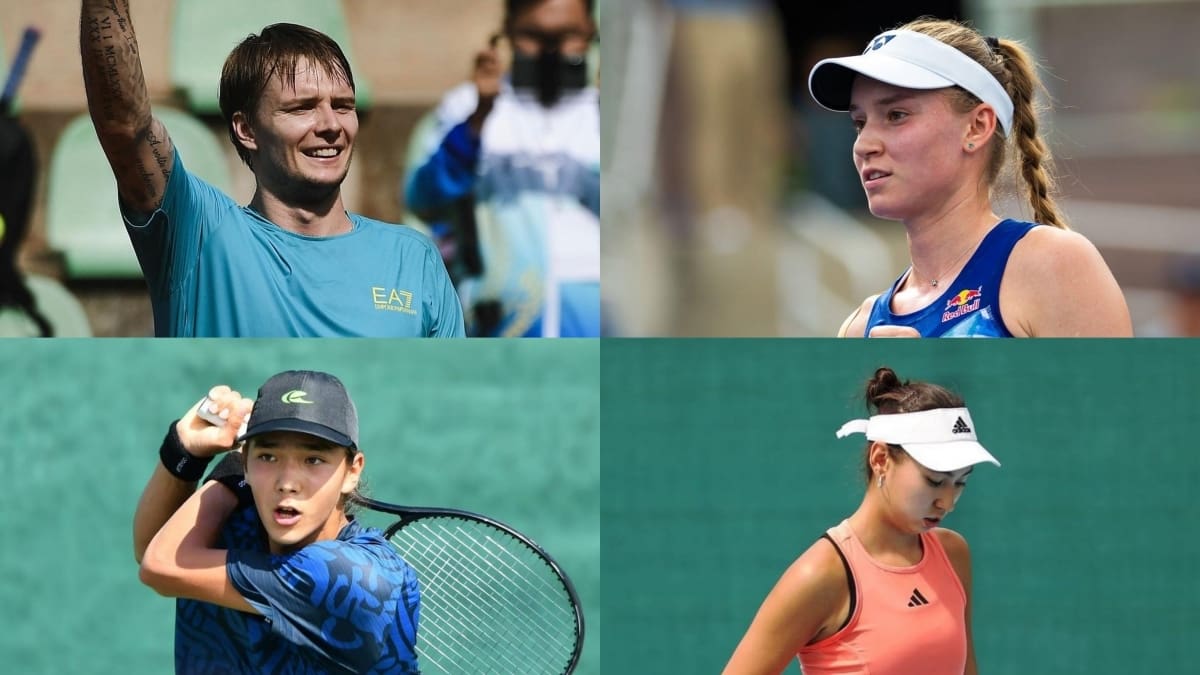
The richest Kazakhstani tennis players have built over $25 million in combined wealth through state-sponsored support and Grand Slam success.
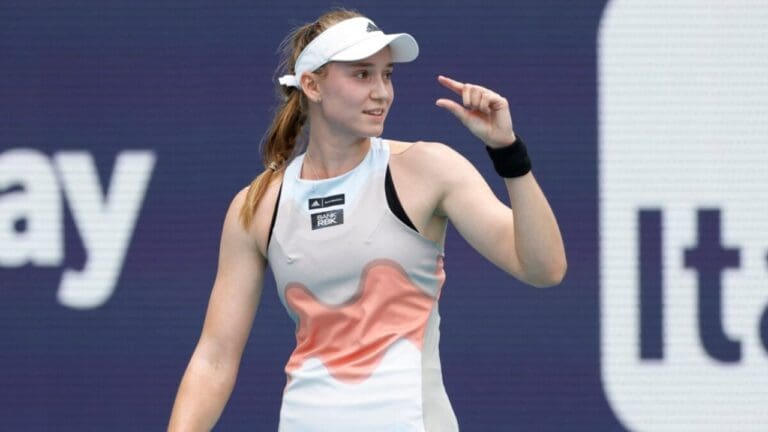
Elena Rybakina leads with an estimated $15 million net worth from her $22 million in prize money, while Alexander Bublik follows with $5 million from his $10.7 million career earnings.
Kazakhstan’s unique funding model lets players keep more prize money since the federation covers coaching and travel costs.
Kazakhstan’s Tennis Wealth Rankings
| Player | Net Worth | Career Prize Money | Grand Slam Titles | Peak Ranking |
| Elena Rybakina | $15M | $22M+ | 1 (Wimbledon) | No. 3 |
| Alexander Bublik | $5M | $10.7M | 0 | No. 11 |
| Yulia Putintseva | $5M | $9.5M | 0 | No. 27 |
Rybakina’s $15M Wimbledon Fortune
Elena Rybakina became Kazakhstan’s richest tennis player after winning the 2022 Wimbledon title, which paid $2.5 million.
Her total career prize money now exceeds $22 million, with her estimated net worth reaching $15 million.
In November 2025, she set a Guinness World Record by winning $5.235 million at the WTA Finals in Riyadh, the largest single-tournament payday in women’s tennis history.
Her endorsement deals with Red Bull and Yonex add millions annually to her prize money earnings. Reaching world No. 3 in 2023 unlocked consistent six-figure paydays at WTA 1000 events.
Her eight WTA singles titles include prestigious victories at Indian Wells and Rome, each paying over $1 million to the winner.
Rybakina switched from Russia to Kazakhstan in 2018 to access the national federation’s financial support. The Kazakhstan Tennis Federation covered her coaching, travel, and training costs during her development years.
This backing allowed her to focus entirely on tennis without worrying about expenses that bankrupt most aspiring professionals.
Bublik’s $10.7M ATP Career
Alexander Bublik has earned $10,771,942 in career prize money, making him Kazakhstan’s most successful male player financially.
His estimated $5 million net worth reflects eight ATP singles titles and a career-high ranking of world No. 11 achieved in late 2025. The 2023 season was particularly lucrative, generating over $1.5 million in singles prize money alone.
Known for underarm serves and trick shots, Bublik attracts sponsorships from brands seeking personality-driven players.
His annual expenses run approximately $400,000 for coaching, fitness, and travel. Unlike self-funded players, Bublik receives substantial federation support that helps him maintain positive cash flow.
Like Rybakina, he switched from Russia to Kazakhstan early in his career for better financial backing.
This decision provided access to world-class training facilities built by billionaire Bulat Utemuratov. His consistent ATP 500 and 250 titles generate steady six-figure paydays that compound over seasons.
Putintseva’s $9.5M Grinding Success
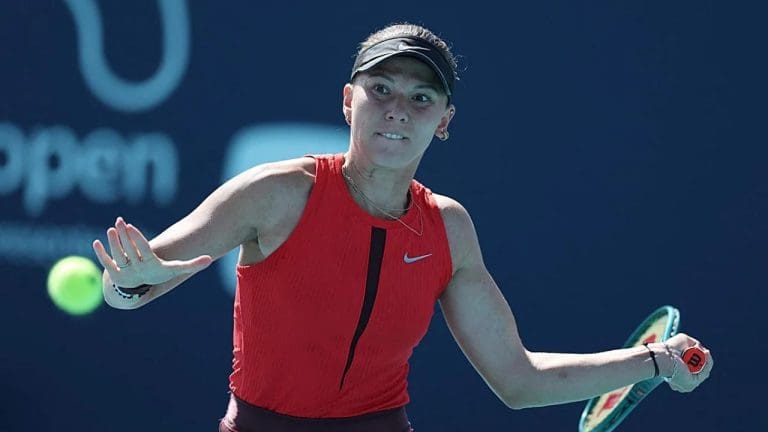
Yulia Putintseva has accumulated $9,557,501 in career prize money over 14 years on the WTA Tour. Her estimated $5 million net worth comes from three WTA singles titles and consistent top-50 performance.
The 2024 season was her most successful financially, earning $1.4 million and securing her third career title.
Her three Grand Slam quarterfinal appearances at the French Open and US Open provided major paydays of $300,000-$500,000 each.
Despite having no Grand Slam titles, her longevity and 452 career match wins demonstrate how steady performers build wealth. Regional sponsorships in Kazakhstan add modest income to her prize money totals.
Putintseva was among the first players to switch nationalities to represent Kazakhstan. Her career proves that mid-tier stars can achieve financial security with proper federation backing.
The cost coverage she received allowed her to maintain a full tournament schedule without debt.
Why Kazakhstan Produces Tennis Millionaires
Kazakhstan’s tennis wealth stems from billionaire Bulat Utemuratov’s $100 million investment in the sport. As president of the Kazakhstan Tennis Federation, he built 38 tennis centers across the country and funds player development programs.
This backing covers coaching, travel, and training costs that normally consume 70-90% of a player’s prize money.
The “Kazakhstan Model” recruits talented Russian juniors lacking financial resources and offers citizenship plus full support.
This strategy produced a Wimbledon champion and multiple top-20 players from a nation with minimal tennis tradition. Players can focus purely on performance while the federation handles expenses.
Kazakhstan hosts the Astana Open ATP 500 event, providing home-court earning opportunities for its stars.
This tournament offers $2.1 million in total prize money with the winner taking $353,000. Domestic tournaments reduce travel costs while generating substantial income that players from other Central Asian nations can’t access.
FAQs
Who is Kazakhstan’s richest tennis player?
Elena Rybakina is Kazakhstan’s richest tennis player with an estimated $15 million net worth from over $22 million in career prize money. Her 2022 Wimbledon title and 2025 WTA Finals record payday of $5.235 million drove her wealth to the top.
How much has Alexander Bublik earned from tennis?
Alexander Bublik has earned $10,771,942 in career prize money as of late 2025. His estimated net worth is $5 million, earned through eight ATP singles titles and a career-high ranking of world No. 11.
Has a Kazakhstani player ever won a Grand Slam?
Yes, Elena Rybakina won the 2022 Wimbledon singles title, becoming the first player from Kazakhstan to win a Grand Slam. She also reached the 2023 Australian Open final, losing to Aryna Sabalenka.
Why do Kazakhstani tennis players earn more than other Central Asian players?
The Kazakhstan Tennis Federation provides full financial backing for coaching, travel, and training costs. This allows players to keep more prize money compared to self-funded athletes from neighboring countries who spend 70-90% of earnings on expenses.
Who funds Kazakhstan’s tennis program?
Billionaire Bulat Utemuratov, president of the Kazakhstan Tennis Federation, has invested over $100 million in the sport. He built 38 tennis centers and funds player development, allowing Kazakhstan to compete with traditional tennis powerhouses.