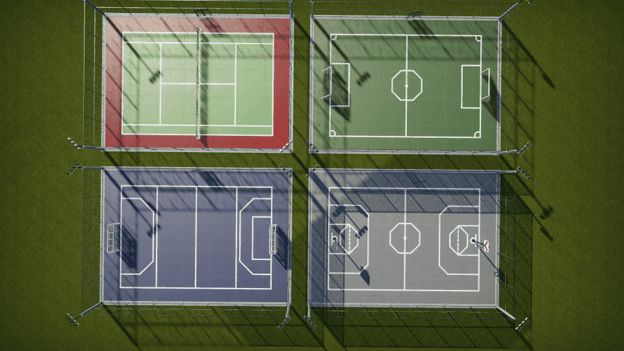
Every time Wimbledon rolls around or a Grand Slam final captivates the globe, the same question echoes through living rooms and sports bars alike: why is tennis scored 15 30 40?
It is one of the great peculiarities of modern sport—a scoring system that appears to defy all mathematical logic, yet has persisted for centuries without any serious challenge. Football has its simple goals, basketball its baskets, but tennis insists on counting points in increments that make no immediate sense.
The answer, as with so many enduring mysteries, lies buried somewhere in the mists of medieval Europe, wrapped in French linguistics, ancient clock faces, and a healthy dose of scholarly disagreement.
For those who follow the sport closely, the idiosyncrasies of the tennis scoring system are part of its charm. But for newcomers, it can feel like an initiation ritual.
Fortunately, understanding the tennis scoring history does not require a degree in medieval studies—just a willingness to embrace a few competing theories and the delightful uncertainty that surrounds them.
And while the origins may be hazy, one thing is certain: the peculiar rhythm of 15, 30, and 40 has given the sport a distinctive identity that even the most sophisticated tennis predictions cannot fully capture, because the game’s scoring has always been as much about tradition as about mathematics.
That unpredictability is precisely what makes the sport so thrilling, yet the numbers themselves remain stubbornly, beautifully illogical.
The Clock Face Theory – The Most Popular Explanation
The most widely circulated explanation for the question why does tennis scoring go 15 30 40 involves a clock face. The theory suggests that in the early days of the game, around the 16th century, large clock faces were used as scoreboards.
Each time a player won a point, the minute hand would be moved a quarter of the way around the clock—first to 15, then to 30, then to 45, and finally to 60 to signal a game win. This is an elegant explanation: four points, four quarters of an hour, a perfect symmetry that feels almost too neat to be coincidence.
Yet this neatness is precisely what makes historians suspicious. The game of tennis—or rather its precursor, jeu de paume—was already being played in the 12th century, centuries before clocks with minute hands became commonplace.
If the scoring system predates the technology supposedly used to display it, the clock face theory starts to look more like a convenient myth than historical fact.
Nevertheless, it remains the explanation most fans encounter first, and it is not entirely without merit: the connection to the number 60—a number that was considered “complete” or “good” in medieval numerology—does lend it some credibility. Still, it fails to explain the most glaring anomaly of all.
The Great Mystery: Why 40 Instead of 45?
Here lies the heart of the puzzle. Even if we accept that early scoring was based on quarters of an hour, the progression should be 15, 30, 45, 60.
Yet modern tennis uses 40. So why is 40 used in tennis instead of 45? This question has spawned several theories, each with its own passionate defenders.
The most linguistically straightforward theory is simplicity itself: in French, “quarante-cinq” (45) has three syllables, while “quarante” (40) has only two. When referees and players were shouting scores across the court, shorter was better.
The “5” was simply dropped over time for the sake of convenience and rhythm. This explanation is so practical that it feels almost anticlimactic, but it has a certain commonsense appeal.
A more elaborate theory involves the introduction of deuce. In tennis, a player must win by two points. If the score were 45-45, the next point would push the clock past 60, breaking the elegant system.
By changing 45 to 40, a tied game could sit at 40-40 (deuce), the advantage point could move the hand to 50, and the winning point would land perfectly on 60. This allowed the clock-face system to accommodate the two-point margin without breaking.
It is a clever workaround, and it explains why is tennis 15 30 40 instead of 45 with a logic that satisfies both mathematicians and historians.
But there is a third theory, one that ties the scoring directly to the physical dimensions of the court itself.
The Jeu de Paume Theory – A French Connection
Many tennis historians believe that the true origin of the scoring system lies not with clocks but with the medieval French game jeu de paume—the palm game that evolved into modern tennis.
In this version of events, the court measured 45 feet on each side of the net. Players would start at the back and move forward with each point they won: 15 feet on the first point, another 15 feet on the second (30 total), and then, because they could not get too close to the net, they moved only 10 more feet—hence 40.
This theory grounds the scoring in the physical reality of the game itself, making it feel more organic and less abstract than the clock-face explanation.
It offers a compelling, ground-level logic to why is tennis scored this way—not as an abstract numerical game, but as a literal measure of movement across the court.
The shift from 45 to 40, in this reading, was not a linguistic shortcut but a practical adjustment based on court geometry. Players advanced 15 feet, then another 15, and then a final 10—and the scoring system simply reflected those movements.
Whether this is historically accurate or another romantic invention is impossible to say with certainty, but it adds a layer of poetic logic that resonates with players who understand the geometry of the game.
Why Is Zero Called Love in Tennis?
No exploration of tennis scoring would be complete without addressing the sport’s most endearing quirk: the use of “love” to mean zero. The question why is zero called love in tennis has a surprisingly charming answer.
The most widely accepted explanation is that it has its roots in the French word for egg—l’oeuf. A zero, after all, resembles an egg, and in sports it is common to refer to a score of zero as a “duck egg” or “goose egg”.
The French l’oeuf sounds similar enough to the English “love” that the term stuck through centuries of cross-Channel sporting exchanges.
There is, however, an alternative theory with a more romantic flavour. Some linguists trace the term to the Dutch and Flemish word “lof,” meaning honour. In this interpretation, a player with no points is still playing for honour—a noble sentiment that elevates the scoreless player from loser to sportsman.
Whether the true origin is culinary or chivalric, the term “love” has become one of tennis’s most distinctive and beloved features, giving even a score of zero a touch of grace.
The Origin of Deuce and Advantage
The terms “deuce” and “advantage” also have French origins. When the score reaches 40-40, it is called deuce, which is believed to come from the French phrase “à deux le jeu”—the game is tied—or simply “deux,” meaning two, because a player needs two consecutive points to win.
The concept of deuce was introduced to ensure that no game could be won by a single point, maintaining the competitive integrity of the sport. The next point after deuce gives a player the “advantage,” and if they win the following point, the game is theirs.
This system has been in place since at least the 16th century, when Antonio Scaino’s Trattato del Giuoco della Palla (1555) codified the rules using the terms a due and vantaggio.
Why Does It Still Matter Today?
The truth is that no one knows for certain why is tennis scoring 15 30 40. As Elizabeth Wilson, author of Love Game: A History of Tennis, put it: “I don’t think anybody really knows how it started or why it developed how it did. There are various theories, all sorts of romantic theories have been built up about it”.
The Encyclopaedia Britannica itself concedes that the system “never has been satisfactorily explained why three points equal 40 rather than 45”. Even modern players like Coco Gauff have questioned the logic, suggesting that the scoring should be simplified to an incremental 1-2-3-4 system.
And yet, the system endures. Perhaps that is the point. Tennis is a sport steeped in tradition, from its all-white dress codes at Wimbledon to its grass courts and its peculiar scoring.
The mystery of 15, 30, 40 is not a flaw to be corrected but a feature to be celebrated—a reminder that some of the best things in life resist easy explanation.
Whether the answer lies with a clock face, a French court, or a linguistic shortcut, the scoring system has given tennis a unique identity that sets it apart from every other sport on the planet. And in an age of increasing uniformity, that is something worth preserving.