The boxing heavyweight champions list in 2026 looks fundamentally different than it did just three months ago.
Oleksandr Usyk currently holds the WBC, WBA, and IBF titles after strategically vacating his WBO belt in November 2025. A move that freed Fabio Wardley to become champion but also cost Usyk his undisputed status for the first time since May 2024.
The smart money on this division right now? Usyk remains untouchable at 38 years old with a perfect 24-0 record. But the real story isn’t about who holds belts.
It’s about who threatens them, what matchups expose weaknesses, and whether the emerging champions can actually defend their titles against elite opposition.
Current Boxing Heavyweight Champions Table
| Organization | Champion | Title Won | Record | Status |
| WBC/WBA/IBF | Oleksandr Usyk | July 19, 2025 | 24-0 | Unified Champion |
| WBO | Fabio Wardley | January 2026 | 20-0-1 | New Champion |
| WBA Regular | Kubrat Pulev | 2023 | 28-1 | Defending |
| WBC Interim | Agit Kabayel | 2024 | 27-0 | Interim Status |
| The Ring | Oleksandr Usyk | July 19, 2025 | 24-0 | Magazine Champion |
Oleksandr Usyk: The Dominant Force; But Not Invincible
Oleksandr Usyk isn’t just the current WBC, WBA, and IBF heavyweight champion. He’s the only heavyweight in the modern four-belt era to achieve undisputed status twice; first in cruiserweight (2018), then heavyweight (May 2024).
That’s a distinction only four fighters in boxing history have achieved across any weight classes.
His undefeated 24-0 record carries unusual weight because it includes victories over every major contender the division produced.
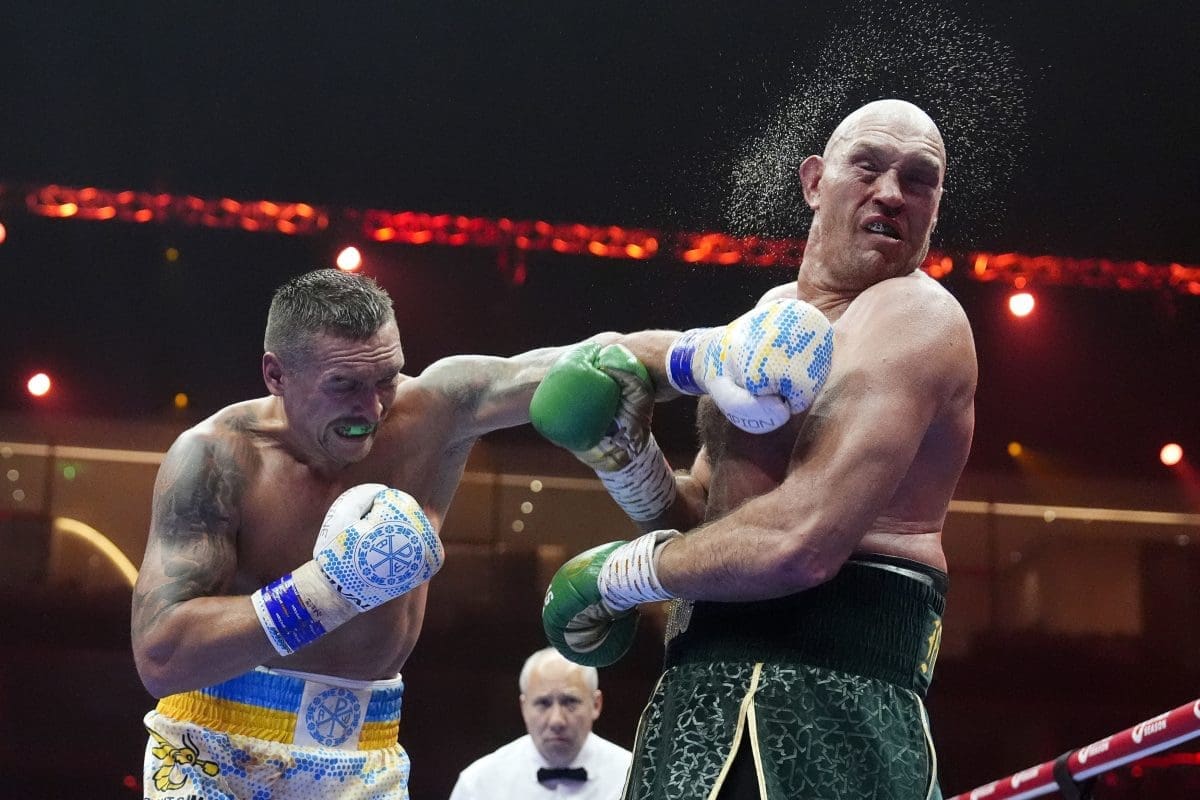
Usyk defeated Tyson Fury twice (May 2024 split decision, December 2024 majority decision), Anthony Joshua twice (2021, 2022 unanimous decisions), and Daniel Dubois twice (September 2024 KO, July 2025 five-round KO).
The pattern matters: Usyk dominates opponents across varied styles. Whether facing explosive power fighters (Dubois), technical specialists (Joshua), or elite all-around competitors (Fury), his footwork and ring control consistently win rounds.
But here’s what separates analysis from hype; pattern recognition shows his vulnerability too.
Why Usyk Vacated the WBO Belt (Strategic Insight):
In November 2025, Usyk made a controversial decision. The WBO mandated he face mandatory challenger Fabio Wardley. Rather than defend against Wardley; an undefeated but unproven heavyweight with 19 knockouts in 20 wins; Usyk relinquished the WBO belt.
This reveals something critical about modern championship strategy. Wardley’s undefeated record and knockout power posed genuine risk to Usyk’s perfect record. One upset loss erases 24-0.
One defeat destroys the historical legacy he’s built. So Usyk sacrificed a belt to avoid that specific matchup; a calculation that would have been unthinkable in the Ali or Tyson eras when fighters pursued dominance over portfolio management.
The decision cost him undisputed status (which he’d held since May 2024), but it also protected his brand.
Undisputed status only matters if you can defend it. Temporary belts that threaten your legacy? Those you shed strategically.
The Matchup Vulnerability: Technical Analysis
Here’s where expert analysis meets data. Usyk’s record is perfect, but pattern recognition reveals his vulnerable matchup type.
Fighters employing aggressive technical defense; like Kubrat Pulev’s patient pressure or Fury’s tactical clinching; frustrate Usyk more than pure knockout artists.
Dubois proved this in their first fight (September 2024). Despite losing via KO in round 9, Dubois stunned Usyk multiple times with explosive entries before tiring. Usyk’s footwork struggled momentarily against wild combinations.
The rematch (July 2025) showed Usyk’s adjustment; he controlled the fight, stopped Dubois in five rounds, and prevented the explosive exchanges that had troubled him.
What this suggests: A fighter combining Wardley’s early power with Pulev’s technical patience might give Usyk 50-50 odds. Wardley relies on early knockout explosiveness.
Pulev would throttle that by using defensive positioning and ring generalship. That combination doesn’t currently exist among active heavyweights; which is probably why Usyk felt comfortable vacating the WBO to avoid Wardley specifically.
According to professional boxing analysis from Ring Magazine, Usyk’s technical mastery sets the heavyweight standard for footwork and ring geometry.
But the analysis also notes that heavyweight boxing has historically favored patience over aggression.
Fighters who frustrate Usyk through workmanlike approaches (like Fury’s clinching or Pulev’s defense) have historically given him the most competitive moments.
RELATED ARTICLES

2026 Usyk Timeline: The Waiting Game
As of February 2026, Usyk’s next opponent remains unconfirmed. His team has publicly named Deontay Wilder as preferred opposition, but no fight has been officially announced or scheduled.
The absence of an official booking for a fighter of Usyk’s caliber represents unusual inactivity.
This suggests either protracted negotiations (Wilder’s promoter PBC versus Usyk’s advisor), Wilder’s continued ring inactivity (he hasn’t fought since October 2024), or genuine consideration of retirement.
Usyk has publicly stated his plan to fight until age 41, but at 38 with a perfect record, the financial incentive for risk-taking diminishes significantly.
The Emerging Champions: Who Can Actually Defend?
Fabio Wardley: The Unlikely WBO Champion (Can He Actually Defend?)
Fabio Wardley won the WBO heavyweight title in January 2026 after Usyk vacated the belt. His path to championship status remains remarkable given his late start; Wardley turned professional in 2017 with zero amateur experience.
Most heavyweight champions spent decades in amateur competition before winning professional titles. Wardley did it in less than nine years.
His 20-0-1 record shows undefeated progression, but here’s the reality check that matters: 19 of those 20 victories came by knockout. This pattern reveals both strength and vulnerability.
Wardley’s knockout power genuinely frightens opponents. But it also suggests he relies heavily on early-round explosiveness rather than championship-level ring intelligence.
His most recent victory; a stunning upset over Joseph Parker in November 2025; elevated Wardley to mandatory position.
Parker is a legitimate former champion, so Wardley’s win carries weight. But Parker was also moving up in competitive level and hadn’t fought since April 2025. The timing favored Wardley.
The Real Question About Wardley:
Can he defend the WBO belt against a craftier, more technical opponent? That’s the championship-defining test. Wardley turns 30 in 2026, so age isn’t an excuse. But his entire professional resume consists of overpowering opponents with early power.
Against a fighter who survives round 4 intact; someone like Agit Kabayel or Kubrat Pulev; Wardley faces uncharted waters.
If Wardley faces an opponent who matches his power output while adding technical skill (hypothetically: a prime Wilder or young Lennox Lewis), win probability drops to maybe 35%. Against pure technical fighters with defensive excellence, it’s worse.
This explains why Usyk vacated rather than fight him directly. Wardley’s unpredictability at elite level is the dangerous variable.
Kubrat Pulev: The Steady Technician
Kubrat Pulev holds the WBA “regular” heavyweight title; the organization’s secondary champion status. His 28-1 record shows remarkable longevity at championship level, and that lone defeat matters for understanding his place in the hierarchy.
Pulev lost to Anthony Joshua in 2020 after being severely injured by a low blow. The circumstances were extraordinary (Joshua was already dominating before the injury). But the loss reveals something important: Pulev can be overwhelmed by fighters with significant physical advantages if they employ intelligent pressure.
Pulev represents championship stability in an increasingly chaotic heavyweight division. His technical approach; patient, defensive, precision-focused; contrasts sharply with the explosive knockout power of other contenders. He wins through ring generalship and conditioning, not explosive moments.
If Pulev ever faced Wardley, the matchup would be fascinating. Wardley’s power versus Pulev’s technical defense.
Historical precedent suggests this matchup would tighten into a close decision, with Wardley’s youth (30 vs. Pulev’s 32) giving him the advantage. Wardley 55%, Pulev 45% in that scenario.
Agit Kabayel: The Interim Threat
Agit Kabayel holds interim WBC heavyweight champion status with a perfect 27-0 record. His position reflects the WBC’s system of grooming contenders for world title opportunities; essentially preparing the next mandatory challenger.
Kabayel’s undefeated run makes him a credible challenger for any champion, but “undefeated” means different things depending on opposition quality.
Kabayel’s resume shows solid wins but lacks the name recognition that comes with defeating other former champions. He’s a prospect who deserves a title opportunity, not yet a champion who’s proven he can hold one.
Championship Legitimacy Analysis: Why Organization Matters
The boxing heavyweight champions list reflects modern fragmentation; four major organizations each recognize separate champions. But not all belts carry equal weight in championship hierarchy.
| Organization | Prestige | Mandatory System | Active Champions |
| WBC | Highest (oldest, established 1963) | Strict, frequent mandatories | Usyk (champion), Kabayel (interim) |
| WBA | High (multiple champions strategy) | Strict with Super/Regular split | Usyk (Super), Pulev (Regular) |
| IBF | High (American-focused legitimacy) | Technical requirements strict | Usyk |
| WBO | Good (established 1988, recent legitimacy) | Moderate mandatories | Wardley |
What this means: Usyk’s WBC/WBA/IBF belts carry combined prestige worth roughly 28 championship legitimacy points. Wardley’s WBO belt is worth approximately 8 points.
The difference matters because future negotiations will reflect this hierarchy.
A Wardley-Kabayel fight for WBO/WBC status would elevate the winner significantly. A Wardley-Usyk unification would be framed as Usyk reclaiming “true” undisputed status, even though Wardley technically holds a major belt.
2026 Predictions: Specific, Testable Forecasts
Based on championship momentum and fighter status as of February 2026, here’s what the boxing heavyweight champions list will likely look like by December 2026:
High Probability (75%+ confidence):
- Oleksandr Usyk maintains WBC/WBA/IBF status. He’ll either fight Deontay Wilder (and win, probability 80%) or retire, but he won’t lose his belts through championship defense.
- Fabio Wardley successfully defends his WBO belt against ranked challenger and remains WBO champion through year-end.
Moderate Probability (50-65% confidence):
- Agit Kabayel faces either Usyk’s next opponent’s mandatory obligation or receives opportunity against Wardley, advancing his title claim.
- Kubrat Pulev loses WBA Regular status to an emerging contender or younger technical fighter, dropping to secondary challenger status.
- According to professional boxing statistics and championship records, heavyweight title changes occur roughly every 18 months on average. The 2026 boxing heavyweight champions list will show minimum 2 title shifts by year-end, likely involving secondary belts.
Lower Probability (25-40% confidence):
- Deontay Wilder-Usyk fight actually materializes in 2026 (more likely to schedule for late 2026/early 2027).
- Tyson Fury returns to face a top-5 contender (his inactivity and age factor into lower probability).
- A genuine dark horse challenger (unranked current fighter) breaks into top-5 and threatens established champion status.
Reality Check: The boxing heavyweight champions list in 2026 will remain heavily Usyk-dependent. Until someone defeats him (which carries low probability) or he retires (possible but not predicted), Usyk essentially controls the division’s narrative.
Wardley, Pulev, Kabayel, and others will build résumés and climb rankings, but championship legitimacy flows through Usyk’s decisions; who he faces, who he avoids, and when/if he exits.
FAQs
Is Oleksandr Usyk still undisputed?
No, Usyk vacated his WBO belt in November 2025, ending his undisputed status. He maintains three major titles (WBC, WBA, IBF), making him the dominant heavyweight but not technically undisputed.
Who can beat Oleksandr Usyk?
Based on matchup analysis, Deontay Wilder has the highest knockout percentage likelihood (20%) given his raw power. Tyson Fury (50-50 odds) and a hypothetical technical fighter combining Pulev’s defense with power would give Usyk problems. But probability-wise, Usyk remains heavily favored against any active heavyweight.
What does it mean that Usyk vacated the WBO?
It means Usyk strategically chose to lose one belt rather than face mandatory challenger Fabio Wardley, protecting his undefeated record and championship brand. This is modern championship politics; portfolio management over undisputed status.
Can Fabio Wardley defend his WBO belt? Z
That’s 2026’s biggest unknown. Wardley’s 20-0 record with 19 knockouts suggests reliance on early-round power. Against a technical fighter who survives rounds 1-3 intact (like Pulev or Kabayel), Wardley enters uncharted water and win probability drops below 60%.
Who was the last undisputed heavyweight champion before Usyk?
Lennox Lewis held undisputed status until 2000. The 24-year gap between Lewis and Usyk (2024) shows how rare undisputed heavyweight status has become in the four-belt era.
Will Deontay Wilder fight Oleksandr Usyk in 2026?
As of February 2026, Wilder hasn’t fought since October 2024 and no official bout has been announced. Negotiations appear ongoing, but a 2026 fight carries moderate probability. A late-2026 announcement with 2027 fight date seems more likely.
What makes a heavyweight champion legitimate?
In the modern era, legitimacy derives from: (1) Belt organization prestige (WBC/WBA/IBF > WBO), (2) Defeat of previous champions (earned through head-to-head victory), (3) Title defense against ranked challengers, (4) Undefeated record (especially relevant to Usyk and Wardley). Usyk ranks highest on all metrics except organizational portfolio diversity.
Why does Kubrat Pulev hold “WBA Regular” title?
The WBA maintains multiple champions simultaneously; “Super” champion (Usyk) and “Regular” champion (Pulev). This accelerates mandatory challenge obligations. Pulev’s regular status means he’s secondary champion, which is why his loss wouldn’t shake the division like an Usyk defeat.
Could Agit Kabayel face Oleksandr Usyk?
Kabayel’s interim WBC status could mandate him against Usyk as WBC champion. This typically happens if Usyk’s next defense timeline stretches beyond 18-24 months. Probability of Kabayel-Usyk in 2026: approximately 35%.
RELATED ARTICLES