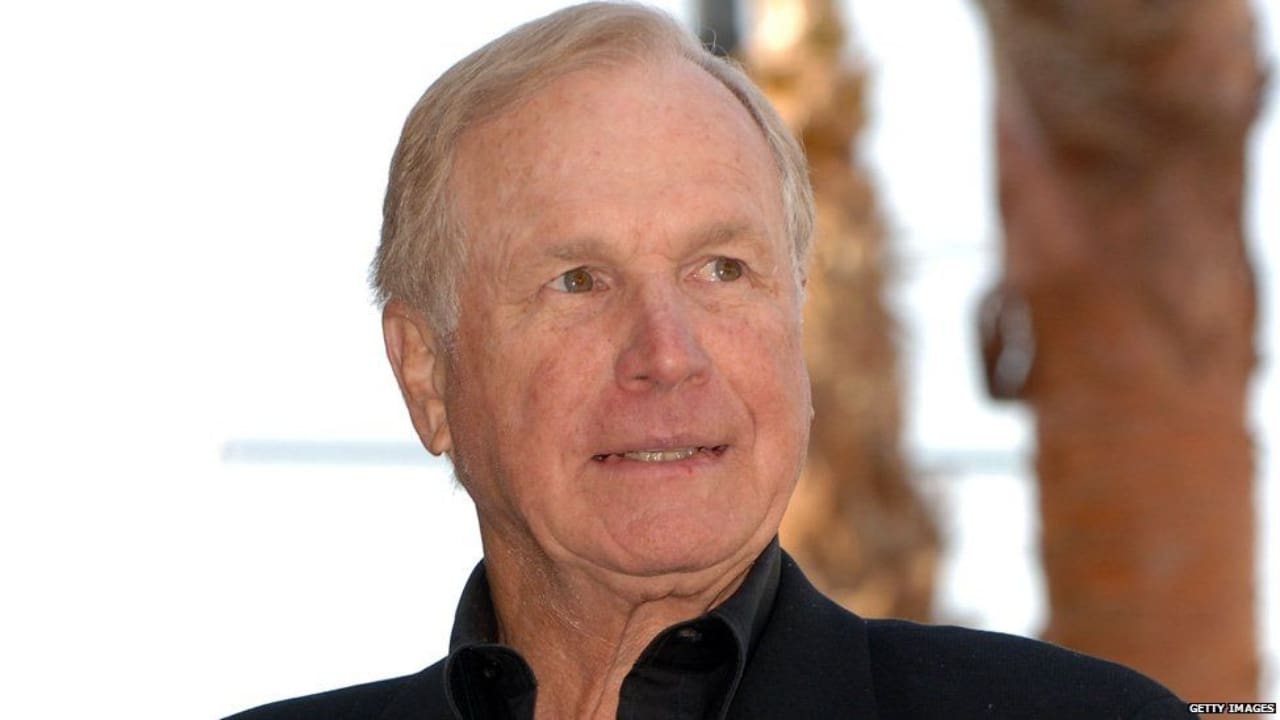
Wayne Rogers became famous as Trapper John McIntyre on M*A*S*H, but his second career in investing and financial commentary made his professional story far broader than a three-season television role.
Rogers died on December 31, 2015, at age 82. In 2026, he is remembered as both a major television actor and an unusually serious Hollywood investor.
Wayne Rogers Biography
| Field | Details |
|---|---|
| Full Name | Wayne McMillan Rogers III |
| Date of Birth | April 7, 1933 |
| Date of Death | December 31, 2015 |
| Age at Death | 82 |
| Birthplace | Birmingham, Alabama, USA |
| Profession | Actor, investor and financial commentator |
| Known For | Trapper John McIntyre on M*A*S*H |
| Education | Princeton University |
| Spouse | Amy Hirsh Rogers |
Wayne Rogers Net Worth Details
Wayne Rogers had an estimated net worth of approximately $75 million at the time of his death on December 31, 2015.
While his acting career — particularly his three seasons on MASH — gave him early financial traction, the bulk of his fortune came from decades of shrewd investing, business ownership, and his role as a recognized financial commentator.
Rogers was genuinely unusual in Hollywood: a Princeton-educated actor who took money management as seriously as any role he ever played. He built wealth across multiple industries long after his acting career had peaked, making his overall financial story one of the most impressive in TV history.
From Princeton to Acting
Rogers graduated from Princeton University with a history degree before serving in the U.S. Navy and eventually pursuing acting.
His background gave him an unusual combination of formal education, military experience, and entertainment work before financial investing became a major part of his professional identity.
He built credits in television and film during the 1960s, including the western series Stagecoach West, before landing the role that would make him nationally famous.
That steady pre-M*A*S*H career is important because Rogers was already an experienced working actor before the medical comedy became a cultural phenomenon.
M*A*S*H and Trapper John
Rogers joined CBS’s M*A*S*H at its 1972 launch as Captain “Trapper” John McIntyre opposite Alan Alda’s Hawkeye Pierce.
Their partnership became central to the show’s early seasons, combining irreverent comedy with the anti-war and medical drama that distinguished the series.
Rogers appeared through the first three seasons before leaving amid contractual and creative disagreements.
The Los Angeles Times obituary described both his acting career and the investment work that increasingly occupied him later in life.
Life After M*A*S*H
Leaving one of television’s most successful series did not end Rogers’ acting career.
He later starred as Dr. Charley Michaels in the CBS comedy House Calls, which ran from 1979 to 1982 and earned him another substantial television role.
Rogers continued appearing in television movies and series afterward, but he gradually became less dependent on acting as his primary professional identity.
That shift separates his financial story from actors whose later wealth remained tied almost entirely to residuals and new screen roles.
Investing and Business Career
Rogers became known in Hollywood for taking investing seriously and managing money with a level of involvement unusual for an actor.
He developed business interests in securities and real estate and was repeatedly described as an investor and money manager rather than merely a celebrity with a passive portfolio.
His financial expertise became public enough that he testified before the U.S. House Judiciary Committee in 1988 and 1990 on banking-law issues, including Glass-Steagall.
Those appearances support the view that his finance career had developed into a genuine second profession rather than a promotional side project.
Cashin’ In and Financial Television
Rogers later became a familiar financial commentator through the Fox News program Cashin’ In.
The older draft incorrectly identified the show as a Fox Business Network program. Cashin’ In was part of Fox News’ weekend business programming.
Rogers brought an unusual mix of television ease and practical investment experience to the panel, discussing markets, stocks, real estate, government policy, and economic issues.
His media work reinforced the public identity he had developed outside acting: someone whose financial opinions were expected to stand on their own rather than trade only on celebrity status.
Real Estate and Private Investments
Rogers was widely reported to have invested in real estate and other businesses over many years.
However, public obituaries and profiles do not provide an audited breakdown of his portfolio, asset allocations, investment-firm income, or property values.
That means individual holdings should not be reverse-engineered from generic real-estate assumptions or presented as confirmed portions of his estate.
The defensible conclusion is that investing and business became major sources of his wealth after acting established his early career.
Death and Legacy
Rogers died in Los Angeles on December 31, 2015, from complications of pneumonia.
He was survived by his wife Amy, his children Bill and Laura, and grandchildren, according to contemporary obituary reporting.
His legacy remains unusual because two very different audiences remember him for different reasons: television viewers for Trapper John and financial viewers for years of investment commentary.
For another actor closely associated with M*A*S*H whose career continued well beyond the series, readers can explore our Mike Farrell profile.
FAQs
When did Wayne Rogers die?
Rogers died on December 31, 2015, at age 82 from complications of pneumonia.
Why did Wayne Rogers leave M*A*S*H?
He left after the first three seasons amid contractual and creative disagreements as the series increasingly centered on Alan Alda’s Hawkeye Pierce.
Was Wayne Rogers really an investor?
Yes. Rogers built a serious second career in investing and business and later became a regular financial commentator on Fox News’ Cashin’ In.
Did Wayne Rogers work on Fox Business Network?
His well-known financial panel role was on Cashin’ In, which aired as part of Fox News’ business programming rather than Fox Business Network.