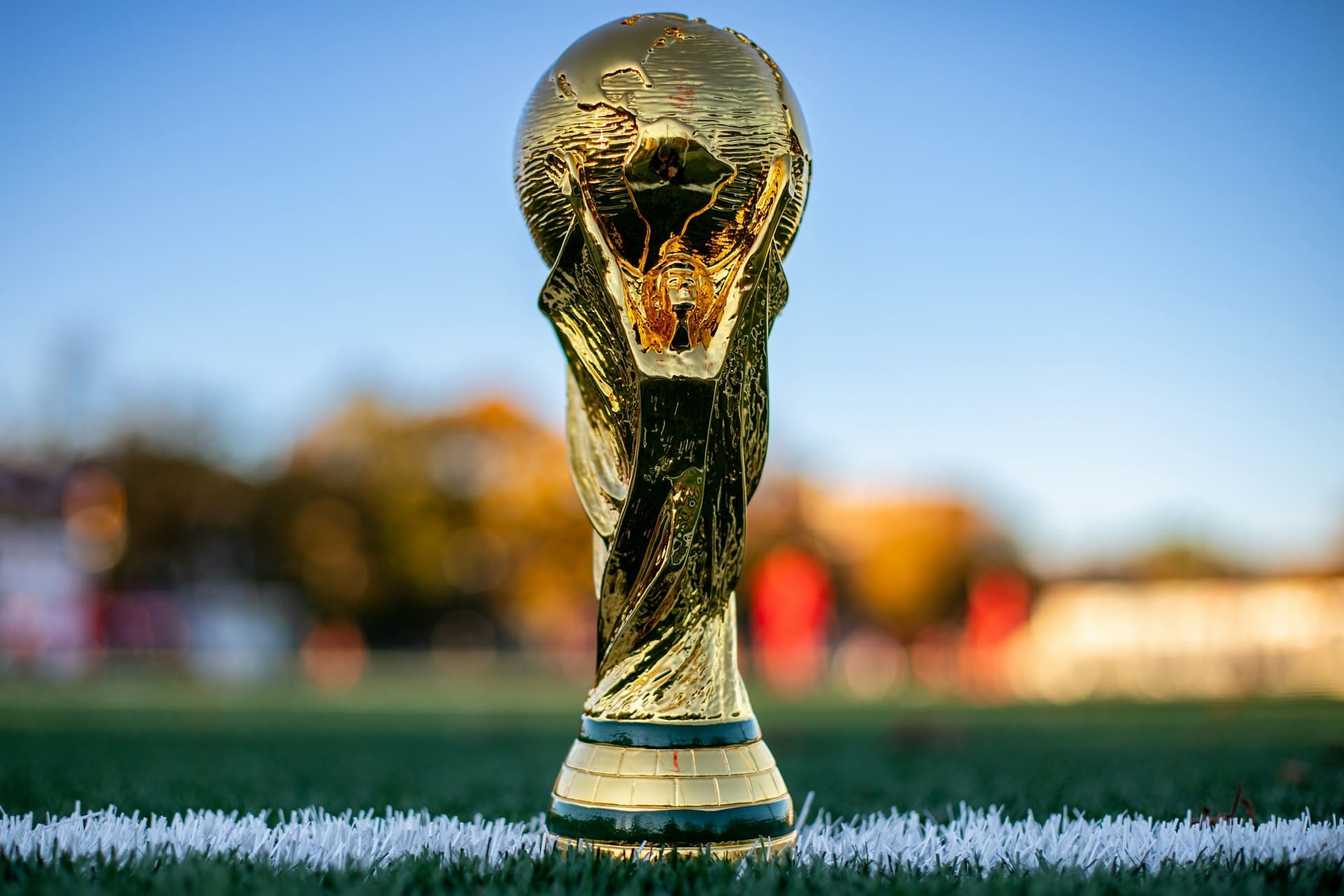
Every World Cup crowns a champion, but it also often provides a surprise story that captures global attention.
As the FIFA World Cup 2026 approaches, to be played across the United States, Canada, and Mexico, the expanded 48-team format opens the door wider than ever for ambitious challengers.
Traditional giants still dominate the headlines, yet history shows that momentum, belief, and tactical clarity often outweigh reputation.
The modern tournament rewards depth, adaptability, and mental resilience. With more matches and diverse venues across North America, preparation matters as much as pedigree.
Several nations enter this cycle underestimated but quietly equipped for a breakthrough. The following five teams carry the structure, talent, and identity to disrupt expectations and redefine the narrative of the FIFA World Cup 2026.
Serbia: The Perennial Giant Killers
Serbia consistently arrives at major tournaments carrying the weight of unrealized potential. Despite boasting a golden generation over the past decade, they have struggled to convert talent into knockout-stage success.
Their physical style unsettles opponents, yet previous campaigns ended in frustration and narrow exits that reinforce a reputation for underperformance.
The difference during the FIFA World Cup 2026 may lie in the evolution of their attack. Dušan Vlahović leads a fully mature front line, while Sergej Milinković-Savić provides creativity and a late-arriving threat from midfield.
This combination delivers a balance between power, experience, and intelligence. The expanded structure of the 2026 FIFA World Cup offers Serbia a greater margin for error in the group stage, allowing its rhythm to build.
Their true edge comes from set pieces. Serbia dominates aerially and punishes defensive lapses from dead-ball situations. On larger North American pitches, their size and efficiency could overwhelm technically polished but physically less robust opponents.
United States: The Rising Host Nation
Hosting creates opportunity, but it doesn’t guarantee success. The United States has reached the knockout rounds in past tournaments, yet has fallen short of a defining run. Home advantage alone can’t compensate for tactical gaps or inexperience at decisive moments.
That dynamic shifts as the FIFA World Cup 2026 approaches. Christian Pulisic, Weston McKennie, and Tyler Adams enter their prime years with extensive European experience.
The squad depth surpasses any previous U.S. outfit, with rotation options capable of maintaining tempo across multiple matches. The collective maturity of this group changes the ceiling.
The X-factor is a combination of draw positioning and atmosphere. Recent soccer narratives have noted that, as hosts of the 2026 FIFA World Cup, the US likely benefits from favorable early fixtures.
Their high-pressure, energetic style thrives in intense stadium environments. A unified nation and confident squad could finally push the team beyond the Round of 16 and into genuine contention.
Morocco: Building on a Historic Run
Morocco reshapes global perception with a stunning semi-final appearance in 2022, becoming the first African nation to reach that stage.
In 2026, they no longer surprise anyone. Expectation replaces anonymity, and opponents prepare specifically for their disciplined structure.
Yet their previous run establishes a foundation rather than a fluke. Achraf Hakimi and Sofyan Amrabat anchor a core that understands the pressure of tournament play.
Manager Walid Regragui instils tactical discipline and defensive resilience, which remain hallmarks of this team. Their structure absorbs pressure and strikes with precision on transitions.
Support amplifies their threat. The expanded diaspora across North America ensures vocal backing throughout the FIFA World Cup 2026. Belief now drives performance.
Morocco enters the competition convinced they belong among elite contenders, making them a nightmare matchup for technically superior but mentally fragile opponents in knockout scenarios.
Ecuador: The Altitude Advantage, Refined
Ecuador traditionally relies on the punishing altitude of Quito to dominate qualification campaigns.
At neutral venues, that natural edge disappears, contributing to inconsistent World Cup performances. Physical intensity alone is not enough to carry them deep into global tournaments.
This generation evolves beyond that stereotype ahead of the FIFA World Cup 2026. Kendry Páez and Moisés Caicedo symbolize a technical leap forward, thriving in elite European environments.
Ecuador now blends aggression with composure, shifting toward possession control and structured pressing rather than pure physicality.
While altitude vanishes, acclimatization remains an asset. Many players feel comfortable across the Americas, reducing environmental shock.
Their high-tempo, relentless pressing style suits the heat and travel demands of a North American summer.
Against European sides less accustomed to such conditions, Ecuador’s fitness and tactical energy could prove decisive in tight matches.
Ukraine: A Nation’s Spirit and Technical Class
Ukraine confronts extraordinary challenges both on and off the pitch. Qualification alone represents resilience and unity.
Many observers view them as participants rather than contenders, assuming emotional narratives overshadow competitive potential.
That assumption underestimates their technical core. Oleksandr Zinchenko brings tactical intelligence and positional versatility, while Mykhailo Mudryk injects unpredictability in wide areas.
The backbone of Shakhtar Donetsk fosters cohesion forged under adversity. Shared experience strengthens tactical understanding and collective discipline.
Emotion becomes their ultimate advantage at the FIFA World Cup 2026. Ukraine competes for more than progression; they represent national pride and perseverance. That intangible motivation can galvanize performances beyond statistical projections.
In a knockout match decided by fine margins, belief and unity sometimes outweigh raw talent, positioning Ukraine as a dangerous dark horse capable of heroic moments.
Why the Unexpected Shapes Great World Cups
The FIFA World Cup 2026 promises spectacle across North America, but its defining story may come from outside the traditional elite.
Serbia’s physical dominance, America’s prime-era confidence, Morocco’s hardened belief, Ecuador’s technical evolution, and Ukraine’s emotional unity all present credible paths to disruption.
The expanded format increases volatility and opportunity. One disciplined defensive display, one explosive counterattack, or one inspired home performance can quickly rewrite brackets.
Dark horses thrive in precisely these conditions. As fans prepare for kickoff, it would be wise to remember that global tournaments reward courage and cohesion as much as star power.
When the FIFA World Cup 2026 unfolds, expect at least one of these challengers to seize the moment and shock the world.