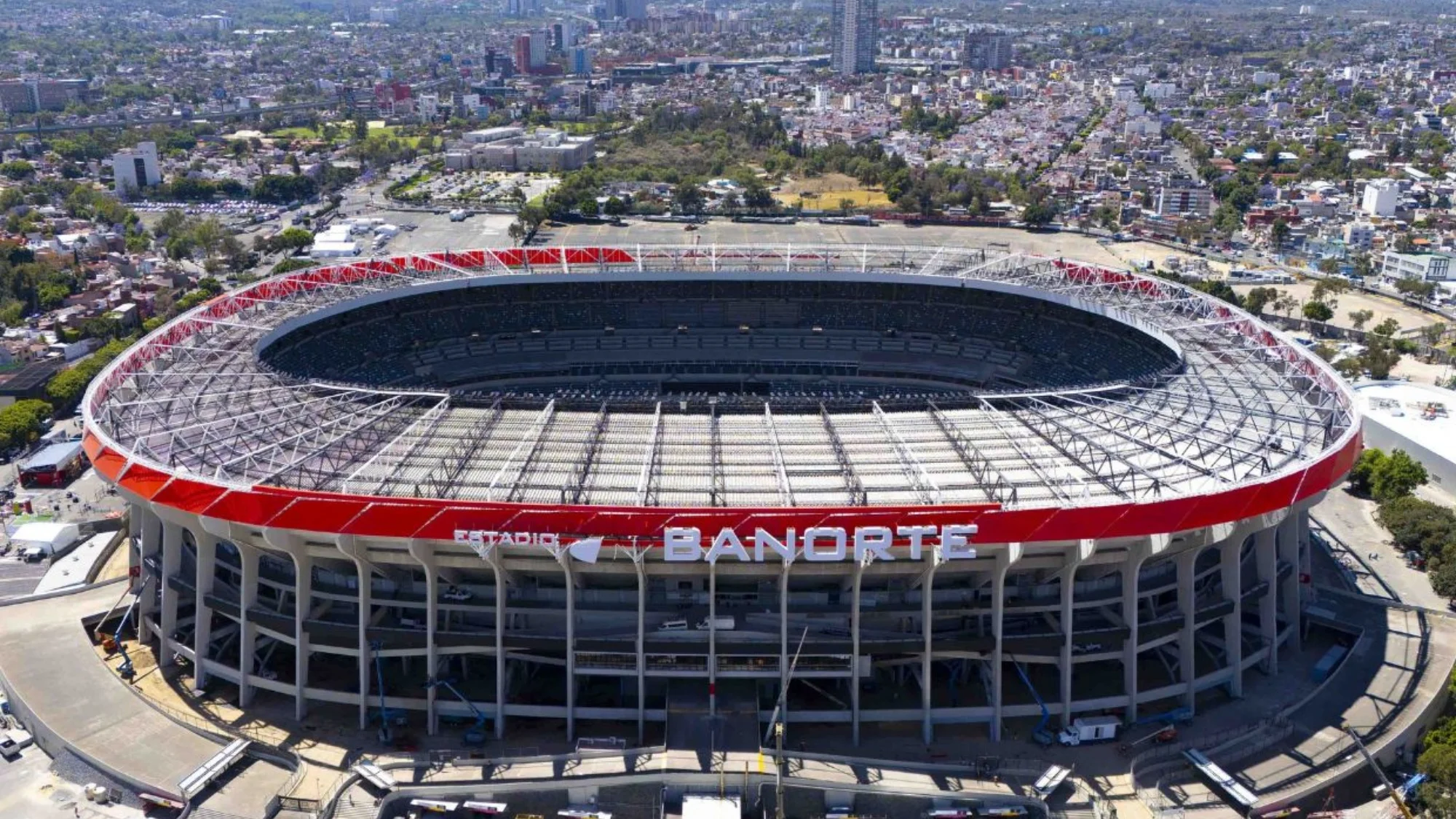
Getting to one of the world’s most legendary football stadiums doesn’t have to be complicated.
Estadio Azteca sits in southern Mexico City’s Coyoacán borough, and the city runs multiple public transport options that drop you right at the gates.
With the 2026 World Cup opening match scheduled here, Mexico City authorities have expanded service hours and added special routes to handle the expected crowds.
Here are your main transportation options:
- Metro Line 2 + Tren Ligero (most popular)
- Direct bus routes
- Metrobús connections
- Uber and rideshare services
- Licensed taxis
- Private vehicle (limited parking)
Most visitors combine metro with the Tren Ligero since it delivers you closest to the entrance, but each option works depending on where you’re starting and how much you want to spend.
Metro and Tren Ligero (Light Rail)
The most efficient route combines Metro Line 2 with the Tren Ligero light rail system. Start by taking Metro Line 2, the blue line that runs from Cuatro Caminos in the north to Tasqueña in the south.
Once you reach Tasqueña station, transfer to the Tren Ligero heading toward Xochimilco and exit at Estadio Azteca station.
Total travel time from downtown Mexico City runs 45-60 minutes. The metro portion costs around 5 pesos, and the Tren Ligero adds another 3 pesos.
You’ll need a mobility card that works across Metro, Metrobús, Tren Ligero, and other city transit systems.
The Estadio Azteca station sits just 5 minutes walking distance from the main entrance. For major events, the city extends service hours until 1:00 AM to help crowds get home after matches.
One warning about this route: Tasqueña station gets packed on game days. Arrive early and follow the crowd flow, which naturally moves toward the Tren Ligero platform.
Bus Routes
Multiple bus routes run along Calzada de Tlalpan and Periférico Sur, dropping passengers within a few blocks of the stadium.
Key routes include buses 105, 24B, 9, and various numbered “Ruta” services.
From Universidad station on Metro Line 3, you can catch direct buses to Estadio Azteca for 6-8 pesos.
The ride takes about 30 minutes, though you might need to walk a bit more than with the Tren Ligero option.
The city also runs special trolleybus routes from major transit hubs during big events. Check the stadium’s event page before traveling, as authorities often add temporary express buses on match days.
Buses work well if you’re coming from neighborhoods not directly served by Metro Line 2, but expect standing room only when the stadium fills up.
Metrobús Line 1
Metrobús Line 1 runs north-south through the city, with Perisur and Villa Olímpica stations closest to Estadio Azteca. Neither station delivers you to the stadium entrance directly.
From Perisur station, you’re looking at a 7-10 minute taxi ride or you can catch a connecting bus. Villa Olímpica works similarly, requiring either a taxi or local bus to complete the journey.
This option makes sense if you’re staying in neighborhoods along the Metrobús corridor and don’t want to backtrack to catch Metro Line 2.
The Metrobús itself is fast and reliable, but you’ll need that second connection to actually reach the stadium.
Uber and Rideshare Services
Uber, Didi, and other rideshare apps operate throughout Mexico City. From central neighborhoods like Roma or Condesa, expect 90 minutes of travel time on match days due to traffic.
During off-peak hours, the ride from Universidad station runs about 10 minutes and costs around 45 pesos.
Designated drop-off and pickup zones operate near the stadium. Look for marked areas around Santa Úrsula and Avenida del Imán near gates 3 and 8.
The catch with rideshare: prices spike dramatically during peak hours and major events. What costs 45 pesos normally might jump to 150-200 pesos when 80,000 fans are trying to leave at once.
If you’re traveling in a group of 3-4 people, splitting an Uber can compete with public transit costs while offering door-to-door convenience. Solo travelers save more with metro.
Taxis
Licensed taxis operate throughout the stadium area. You’ll find taxi stands near Perisur and Villa Olímpica Metrobús stations, as well as around Tasqueña.
Some drivers have a reputation for overcharging tourists and out-of-town visitors heading to the stadium.
Agree on the fare before getting in, or insist the driver uses the meter. A fair price from Tasqueña to the stadium shouldn’t exceed 60-80 pesos.
For safety and price transparency, many visitors prefer official sitio taxis (taxi stands) over street hails. The sitio taxis charge set rates and provide receipts.
Driving and Parking
Stadium parking opens four hours before events and costs around 120 pesos for cars, 360 pesos for minibuses, and 480 pesos for buses.
Parking demand near the stadium is expected to jump 40% during the 2026 World Cup.
| Vehicle Type | Parking Cost |
| Cars/Motorcycles | 120 pesos |
| Minibuses | 360 pesos |
| Buses | 480 pesos |
Key approach roads include Calzada de Tlalpan, Acoxpa, Periférico, and Circuito Azteca. On game days, traffic gets brutal and exiting the lots after events can take over an hour.
For the stadium’s March 2026 reopening match, authorities announced no public parking would be available, directing all fans to use public transportation or remote parking lots.
The city is setting up remote parking areas in different parts of Mexico City with shuttle connections to the stadium.
If you must drive, arrive 3-4 hours early to secure a spot and build in significant time for post-match exit delays.
Transportation Options Comparison
| Option | Cost | Travel Time | Best For |
| Metro + Tren Ligero | 8 pesos | 45-60 min from downtown | Budget travelers, avoiding traffic |
| Bus from Universidad | 6-8 pesos | 30 min + walking | South side residents |
| Metrobús + connection | 6-10 pesos | 40-50 min | Metrobús corridor residents |
| Uber/rideshare (off-peak) | 45-80 pesos | 30-40 min | Small groups, convenience |
| Uber/rideshare (peak) | 150-250 pesos | 60-90 min | Groups willing to pay premium |
| Taxi | 60-150 pesos | 30-60 min | Direct routes, 2-3 people |
| Private car | 120 pesos parking | Varies (traffic-dependent) | Early arrivals, suburban visitors |
Which Transportation Option Works Best?
Metro Line 2 to Tasqueña, then Tren Ligero to Estadio Azteca station wins for most visitors. It’s cheap at 8 pesos total, avoids traffic completely, and drops you closest to the entrance.
Buses from Universidad work if you’re coming from the south and want to save the Tasqueña transfer. They cost slightly more but still budget-friendly.
Uber or taxi makes sense for groups of 3-4 people, late-night returns after extended service hours end, or if you’re carrying bags and want door-to-door service. Just expect higher costs during events.
Driving only makes sense if you’re coming from outside Mexico City and can arrive very early. Otherwise, the parking hassle and traffic delays make public transit the smarter choice.
FAQs
How far is Estadio Azteca from Mexico City International Airport?
The airport sits about 25 kilometers from Estadio Azteca. Take the Metrobús from either airport terminal, transfer to Metro, then catch the Tren Ligero. Total journey runs 90-120 minutes depending on connections.
Can I use the same card for metro, Tren Ligero, and Metrobús?
Yes. The integrated mobility card works across Metro, Metrobús, Tren Ligero, Cablebús, Trolebús, and RTP bus systems. Buy one card and reload it as needed.
What time should I leave to reach the stadium for a match?
Plan to arrive at least 2-3 hours before kickoff. Gates open hours before events, and you’ll need time for security screening, finding your seat, and beating the worst of the crowd surge.
Is it safe to use public transportation to Estadio Azteca?
Mexico City’s metro system is used by millions daily and is generally safe. Standard precautions apply: watch your belongings, avoid displaying expensive items, and stay aware of your surroundings. Travel in groups when possible, especially for late-night returns.
Where exactly is the Tren Ligero platform at Tasqueña station?
Follow signs for “Tren Ligero” or “Xochimilco” after exiting Metro Line 2 at Tasqueña. The transfer is well-marked and you’ll see crowds heading that direction on match days.