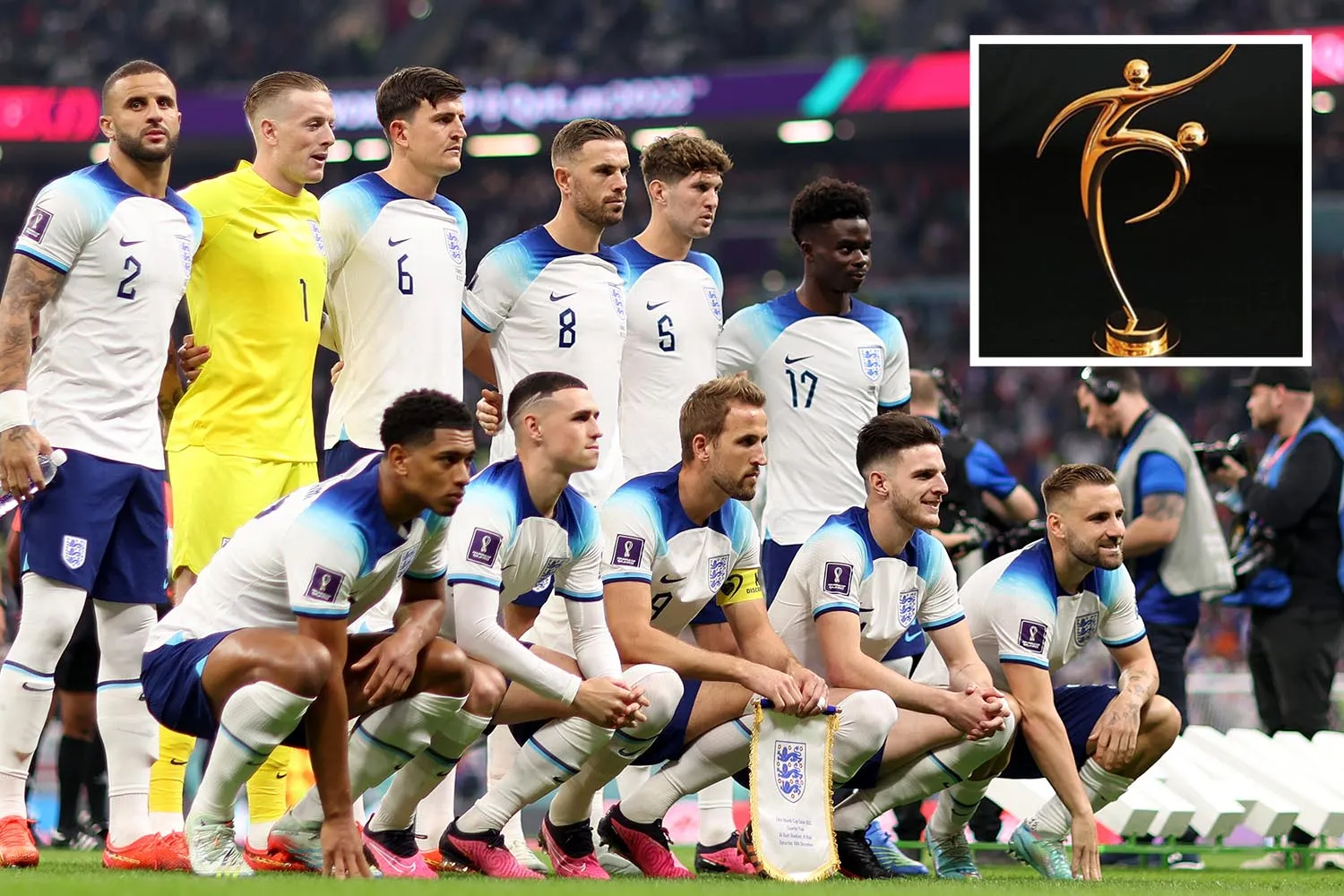
Football rewards more than winning. The FIFA Fair Play Trophy honors the team that competes with the most respect for the rules, the referee, and the spirit of the game. It has been part of the World Cup since 1970.
That year, Peru made history by winning the inaugural award without a single yellow or red card across the entire tournament. No team has repeated that feat in over 50 years.
Across 14 World Cups, 17 trophies have been handed out, including two shared awards. Brazil leads all nations with four wins, while Spain and England have each won three.
Complete List of Winners (1970–2022)
Only teams that advance past the group stage are eligible. A panel of FIFA officials evaluates candidates using a weighted voting system: first choice earns 5 points, second choice 3 points, and third choice 1 point.
Card totals carry the most weight, but sportsmanship on and off the pitch also factors in.
| Year | Host Country | Winner(s) | Tournament Result | Notable Detail |
| 2022 | Qatar | England | Quarter-finals | Just 1 yellow card total |
| 2018 | Russia | Spain | Round of 16 | Clean record despite mid-tournament coaching change |
| 2014 | Brazil | Colombia | Quarter-finals | 5 yellows, 0 reds; James Rodríguez won Golden Boot |
| 2010 | South Africa | Spain | Champions | Won World Cup and Fair Play in the same tournament |
| 2006 | Germany | Brazil and Spain (shared) | QF / Round of 16 | Tournament saw 28 red cards overall |
| 2002 | South Korea/Japan | Belgium | Round of 16 | Consistent clean record throughout |
| 1998 | France | England and France (shared) | R16 / Champions | France won despite 3 red cards |
| 1994 | United States | Brazil | Champions | Fourth Fair Play win alongside fourth World Cup title |
| 1990 | Italy | England | Fourth place | 6 yellow cards total |
| 1986 | Mexico | Brazil | Quarter-finals | Part of a three-tournament winning streak |
| 1982 | Spain | Brazil | Second group stage | First year a physical trophy was awarded |
| 1978 | Argentina | Argentina | Champions | Host nation wins both the World Cup and Fair Play Trophy |
| 1974 | West Germany | West Germany | Champions | Only 3 yellow cards across the whole tournament |
| 1970 | Mexico | Peru | Quarter-finals | Zero yellows, zero reds — never matched since |
Three host nations, West Germany, Argentina, and Spain, each won both the World Cup and Fair Play Trophy in the same year.
Brazil’s four wins across three decades remain the all-time record.
How the Award Is Decided
Beyond card totals, FIFA evaluators look at how teams treat referees and opponents, bench conduct, and overall behavior throughout the tournament.
Sportsmanship shown off the pitch can also influence the panel’s decision.
Winners receive the following:
- The FIFA Fair Play Trophy
- A diploma
- Fair play medals for every player and official
- $50,000 worth of football equipment for youth development in the winning nation
Trophy Design Through the Years
The award has gone through three phases. From 1970 to 1978, winners received only a certificate.
FIFA introduced the Sport Billy trophy in 1982, a golden figure based on a German cartoon character created in 1977 who served as FIFA’s official fair play mascot. That design ran through 1990.
In 1994, FIFA replaced it with the modern elegant footballer figure still in use today, with Brazil being the first recipient when they won the World Cup that year.
Brazil’s Four Wins
No nation has won the World Cup Fair Play Award more times than Brazil. Their wins in 1982, 1986, 1994, and 2006 span three different decades.
The 1994 win was the most complete, as they lifted both the World Cup and the Fair Play Trophy in the same tournament.
The contrast in their overall record makes those wins even more notable. Brazil holds the record for the most red card dismissals of any nation across all World Cups with 11 in total.
Yet in each of their four winning years, their in-tournament discipline was the best of any team.
According to FIFA’s official award records, their technical, possession-based style naturally reduces the need for cynical fouls.
England and Spain: Three Wins Each
England’s three wins came in 1990, 1998, and 2022. The 2022 performance in Qatar was the most impressive, as the squad received just one yellow card across five matches.
That booking went to Harry Maguire in the 90th minute against France. It is the cleanest record of any winner since Peru in 1970.
Spain’s three wins all came between 2006 and 2018, making them the most consistent Fair Play nation of the modern era. Their 2010 win in South Africa was the most significant.
By winning both the World Cup and the Fair Play Trophy, they became only the third nation to achieve that double, after West Germany in 1974 and Argentina in 1978.
Across their entire World Cup history, Spain has received just one red card in 67 matches.
Historic Moments That Defined the Award
Peru’s 1970 record remains the most remarkable in Fair Play history.
They played the entire tournament without a single card of any kind and lost 4-2 to eventual champions Brazil in the quarter-finals. No team has come close to matching that standard since.
The 1998 award is the most debated. France shared it with England despite collecting three red cards during the tournament: Zinedine Zidane against Saudi Arabia, Laurent Blanc in the semi-final, and Marcel Desailly in the final against Brazil.
England’s record was far cleaner, which led many observers to question the consistency of the judging process, particularly with France as the host nation.
The most consequential fair play moment came at the 2018 World Cup in Russia.
Japan and Senegal finished their group with identical records across every tiebreaker. FIFA used the fair play rule for the first time ever to separate them.
Japan’s 4 yellow cards beat Senegal’s 6, and Senegal became the first team in history to be eliminated from a World Cup via fair play tiebreaker.
The moment was also controversial because Japan deliberately ran down the clock in their final group game once they knew the results elsewhere guaranteed their advancement on cards.
Japan: The Cleanest Team Never to Win
Japan has played 25 World Cup matches without receiving a single red card, the cleanest overall record of any nation in tournament history.
Their yellow card average per match is among the lowest of any regular qualifier.
Yet they have never won the Fair Play Trophy. The 2018 tiebreaker showed that clean play carries real consequences even without a trophy to show for it.
Fair Play at the 2026 World Cup
The 2026 FIFA World Cup across the United States, Canada, and Mexico will feature 48 teams and 104 matches, the largest tournament in history.
More games mean more chances for cards to accumulate, making a clean disciplinary record a harder achievement than ever before.
Japan, Spain, and England all arrive as strong contenders based on historical consistency and recent form.
For a full overview of host venues, the Surprise Sports covers every location in detail.
FAQs
Who has won the most World Cup Fair Play Awards?
Brazil has won four times, in 1982, 1986, 1994, and 2006, more than any other nation. England and Spain each follow with three wins apiece.
Has any team won the World Cup and Fair Play Award in the same tournament?
Yes, three times: West Germany in 1974, Argentina in 1978, and Spain in 2010. Spain is the only nation to achieve this double in the modern era.
What does the Fair Play Award winner receive?
Winners receive the FIFA Fair Play Trophy, a diploma, fair play medals for every player and official, and $50,000 worth of football equipment for youth development in the winning nation.
Which team won the World Cup Fair Play Award without receiving any cards?
Peru in 1970 is the only team in World Cup history to win the award with zero yellow and zero red cards across the entire tournament. That record has never been matched.
Has the fair play rule ever decided World Cup qualification?
Yes, at the 2018 World Cup in Russia, Japan advanced over Senegal on the fair play tiebreaker after both teams finished level on every other stat. Japan’s 4 yellow cards beat Senegal’s 6, making it the first time ever a team was eliminated from a World Cup via fair play.