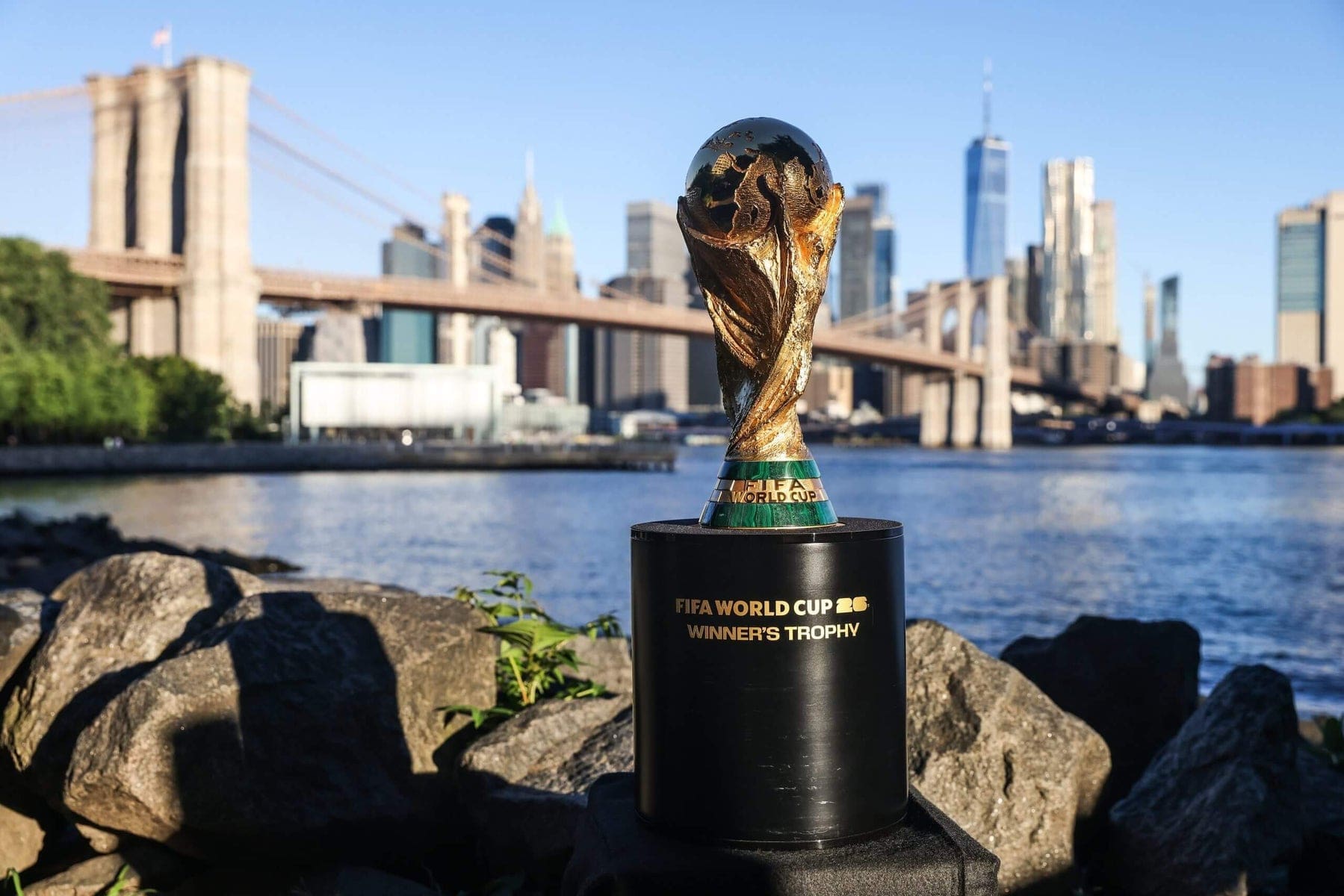
I’ll be honest: when FIFA first announced the 48-team expansion for the 2026 World Cup, I hated it. I thought it would dilute the quality, ruin the group stage tension, and turn the “Greatest Show on Earth” into a bloated marathon.
But after looking at the qualifying cycles and the sheer chaos of the new format, I’ve done a complete 180. We aren’t just getting more football; we’re getting a totally different sport.
If you’re already scanning the world cup 2026 odds to see if France or Brazil can handle the North American summer, you’re missing the bigger picture.
This isn’t just about who lifts the trophy in New Jersey. It’s about the fact that for the first time in history, the “heavyweights” are stepping into a minefield where the traditional map of football has been shredded.
The Logistics of a Continental Circus
Let’s talk about the scale. We’re moving from the compact, air-conditioned stadiums of Qatar to a tournament spread across three time zones and three massive nations.
I remember covering the 1994 World Cup in the States—the heat in Dallas was enough to melt the cleats off your feet. Now, imagine a team playing a group match in the thin air of Mexico City, followed by a knockout round in the damp chill of Vancouver.
This isn’t just a physical test; it’s a tactical nightmare. According to recent reports on FIFA’s $13 billion projections, this will be the most lucrative sporting event in history.
But for the players, it’s a test of survival. The travel alone will create “fatigue upsets” that we’ve never seen before.
Why the “Dark Horse” is Dead (And Something Better Took Its Place)
In previous years, we had one or two “Cinderella stories”—think Morocco in 2022. In 2026, the entire middle class of global football has moved up.
Because of the expanded berths, teams like Uzbekistan, Haiti, and Curaçao aren’t just there to make up the numbers; they are battle-hardened squads with nothing to lose.
The New Tier System
| Category | Teams to Watch | Why? |
| The Elites | France, Argentina | Deep squads that can handle the 8-game grind. |
| The Chaos Agents | Senegal, Japan | High-intensity styles that punish traveling giants. |
| The Debutants | Uzbekistan, Jordan | Unknown quantities with massive tactical discipline. |
I recently watched a clip of Jordan’s qualifying run, and the discipline they showed was terrifying.
If a team like Italy or Germany (provided they’ve fixed their recent identity crises) goes into a match thinking they can coast, they are going to get mauled. The “gap” between the top 10 and the top 50 has effectively evaporated.
The “Testing Experience”: A Reality Check in Mexico City
I wanted to see what the atmospheric shift really felt like, so I spoke with a few scouts who were at the recent CONCACAF qualifiers at the Estadio Azteca.
One scout told me, “I watched a top-tier European midfielder struggle to complete a 10-yard pass by the 70th minute. The ball travels differently, and your lungs just burn.”
The result? Teams that rely on high-pressing, “heavy metal” football might find themselves gasping for air by the Round of 32.
This tournament favors the possession-heavy, economical giants—or the teams that have lived and breathed this climate their whole lives.
The Verdict: Don’t Trust the History Books
The Verdict: “The 2026 World Cup is the ultimate disruptor. It’s too big, too hot, and too spread out for the old guard to dominate through reputation alone.
If you’re looking for a predictable tournament, look elsewhere. This is going to be beautiful, messy, and utterly exhausting.”
As we edge closer to the opening whistle in Mexico City, keep an eye on the travel schedules as much as the team sheets.
The team that wins in 2026 won’t necessarily be the most talented—it’ll be the one that managed their sleep, their hydration, and their travel miles the best.
Gambling involves risk. Please play responsibly and only wager what you can afford to lose. If you feel gambling is becoming a problem, visit BeGambleAware.org or call 1-800-GAMBLER.