The most influential players in World Cup history are more than just great footballers. They are the people who changed the game, inspired countries and created moments that fans still talk about decades later.
From Pele in the 1950s to Kylian Mbappe in 2022, each generation has had a player who stood above the rest.
These stars did not just score goals. They shifted how football is played, how it is watched and how it is remembered.
This guide covers the most influential players in World Cup history, their full records, their biggest moments and their lasting impact on the sport.
Most Influential Players in World Cup History
Below is a quick overview of the ten players covered in this guide, including their key World Cup stats.
| Player | Nation | World Cups | Titles | Goals | Biggest Achievement |
| Pele | Brazil | 4 | 3 | 12 | Only player to win three World Cups |
| Diego Maradona | Argentina | 4 | 1 | 8 | Golden Ball winner in 1986 |
| Lionel Messi | Argentina | 5 | 1 | 13 | Only two time Golden Ball winner |
| Ronaldo Nazario | Brazil | 4 | 2 | 15 | Golden Boot winner in 2002 |
| Miroslav Klose | Germany | 4 | 1 | 16 | All time top World Cup scorer |
| Franz Beckenbauer | West Germany | 3 | 1 | 5 | Won World Cup as player and manager |
| Zinedine Zidane | France | 3 | 1 | 5 | Two goals in 1998 final, Golden Ball 2006 |
| Kylian Mbappe | France | 2 | 1 | 12 | Hat trick in the 2022 final |
| Gerd Muller | West Germany | 2 | 1 | 14 | Golden Boot in 1970, winner in 1974 |
| Garrincha | Brazil | 3 | 2 | 5 | Carried Brazil to the 1962 title |
#1) Pele
No list of the most influential players in World Cup history starts without Pele. He played in four World Cups between 1958 and 1970 and remains the only player ever to win three World Cup titles.
He first appeared in 1958 as a 17 year old. He scored six goals in that tournament, including a hat trick in the semi final against France. By the time Brazil won again in 1970, he was 29 and widely seen as the greatest footballer alive.
Pele scored 12 goals in just 14 World Cup games. His average of more than a goal per game is remarkable even by modern standards.
He combined power, technique, vision and aerial ability in a way that no attacker had done before.
Beyond the numbers, Pele changed what it meant to be a footballer. He made Brazil’s yellow shirt a global symbol. His joy and skill turned the World Cup into an entertainment event, not just a sporting contest.
Football in South America, Africa and Asia grew partly because of how he played in 1958, 1962 and 1970.
#2) Diego Maradona
Diego Maradona did something in 1986 that no other player has fully matched. He almost single handedly won the World Cup for Argentina.
He scored five goals and set up five more in that tournament. He also won the Golden Ball as the best player.
His quarter final goal against England is still called the Goal of the Century. He received the ball in his own half, beat five defenders and the goalkeeper, then finished calmly.
It lasted around 11 seconds. In the same game he also scored with his hand, which added another layer to his complex legacy.
What made Maradona truly influential was his ability to win matches that Argentina had no business winning.
He led an average squad past England, Belgium and West Germany to lift the trophy. His impact on that generation of South American football was enormous.
Many coaches and players who watched the 1986 World Cup grew up trying to imitate Maradona’s low dribbling style, quick turns and sharp passing in tight spaces.
His tournament is still used as a teaching example in football academies around the world.
#3) Lionel Messi
Lionel Messi played in five World Cups between 2006 and 2022. Across those tournaments he scored 13 goals and created more chances and assists than any other Argentine player in World Cup history.
For many years, fans questioned whether Messi could be called a true World Cup legend. He had brilliant club seasons at Barcelona but his World Cup record was mixed.
That changed in 2022 when he led Argentina through one of the most dramatic World Cup campaigns ever.
He scored seven goals in the 2022 tournament, including two in the final against France. Argentina trailed France in extra time and Messi kept the team calm and focused.
He converted in the penalty shootout to win the trophy. He also won his second Golden Ball award, making him the only player in history to do so.
Messi now holds the record for most World Cup appearances, most World Cup assists by an Argentine and most goals by a South American at the tournament.
His influence on younger attacking players is clear, from his low center of gravity movement to his precise passing and composed penalty taking.
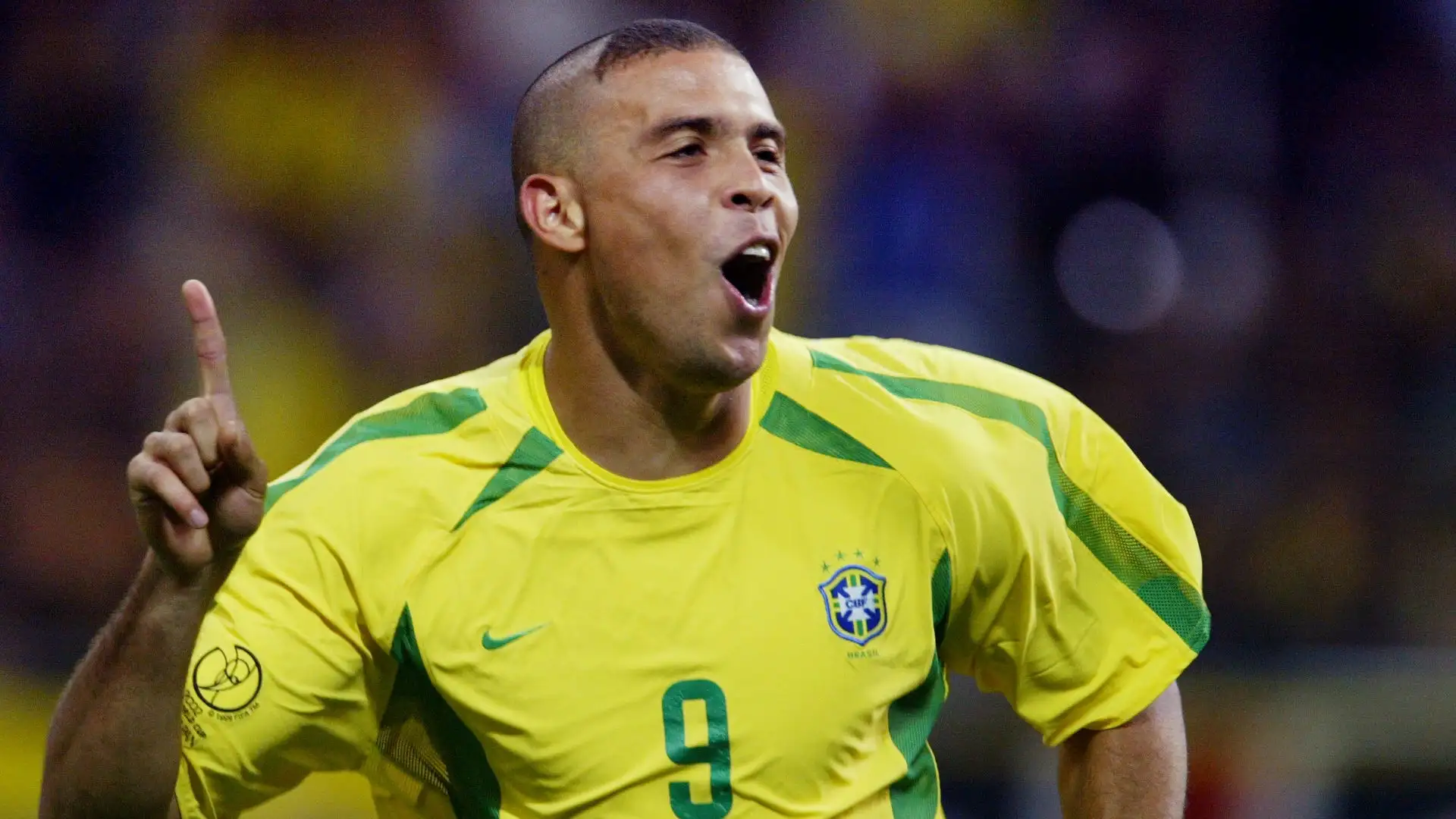
#4) Ronaldo Nazario
Ronaldo Nazario proved that speed, skill and finishing could coexist at the highest level. He scored 15 goals in 19 World Cup games across four tournaments, making him one of the top scorers in the competition’s history.
His best World Cup came in 2002 when he scored eight goals, including two in the final against Germany.
That performance was all the more impressive given that he had suffered a serious knee injury in 1999 and was never fully the same physically. He still found ways to dominate through intelligence, clever runs and finishing ability.
In 1994 Ronaldo was part of the Brazilian squad that won the World Cup, though he did not play. By 1998 he had become the best striker on earth.
He won the Golden Ball and the Golden Boot in that tournament and led Brazil to the final, though they lost to France.
Ronaldo influenced a whole generation of strikers. His technique of dribbling at defenders, using step overs, then shooting low to the near post became a model for forwards in Europe, South America and Africa throughout the 2000s.
#5) Miroslav Klose
Miroslav Klose may not always be the first name people think of, but he holds one of the most important records in World Cup history.
He is the all time leading scorer with 16 goals across four tournaments from 2002 to 2014.
Klose was not a showman. He did not dribble through defenses or score from 30 yards. He scored because he was always in the right place at the right time.
His movement in the box, his reading of crosses and his ability to turn defenders made him very difficult to mark.
In every World Cup he played, Germany reached at least the semi final. In 2014 he broke Ronaldo Nazario’s scoring record of 15 goals during Germany’s 7 to 1 win over Brazil in the semi final. He finished the tournament as a world champion.
His record speaks to his consistency. Four World Cup tournaments, four times in the final four.
That level of sustained impact over 12 years makes him one of the most influential players in World Cup history when it comes to a striker’s reliability.
#6) Franz Beckenbauer
Franz Beckenbauer did something most football legends never get close to. He won the World Cup as a player in 1974 and then won it again as a manager in 1990.
That double achievement puts him in a category almost entirely his own.
As a player, Beckenbauer played the sweeper role in a way that changed how defenders were understood. Before him, defenders defended.
He stepped forward to build attacks, carry the ball out from the back and set the tempo of matches. That style is now considered standard for modern center backs and defensive midfielders.
He captained West Germany in 1974 and performed well throughout the tournament, leading his team past the Netherlands in the final.
In 1966 he had reached the final as a young player too. His World Cup career spanned three tournaments and shaped the idea of a composed, intelligent defender.
As a manager, he guided Germany through qualification and the 1990 tournament. Germany beat Argentina in the final and Beckenbauer became one of very few people to have held the World Cup trophy in both roles.
#7) Zinedine Zidane
Zinedine Zidane is one of the most elegant players to ever appear at a World Cup. He played three World Cups for France and left an impact at each one, though his 1998 and 2006 performances are the ones most remembered.
In the 1998 final against Brazil, Zidane scored two headed goals at the Stade de France to give France a 2-0 lead they never lost.
It was his defining moment. France had never won a World Cup before that night. His performance made him a national hero.
By 2006 Zidane was 34 and had come out of retirement to help France qualify. He played magnificently throughout the tournament, beating Brazil in the quarter finals and Portugal in the semi finals.
He won the Golden Ball as the best player even though France lost the final to Italy on penalties. His last act of that tournament, a red card for headbutting Marco Materazzi, was controversial but even that became part of his legend.
His influence on the attacking midfielder role is immense. Players who combine physicality with technical finesse, like Luka Modric, have often cited Zidane as an inspiration.
#8) Kylian Mbappe
Kylian Mbappe is already one of the most influential players in World Cup history and he is still in the middle of his career.
He made his World Cup debut in 2018 as a 19 year old and won the title with France.
In 2022 he took his World Cup career to another level. He scored eight goals in the tournament, including a hat trick in the final against Argentina.
France lost that match on penalties after leading and then drawing. Mbappe’s three goals in the final were extraordinary but not enough.
He finished 2022 as the tournament’s Golden Boot winner with eight goals. His pace, directness and clinical finishing in those two World Cups have made him the most feared attacking player of his generation.
With 12 World Cup goals before his 25th birthday, Mbappe is already in the conversation for the most influential players in World Cup history.
If he plays in 2026 and 2030, his record could challenge or surpass Klose’s all time scoring mark.
#9) Gerd Muller
Gerd Muller was the defining penalty box striker of his era. He played two World Cups for West Germany and scored 14 goals in just 13 games. That is one of the best goals per game ratios in World Cup history.
In 1970 he was exceptional. He scored 10 goals in six games and won the Golden Boot. West Germany reached the semi finals in a tournament widely remembered as one of the most exciting World Cups ever, featuring the famous 4-3 extra time game against Italy.
In 1974 Muller scored four more goals and netted the winner in the final against the Netherlands.
He retired from international football shortly after that. Despite playing only two tournaments, he left a scoring record that stood for decades.
His influence on modern strikers is built around one idea. You do not need to be tall, quick or elegant if you can read the game and finish in small spaces. Muller was not especially fast or powerful but he was a genius inside the penalty box.
#10) Garrincha
Garrincha is often overlooked in modern discussions but he was one of the most exciting players in early World Cup history.
Born with physical deformities in both legs, he overcame them to become one of the most gifted right wingers of his generation.
He helped Brazil win the World Cup in 1958 alongside Pele. In 1962 he was even better. When Pele was injured in the second game of the tournament, Garrincha took over. He was the star player in every knockout game.
He finished as joint top scorer with four goals and also created many more for teammates.
His dribbling was unpredictable. He would fake one way, go the other, and leave defenders standing. Opposition teams double and triple marked him and he still found ways through.
Brazil won both World Cups he played in and never lost a game in which Garrincha finished on the pitch.
That is a striking record. His style influenced a generation of Brazilian attacking players and helped build the idea that skill and flair are at the heart of the Brazilian football identity.
How These Players Changed the World Cup
The most influential players in World Cup history share one thing. They did not just win matches. They changed what was possible.
Here is a quick breakdown of the main ways each player shaped the game:
- Pele made attacking, creative football the global standard for the sport
- Maradona showed that one player with extraordinary skill can decide a tournament
- Messi proved that patience and persistence can lead to World Cup glory even late in a career
- Ronaldo Nazario combined speed, skill and strength in a way that defined the modern striker
- Klose showed that consistency, movement and smart positioning can outlast any highlight reel
- Beckenbauer redefined how defenders contribute to attack and changed the modern sweeper role
- Zidane influenced every midfielder who wants to combine elegance with match winning impact
- Mbappe is writing a new chapter in pace based, direct attacking play at the highest level
- Gerd Muller set the template for the pure penalty box striker that coaches still look for today
- Garrincha showed that natural talent and joy on the ball can be unstoppable even at the World Cup
Together, these players built the World Cup into the biggest football event on earth. Each one added something the tournament had not seen before.
FAQs
Who is the most influential player in World Cup history?
Most experts point to Pele as the most influential player in World Cup history. He won three titles, scored 12 goals and helped make the tournament a global event. Others make a strong case for Diego Maradona based on his 1986 campaign or Lionel Messi based on his records and 2022 title.
Who is the all time top scorer in World Cup history?
Miroslav Klose holds the record with 16 goals across four tournaments from 2002 to 2014. He passed Ronaldo Nazario’s record of 15 goals during the 2014 semi final against Brazil. Kylian Mbappe is the most likely player to challenge that record in coming tournaments.
Which player has won the most World Cup titles?
Pele won the most World Cup titles as a player with three, in 1958, 1962 and 1970. No other player has won more than two. Ronaldo Nazario and Garrincha each won two World Cups with Brazil.
Who won the World Cup as both player and manager?
Franz Beckenbauer is the most famous example. He won the World Cup as captain of West Germany in 1974 and then as head coach of Germany in 1990. Very few people in football history have achieved that rare double.
Can Kylian Mbappe become the greatest World Cup player ever?
It is very possible. Mbappe already has 12 World Cup goals, one title and a Golden Boot from 2022. He scored a hat trick in the final at just 23 years old. If he stays healthy and performs in 2026 and beyond, he could challenge both Klose’s scoring record and Pele’s legacy as the most influential player in World Cup history.