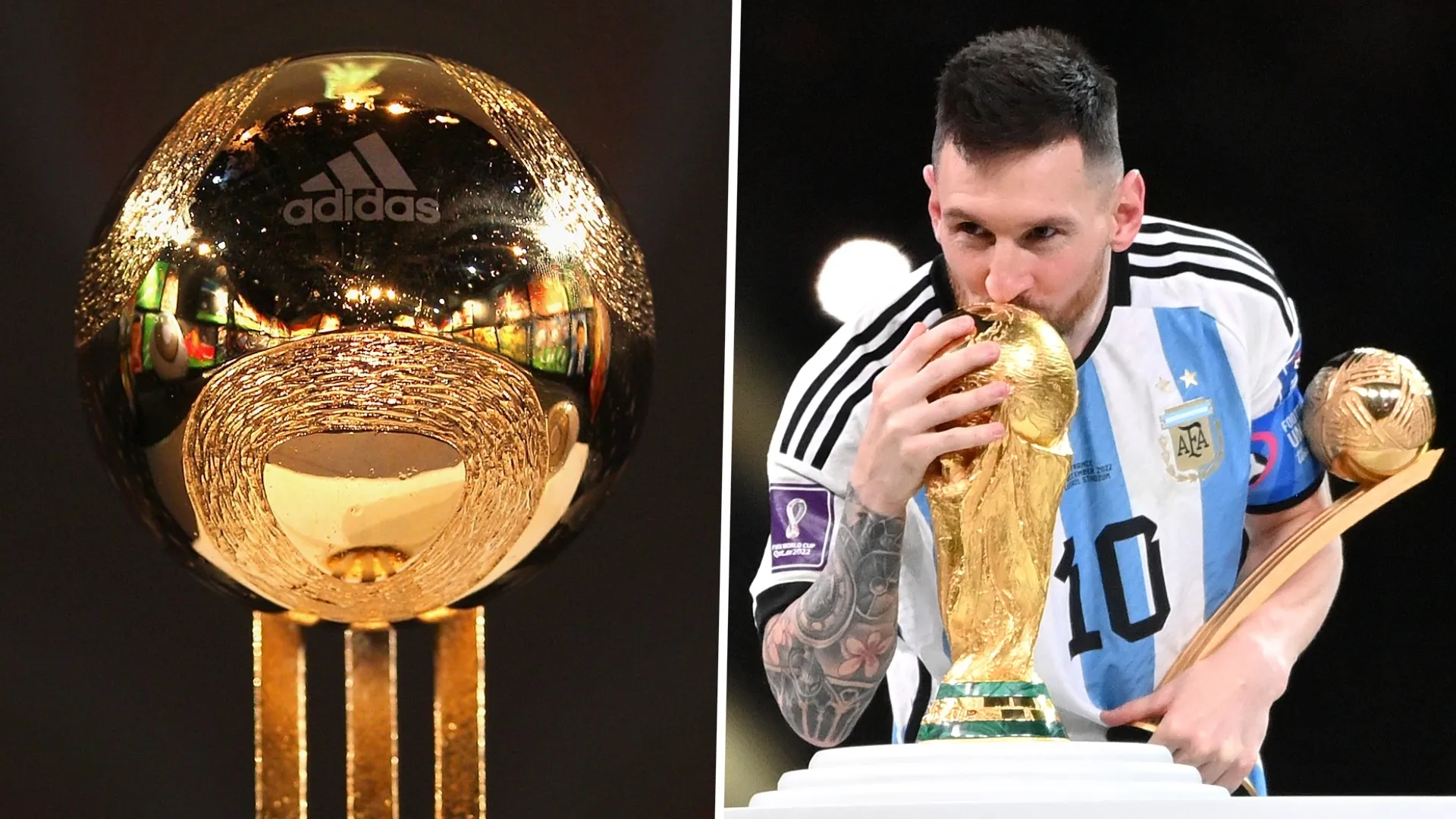
The FIFA World Cup Golden Ball is the tournament’s highest individual honor. It goes to the best player at each World Cup, regardless of whether their team lifts the trophy.
Since FIFA officially introduced the award in 1982, it has recognized legends from Paolo Rossi to Diego Maradona to Lionel Messi. Messi is the only player to win it twice, in 2014 and again in 2022.
This guide covers the complete winners list from 1930 to 2022, how the award is decided, key records, and what changes in 2026.
| Key Fact | Detail |
| Official introduction | 1982 FIFA World Cup, Spain |
| Retroactive coverage | Back to 1930 |
| Only two-time winner | Lionel Messi (2014, 2022) |
| Nation with most winners | Brazil (7 winners) |
| Only goalkeeper to win | Oliver Kahn (2002) |
| Non-champion winners (1982–2022) | 6 of 11 official awards |
Complete Golden Ball Winners List (1930–2022)
Here is every Golden Ball winner, including retroactively assigned awards from 1930 to 1978.
FIFA officially introduced the award in 1982 but later recognized the best player from every earlier tournament back to 1930.
| Year | Winner | Country | Notable Context |
| 1930 | José Nasazzi | Uruguay | Inaugural tournament, captain and champion |
| 1934 | Giuseppe Meazza | Italy | Led Italy to first World Cup title |
| 1938 | Leônidas | Brazil | First Brazilian winner, tournament top scorer |
| 1950 | Zizinho | Brazil | Standout player in Brazil’s runner-up squad |
| 1954 | Ferenc Puskás | Hungary | Led Hungary’s “Golden Team” |
| 1958 | Didi | Brazil | Playmaker in Brazil’s first World Cup win |
| 1962 | Garrincha | Brazil | Carried Brazil after Pelé was injured |
| 1966 | Bobby Charlton | England | Led England to their only World Cup title |
| 1970 | Pelé | Brazil | Retroactive; widely regarded as the greatest World Cup performance |
| 1974 | Johan Cruyff | Netherlands | Pioneered Total Football; finalist runner-up |
| 1978 | Mario Kempes | Argentina | Top scorer and champion |
| 1982 | Paolo Rossi | Italy | First official Golden Ball winner |
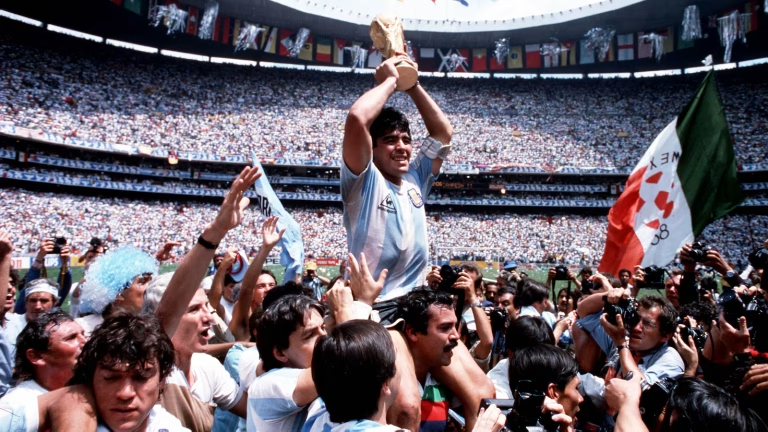
| 1986 | Diego Maradona | Argentina | Greatest individual World Cup display in history |
| 1990 | Salvatore Schillaci | Italy | Top scorer in a tightly contested tournament |
| 1994 | Romário | Brazil | Clinical striker who led Brazil to the title |
| 1998 | Ronaldo | Brazil | Tournament’s standout attacker; Brazil finished runner-up |
| 2002 | Oliver Kahn | Germany | Only goalkeeper ever to win the Golden Ball |
| 2006 | Zinedine Zidane | France | Won despite France losing the final |
| 2010 | Diego Forlán | Uruguay | Won from a fourth-place team |
| 2014 | Lionel Messi | Argentina | Won as captain of the runner-up team |
| 2018 | Luka Modrić | Croatia | Broke 10-year Messi and Ronaldo dominance |
| 2022 | Lionel Messi | Argentina | Second-time winner; won as World Cup champion |
What Is the FIFA World Cup Golden Ball Award?
The FIFA World Cup Golden Ball is presented to the best individual player at each tournament. It is not limited to players on the winning team.
FIFA officially introduced it in 1982 but retroactively assigned it to standout players from every tournament back to 1930.
The award comes in three tiers decided by the same vote. The top vote-getter wins the Golden Ball, second place receives the Silver Ball, and third place takes the Bronze Ball.
At the 2022 World Cup, Lionel Messi won the Golden Ball, Kylian Mbappé received the Silver Ball, and Luka Modrić took the Bronze Ball.
Silver Ball and Bronze Ball Tiers
- Golden Ball: Best player at the tournament
- Silver Ball: Second-place finisher in the vote
- Bronze Ball: Third-place finisher in the vote
How the Golden Ball Is Decided
The Golden Ball follows a two-step process. The FIFA Technical Study Group watches every match and draws up a shortlist of top performers.
Accredited international media representatives then vote on that shortlist, weighing technical skill, leadership, consistency, and impact in knockout matches. Goals matter, but they are not the only factor.
This process is separate from the Ballon d’Or, which is an annual award covering the full club and international season.
The Golden Ball covers only the World Cup tournament itself, making it a narrower but more focused measure of peak performance.
Why the Winner Does Not Need to Come from the Champion Team
Six of the 11 official Golden Balls awarded between 1982 and 2022 went to players who did not win the World Cup.
Modrić won in 2018 as a runner-up. Messi won in 2014 as a runner-up. Kahn won in 2002 despite Germany losing the final.
Zidane won in 2006 despite France losing on penalties. The award is built to judge the individual, not the result.
Golden Ball by the Numbers: A Data-Driven Breakdown
Brazil leads all nations with seven Golden Ball winners, reflecting decades of technically gifted, attack-minded players. No other country comes close.
Argentina follows with three winners, while Italy, Germany, France, Croatia, and Uruguay have each produced one official winner since 1982.
Forwards and attacking midfielders dominate the list because they create the visible moments that stay in voters’ memories.
Defensive players rarely earn enough attention. Only one goalkeeper has ever won the award in 43 years of official history.
| Nation | Winners | Notable Players |
| Brazil | 7 | Pelé (1970), Romário (1994), Ronaldo (1998) |
| Argentina | 3 | Mario Kempes (1978), Lionel Messi (2014, 2022) |
| Italy | 2 | Paolo Rossi (1982), Salvatore Schillaci (1990) |
| Croatia | 1 | Luka Modrić (2018) |
| France | 1 | Zinedine Zidane (2006) |
| Germany | 1 | Oliver Kahn (2002) |
| Uruguay | 1 | Diego Forlán (2010) |
| Netherlands | 1 | Johan Cruyff (1974) |
| England | 1 | Bobby Charlton (1966) |
| Hungary | 1 | Ferenc Puskás (1954) |
Unique Records and Milestones
Lionel Messi is the only player to win the Golden Ball twice. His 2014 win came from a runner-up team; his 2022 win came as champion.
The eight-year gap between them shows how rare that level of sustained tournament dominance is.
Oliver Kahn remains the only goalkeeper to win the award in 43 years of official history. He kept five clean sheets and produced decisive saves across the 2002 knockout rounds.
In 2018, Luka Modrić became the first non-Messi, non-Ronaldo winner in over a decade, a milestone that reminded voters the award belongs to the tournament’s best player, not its biggest brand.
Standout Golden Ball Moments: Iconic Winners
Five performances define what the Golden Ball is truly about.
Diego Maradona in 1986 scored five goals and five assists, including the greatest individual goal in World Cup history. He was the tournament almost entirely by himself.
Pelé in 1970 was the creative heartbeat of the greatest team ever assembled, recognized retroactively but deservedly.
Zinedine Zidane in 2006 won the award at 34 years old in his final professional matches, with France finishing as runners-up, a perfect example of the award honoring individual brilliance over the final result.
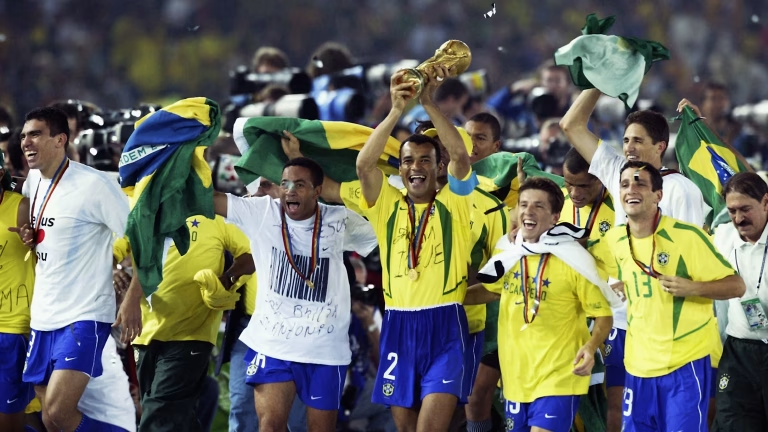
Ronaldo in 1998 was Brazil’s best player despite a runner-up finish, then returned in 2002 as a World Cup champion with eight goals.
Lionel Messi in 2022 scored seven goals and three assists, leading Argentina through the greatest final ever played to win both the trophy and his second Golden Ball.
Recent History: 2010–2022
- 2010: Diego Forlán (Uruguay) won from a fourth-place team, one of the clearest examples of individual brilliance overriding team placement
- 2014: Lionel Messi (Argentina) won as runner-up captain, reflecting sustained quality from matchday one to the final
- 2018: Luka Modrić (Croatia) broke over a decade of Messi and Ronaldo dominance with relentless midfield performances in Croatia’s run to the final
- 2022: Lionel Messi (Argentina) claimed his second Golden Ball as champion, completing one of football’s greatest individual stories
Golden Ball vs. Other World Cup Awards
Each World Cup award measures something different. The Golden Ball is the only one that is fully qualitative, open to all positions, and covers every dimension of play.
That is why Modrić could win the Golden Ball without appearing near the Golden Boot leaderboard, and why Kahn could win the Golden Ball even though the Golden Glove existed separately.
| Award | Criteria | Position Specific? |
| Golden Ball | Best overall player, all positions and stats | No |
| Golden Boot | Top goalscorer (assists as tiebreaker) | No |
| Golden Glove | Best goalkeeper | Yes |
| FIFA Young Player Award | Best player aged 21 or under | No |
| Silver Ball | Second-place in Golden Ball vote | No |
| Bronze Ball | Third-place in Golden Ball vote | No |
Preparing for World Cup 2026
The 2026 World Cup expands to 48 teams across 39 days, spanning three host countries: the United States, Canada, and Mexico.
Finalists could play up to eight matches, one more than the previous maximum.
This places new demands on consistency, recovery, and the ability to perform across a much longer tournament window.
For the Golden Ball, the expanded format means voters will have more data to weigh. Players who peak early and fade in the knockout rounds will be exposed.
Sustained performance across more matches will matter more than ever. Early contenders like Kylian Mbappé, Lamine Yamal, and Vinicius Jr. enter the conversation, though World Cup form rarely follows predictions.
FAQs
Who won the Golden Ball in 2022?
Lionel Messi won the Golden Ball at the 2022 FIFA World Cup in Qatar. He scored seven goals and added three assists as Argentina won the tournament, becoming the only player in history to win the award twice.
Has anyone won the Golden Ball twice?
Only Lionel Messi has won it twice, in 2014 as runner-up captain and in 2022 as champion. No other player in the award’s history has claimed the Golden Ball more than once.
How is the Golden Ball winner decided?
The FIFA Technical Study Group shortlists the tournament’s top performers, and accredited international media representatives cast votes from that list. Voters weigh goals, assists, leadership, and knockout-round impact, not statistics alone.
Can a player from a losing team win the Golden Ball?
Yes. Six of the 11 official Golden Balls between 1982 and 2022 went to non-champions. Modrić (2018), Forlán (2010), Zidane (2006), and Messi (2014) all won from teams that did not lift the trophy.
What is the difference between the Golden Ball and the Ballon d’Or?
The Golden Ball covers only the FIFA World Cup tournament, judging performance across four to seven weeks. The Ballon d’Or is an annual award covering the full club and international season. They have different voters, different criteria, and are awarded at completely different times.