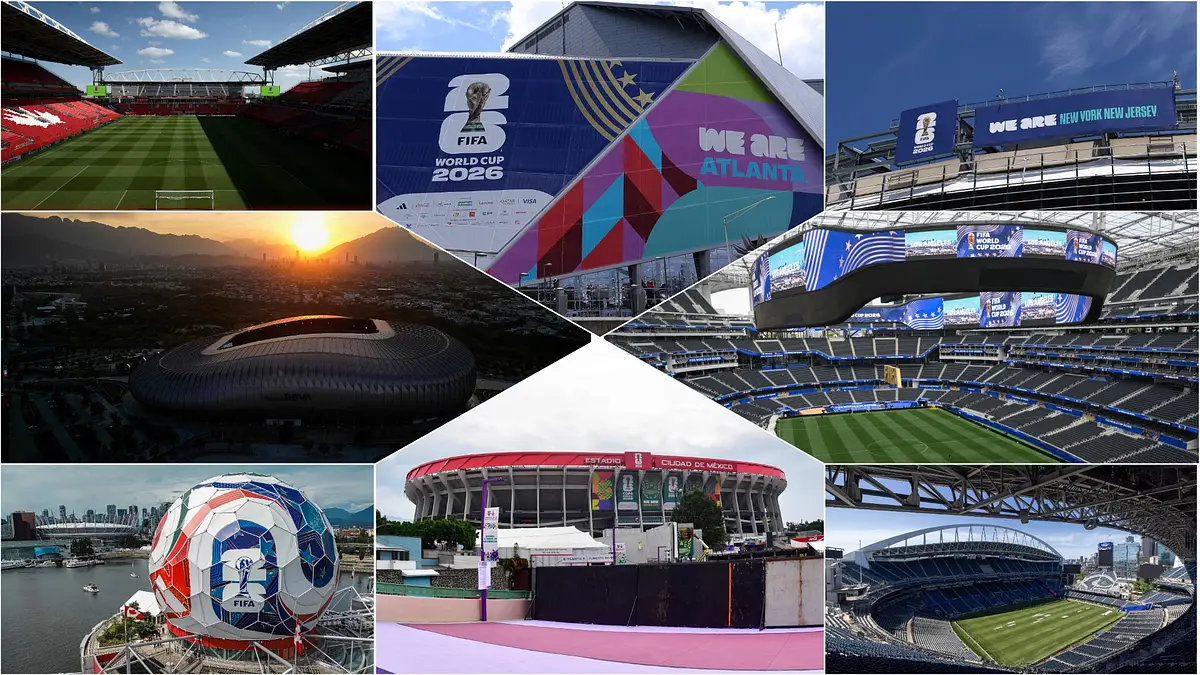
Many fans search for a simple FIFA World Cup stadiums list by year. Most pages are either too long or too confusing. This guide gives you a clear view in one place.
Here you can see every World Cup from 1930 to 2026 with the number of stadiums, the hosts, and the key venues.
You also see how the number of stadiums changed over time and why some tournaments used more venues than others. The structure is simple and easy to scan.
World Cup Stadiums Overview Table (1930–2026)
The table below gives a quick view of each World Cup, its host or hosts, the stadium count, and the final stadium.
| Year | Host(s) | Stadiums used | Final stadium |
| 1930 | Uruguay | 3 | Estadio Centenario |
| 1934 | Italy | 8 | Stadio Nazionale PNF |
| 1938 | France | 10 | Stade Olympique de Colombes |
| 1950 | Brazil | 6 | Maracanã |
| 1954 | Switzerland | 6 | Wankdorf Stadium |
| 1958 | Sweden | 12 | Råsunda Stadium |
| 1962 | Chile | 4 | Estadio Nacional |
| 1966 | England | 8 | Wembley Stadium |
| 1970 | Mexico | 5 | Estadio Azteca |
| 1974 | West Germany | 9 | Olympiastadion Munich |
| 1978 | Argentina | 6 | Estadio Monumental |
| 1982 | Spain | 17 | Santiago Bernabéu |
| 1986 | Mexico | 12 | Estadio Azteca |
| 1990 | Italy | 12 | Stadio Olimpico |
| 1994 | USA | 9 | Rose Bowl |
| 1998 | France | 10 | Stade de France |
| 2002 | South Korea, Japan | 20 | International Stadium Yokohama |
| 2006 | Germany | 12 | Olympiastadion Berlin |
| 2010 | South Africa | 10 | Soccer City (FNB Stadium) |
| 2014 | Brazil | 12 | Maracanã |
| 2018 | Russia | 12 | Luzhniki Stadium |
| 2022 | Qatar | 8 | Lusail Stadium |
| 2026 | USA, Mexico, Canada | 16 | MetLife Stadium |
You can cross check counts and venues with full historical tables on sites like Topend Sports or FIFA’s World Cup history pages.
FIFA World Cup Stadiums List By Tournament (1930–2026)
1930 World Cup stadiums (Uruguay, 3 venues)
The 1930 World Cup in Uruguay used only three stadiums, all in Montevideo. Estadio Centenario was the main venue and hosted most matches, including the final.
The other games took place at Estadio Pocitos and Estadio Gran Parque Central. This is still the only World Cup where every match was played in one city.
1934 World Cup stadiums (Italy, 8 venues)
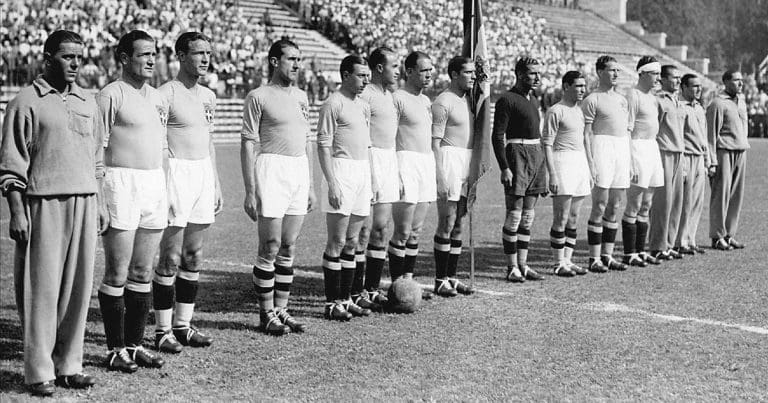
Italy 1934 expanded the event and used eight stadiums in eight cities. Stadio Nazionale PNF in Rome hosted the final and key matches.
Other important venues were in Milan, Turin, Florence, Bologna, Genoa, Naples, and Trieste. It marked a clear move from a single city to a full national World Cup.
1938 World Cup stadiums (France, 10 venues)
The 1938 World Cup in France used ten stadiums across the country. Stade Olympique de Colombes in Paris staged the final.
Matches were also played in cities like Marseille, Bordeaux, Lille, Reims, Strasbourg, Toulouse, and others. The tournament showed steady growth in stadium count and reach.
1950 World Cup stadiums (Brazil, 6 venues)
Brazil 1950 used six stadiums in six cities. Maracanã in Rio de Janeiro was the main venue and hosted the decisive match between Brazil and Uruguay.
Other key stadiums were Pacaembu in São Paulo and grounds in Belo Horizonte, Curitiba, Porto Alegre, and Recife. The huge crowds at Maracanã helped make this tournament famous.
1954 World Cup stadiums (Switzerland, 6 venues)
Switzerland 1954 also used six stadiums. Wankdorf Stadium in Bern hosted the final. St. Jakob Stadium in Basel staged several matches and was one of the busiest venues.
Games were also played in Zurich, Geneva, Lausanne, and Lugano. The stadium numbers stayed modest but well spread.
1958 World Cup stadiums (Sweden, 12 venues)
The 1958 World Cup in Sweden used twelve stadiums, the first time the event passed ten venues. Råsunda Stadium in Stockholm hosted the final and many important matches.
Other venues were in Gothenburg, Malmö, and several smaller cities. The larger stadium count matched growing global interest.
1962 World Cup stadiums (Chile, 4 venues)
Chile 1962 was compact, with only four stadiums used. Estadio Nacional in Santiago hosted the final and most big matches.
The other venues were in Viña del Mar, Rancagua, and Arica. Even with sixteen teams, the tournament kept a small and tight stadium plan.
1966 World Cup stadiums (England, 8 venues)
The 1966 World Cup in England used eight stadiums. Wembley Stadium in London was the main venue and staged the final, along with every England match.
Other stadiums were in Manchester, Liverpool, Birmingham, Sheffield, Sunderland, and Middlesbrough. The tournament balanced tradition with a wide spread of host cities.
1970 World Cup stadiums (Mexico, 5 venues)
Mexico 1970 used five stadiums, but one dominated. Estadio Azteca in Mexico City hosted many matches and the final and held more than 100,000 fans.
Other venues were in Guadalajara, Puebla, Toluca, and León. It was the first World Cup held in North America and at high altitude.
1974 World Cup stadiums (West Germany, 9 venues)
West Germany 1974 used nine stadiums in nine cities. Olympiastadion in Munich hosted the final and several big matches.
Other important venues were in Berlin, Hamburg, Dortmund, Frankfurt, Düsseldorf, Gelsenkirchen, Hanover, and Stuttgart. This World Cup showed a clear national spread with strong stadium infrastructure.
1978 World Cup stadiums (Argentina, 6 venues)
Argentina 1978 used six stadiums. Estadio Monumental in Buenos Aires hosted the final and was the main venue.
Other stadiums were in Córdoba, Rosario, Mar del Plata, and Mendoza. The stadium plan kept the focus on a few key cities while still covering a large country.
1982 World Cup stadiums (Spain, 17 venues)
Spain 1982 used seventeen stadiums, the most ever for a single host. Santiago Bernabéu in Madrid hosted the final.
Matches took place in Barcelona, Seville, Valencia, Bilbao, and many other cities. The high number of venues matched the move to a 24 team tournament and a wide national spread.
1986 World Cup stadiums (Mexico, 12 venues)
Mexico 1986 used twelve stadiums. Estadio Azteca became the first stadium to host two World Cup finals.
Other venues were in Guadalajara, Monterrey, Puebla, and several more cities. The stadium count stayed high but more focused than Spain 1982.
1990 World Cup stadiums (Italy, 12 venues)
Italy 1990 used twelve stadiums around the country. Stadio Olimpico in Rome hosted the final.
Major venues included San Siro in Milan, Stadio San Paolo in Naples, and stadiums in Turin, Bari, Florence, Genoa, Verona, Bologna, Udine, Cagliari, and Palermo. It kept the big multi city model seen in the 1980s.
1994 World Cup stadiums (USA, 9 venues)
The 1994 World Cup in the United States used nine stadiums. The Rose Bowl in Pasadena hosted the final and had one of the largest capacities in World Cup history.
Pontiac Silverdome near Detroit became the first indoor stadium used in a World Cup.
Other venues were in New Jersey, Chicago, Boston, Dallas, Orlando, San Francisco, and Washington DC.
1998 World Cup stadiums (France, 10 venues)
France 1998 used ten stadiums. Stade de France in Saint Denis, built for the tournament, hosted the final.
Other venues were in Marseille, Lyon, Lens, Nantes, Toulouse, Bordeaux, Montpellier, and Saint Étienne. The stadium plan mixed new builds and classic grounds.
2002 World Cup stadiums (South Korea and Japan, 20 venues)
The 2002 World Cup in South Korea and Japan used twenty stadiums, the most in any World Cup. Each country provided ten venues.
International Stadium Yokohama hosted the final. Many stadiums, such as Saitama Stadium 2002 and Seoul World Cup Stadium, were new or heavily upgraded for the event.
2006 World Cup stadiums (Germany, 12 venues)
Germany 2006 used twelve stadiums. Olympiastadion in Berlin hosted the final.
Other major venues included Allianz Arena in Munich, Signal Iduna Park in Dortmund, stadiums in Stuttgart, Hamburg, Frankfurt, Gelsenkirchen, Cologne, Hanover, Leipzig, Nuremberg, and Kaiserslautern.
The tournament used modern, high capacity grounds across the country.
2010 World Cup stadiums (South Africa, 10 venues)
South Africa 2010 used ten stadiums. Soccer City, also known as FNB Stadium, in Johannesburg hosted the final and the opening match.
Other venues included Cape Town Stadium, Moses Mabhida Stadium in Durban, Loftus Versfeld in Pretoria, Nelson Mandela Bay Stadium in Port Elizabeth, and grounds in Bloemfontein, Polokwane, Nelspruit, and Rustenburg. It was the first World Cup held in Africa.
2014 World Cup stadiums (Brazil, 12 venues)
Brazil 2014 used twelve stadiums in twelve cities. Maracanã in Rio de Janeiro hosted the final for the second time in its history.
Other venues were in São Paulo, Belo Horizonte, Brasília, Fortaleza, Recife, Salvador, Curitiba, Porto Alegre, Cuiabá, Manaus, and Natal.
Many stadiums were newly built or rebuilt, which raised debates about cost and legacy.
2018 World Cup stadiums (Russia, 12 venues)
Russia 2018 used twelve stadiums in eleven cities. Luzhniki Stadium in Moscow hosted the final and several big matches.
Other venues were in Saint Petersburg, Sochi, Kazan, Samara, Volgograd, Nizhny Novgorod, Rostov on Don, Kaliningrad, Saransk, and Yekaterinburg.
The tournament had one of the widest geographic spreads of any World Cup.
2022 World Cup stadiums (Qatar, 8 venues)
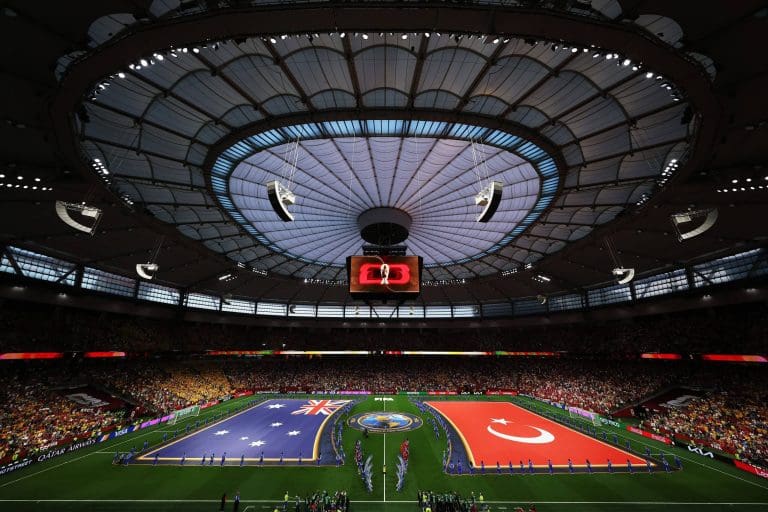
Qatar 2022 used eight stadiums, all within a small area around Doha. Lusail Stadium hosted the final and will be partly reduced after the tournament.
Other venues included Al Bayt, Al Janoub, Stadium 974, Education City, Ahmad bin Ali, Khalifa International, and Al Thumama.
It was the most compact World Cup in terms of travel.
2026 World Cup stadiums (USA, Mexico, Canada, 16 venues)
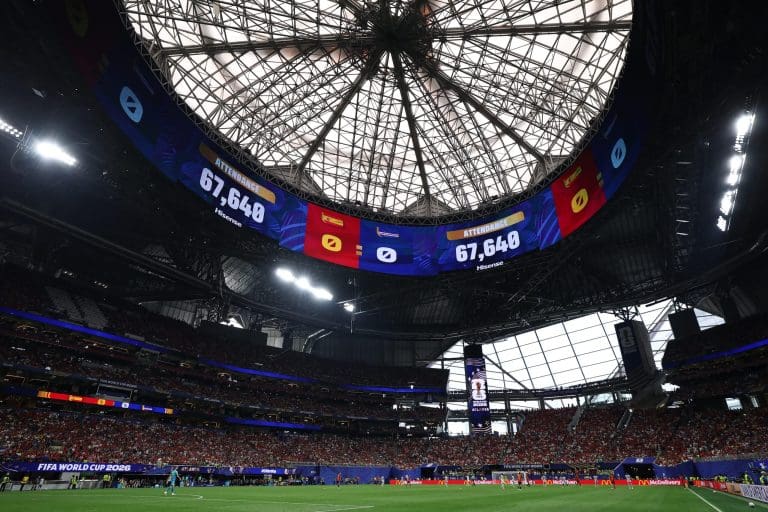
The 2026 World Cup will use sixteen stadiums in three countries. There will be eleven venues in the United States, three in Mexico, and two in Canada.
MetLife Stadium in New Jersey is set to host the final. AT&T Stadium in Dallas will be the largest venue, and Estadio Azteca will appear in its third World Cup.
How World Cup Stadium Counts Changed Over Time
World Cup stadium counts follow a clear pattern. Early tournaments used only a few grounds in one city.
Later events used more stadiums across a full host country. Co hosting and mega hosts then pushed counts even higher.
In 1930, there were only three stadiums, all in Montevideo. By the 1950s and 1960s, most tournaments used between four and twelve stadiums. Spain 1982 reached seventeen stadiums as the event expanded.
From 2002, co hosting and large countries like Brazil and Russia used between twelve and twenty venues. Qatar then moved to a compact eight stadium plan, while 2026 sits in the middle with sixteen.
FIFA also uses minimum capacity and quality rules. Hosts need enough stadiums with at least around 40,000 seats for group games, larger grounds for knockout rounds, and very large stadiums for the final.
This pushes organizers to choose fewer but bigger stadiums rather than many small ones.
Stadium Counts by Era
| Era | Typical stadiums | Range | Example |
| Early single city | 3–6 | 3–6 | 1930 Uruguay |
| Single host expansion | 6–12 | 4–17 | 1982 Spain (17) |
| Co host and mega hosts | 8–20 | 8–20 | 2002 Japan and Korea |
For deeper context on how stadium requirements and costs evolved, you can read long form “World Cup stadium” features on sites like The Stadium Guide or sports business blogs.
FAQs
How many stadiums does each World Cup use?
Most World Cups use between eight and twelve stadiums. Across history, the range goes from three venues in 1930 to twenty in 2002.
Which World Cup used the most stadiums?
The 2002 World Cup in South Korea and Japan used the most stadiums, with twenty venues. Each country supplied ten stadiums for the tournament.
How many stadiums will the 2026 World Cup use?
The 2026 World Cup will use sixteen stadiums. There will be eleven in the USA, three in Mexico, and two in Canada, with MetLife Stadium hosting the final.
What was the smallest number of World Cup stadiums?
The smallest number was three stadiums at the 1930 World Cup in Uruguay. All three were in Montevideo.
Which stadiums have hosted more than one World Cup final?
Only Estadio Azteca in Mexico City and Maracanã in Rio de Janeiro have hosted more than one World Cup final. Both are among the most famous football stadiums in the world.
Do World Cup stadiums have to meet special rules?
Yes. World Cup stadiums must meet strict rules on capacity, safety, and media needs. Modern tournaments also expect at least around 40,000 seats for most matches and higher capacities for the final.