The largest World Cup stadium ever built held roughly 200,000 people. That record will never fall. Maracanã Stadium in Rio de Janeiro hosted the 1950 World Cup with this massive crowd.
Modern safety laws make this figure permanently impossible to repeat. Today’s largest World Cup venue is AT&T Stadium. It caps at 92,967 people which is less than half that number.
One rule drives this ranking. We use capacity at the time of each tournament, not current figures. Post 1989 all seater conversions slashed capacities by 30 to 60 percent across nearly every historic venue. Pre 1990s stadiums used standing terraces.
These were concrete steps packed tight to allow massive crowds. After the 1989 Hillsborough disaster killed 96 fans, FIFA mandated individual seats with backs. This permanently shrank maximum capacities.
Quick Comparison: Top 15 World Cup Stadiums by Capacity
| Rank | Stadium | Country | Year | Tournament Capacity | Current Capacity |
| 1 | Maracanã Stadium | Brazil | 1950 | ~200,000 | 78,838 |
| 2 | Estadio Azteca | Mexico | 1986 | 114,600 | 87,523 |
| 3 | Estadio Azteca | Mexico | 1970 | 107,247 | 87,523 |
| 4 | Wembley Stadium (Original) | England | 1966 | 98,600 | Demolished |
| 5 | Soccer City (FNB Stadium) | South Africa | 2010 | 94,736 | 94,736 |
| 6 | Rose Bowl | USA | 1994 | 94,194 | 88,565 |
| 7 | AT&T Stadium | USA | 2026 | 92,967 | 92,967 |
| 8 | Camp Nou | Spain | 1982 | 90,000 | Under Renovation |
| 9 | Wembley Stadium (New) | England | N/A | 90,000 | 90,000 |
| 10 | Estadio Centenario | Uruguay | 1930 | 90,000 | 60,000 |
| 11 | Lusail Stadium | Qatar | 2022 | 88,966 | ~40,000 |
| 12 | Olympiastadion Berlin | Germany | 1974 | 88,000 | 74,475 |
| 13 | Santiago Bernabéu | Spain | 1982 | 85,000 | 81,044 |
| 14 | MetLife Stadium | USA | 2026 | 82,500 | 82,500 |
| 15 | Stade de France | France | 1998 | 80,698 | 80,698 |
The Top 15 Largest World Cup Stadiums
15. MetLife Stadium (82,500) — USA, 2026
MetLife Stadium in East Rutherford, New Jersey hosts the 2026 World Cup final on July 19. FIFA selected it over the larger AT&T Stadium based on location.
It is home to the NFL’s Giants and Jets. It opened in 2010 at a cost of $1.6 billion. It also served as a 2025 Club World Cup venue to prepare for the 2026 tournament.
14. Stade de France (80,698) — France, 1998
France built this stadium specifically for the 1998 World Cup. It delivered France its first World Cup title on home soil.
The final featured France defeating Brazil 3–0 before 80,000 people. It maintains its original capacity today. A retractable seating system allows the lower tier to move closer to the pitch.
13. Estadio Santiago Bernabéu (85,000) — Spain, 1982
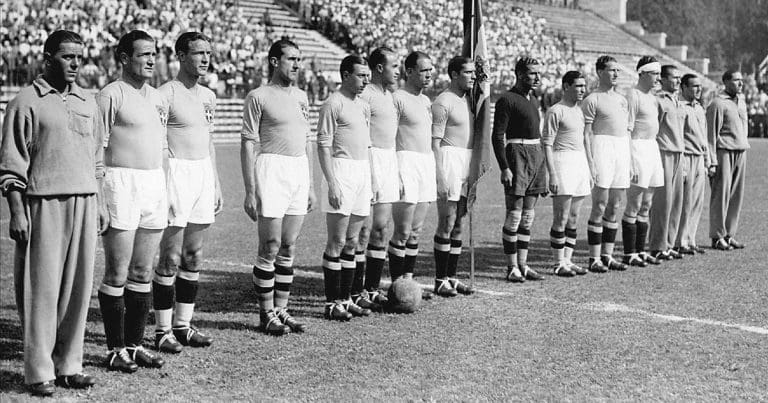
Real Madrid’s home held 85,000 fans for the 1982 World Cup. It hosted the final where Italy defeated West Germany 3–1.
The Bernabéu underwent a major transformation between 2019 and 2023. It gained a retractable roof and an LED facade. Current seated capacity is 81,044.
12. Estadio Centenario (90,000) — Uruguay, 1930
This was the first World Cup stadium ever constructed. Workers completed it in just eight months.
The 1930 final drew 68,346 fans as Uruguay beat Argentina 4–2. The stadium was not actually filled to its 90,000 capacity that day. It will host a symbolic centenary match in 2030.
11. Olympiastadion Berlin (88,000) — Germany, 1974
This stadium was originally built for the 1936 Olympics. It was the largest venue at the 1974 West German World Cup.
Renovations for the 2006 World Cup dropped the capacity to 74,475. It carries a complex legacy because of its origins. It remains a very architecturally distinctive sports venue in Europe.
10. Lusail Stadium (88,966) — Qatar, 2022
Qatar’s showpiece venue hosted one of the greatest finals in history. Argentina defeated France on penalties to give Lionel Messi his title.
The upper tier was removed post tournament. This dropped the capacity to 40,000 for local use. It is the only World Cup final venue designed to shrink.
9. Wembley Stadium New (90,000) — England, No World Cup
The new Wembley earns its place as a modern capacity reference point. It replaced the demolished original stadium in 2007.
It features a 133 meter steel arch visible across London. It is the largest all seater stadium in the UK. England has not hosted a World Cup since 1966 so its World Cup story is unwritten.
8. Camp Nou (90,000) — Spain, 1982
Camp Nou hosted 1982 World Cup matches with 90,000 fans. Standing areas contributed to that high number. It is currently undergoing a major renovation called the Espai Barça project.
The stadium is expected to return with a capacity near 105,000. This is a rare case where a venue grows larger over time.
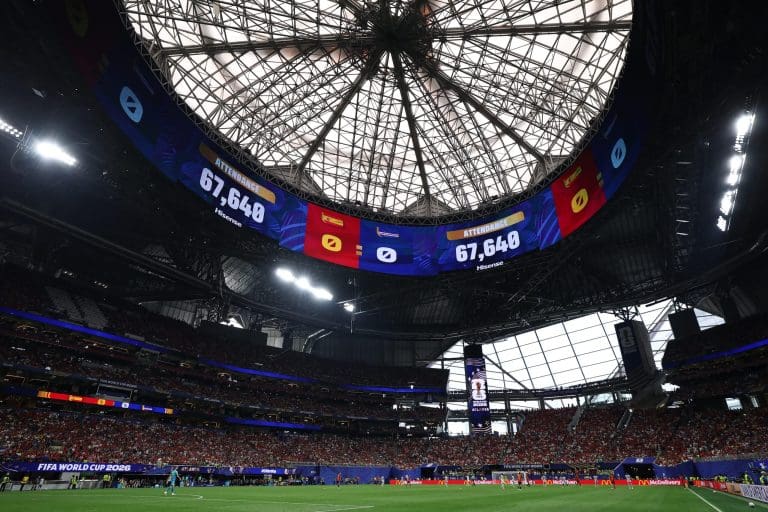
7. AT&T Stadium (92,967) — USA, 2026
This is the largest stadium in the 2026 tournament. It is home to the Dallas Cowboys. It features a retractable roof and a massive center hung video board.
Expandable configurations can push attendance past 100,000 for special events. FIFA selected MetLife for the final despite the size advantage here.
6. Soccer City FNB Stadium (94,736) — South Africa, 2010
Africa’s largest stadium hosted the first World Cup on African soil. The design mimics an African calabash pot.
Unlike most historic venues it maintains its full capacity today. It is a fully all seater facility. The 2010 tournament was a historic first for the African continent.
5. Rose Bowl (94,194) — USA, 1994
The Rose Bowl served as the largest stadium at the 1994 tournament. Brazil beat Italy on penalties in the final.
Roberto Baggio missed the final penalty in front of this massive crowd. The stadium also hosted the 1999 Women’s World Cup final. Current capacity is 88,565.
4. Wembley Stadium Original (98,600) — England, 1966
The twin towers of original Wembley defined English football for 80 years. England beat West Germany 4–2 in the 1966 final before 96,924 fans.
This remains the only World Cup title England has ever won. The stadium was demolished in 2003 and replaced four years later.
3. Estadio Azteca (107,247) — Mexico, 1970
Azteca appears twice in this list. In 1970 it held 107,247 fans as Brazil defeated Italy 4–1. This gave Pelé his third World Cup title.
The high altitude of 7,200 feet affected players throughout the games. Brazil’s performance here is considered one of the finest in history.
2. Estadio Azteca (114,600) — Mexico, 1986
Azteca reached its peak capacity for 1986. Argentina defeated West Germany 3–2 in the final. Diego Maradona scored his famous Hand of God goal against England here.
In 2026 it will become the first stadium to host three men’s World Cups. Current capacity is 87,523.
1. Maracanã Stadium (~200,000) — Brazil, 1950
Nothing else comes close. Maracanã was built in 18 months for the 1950 tournament. Concrete standing terraces were stacked across multiple tiers.
Official attendance was estimated between 199,000 and 210,000. All seater conversion reduced capacity to 78,838 today. This is a 61 percent cut from the same structure.
Why Mega Stadiums Are Gone Forever
Three forces ended the era of 100,000 plus capacity stadiums. The 1989 Hillsborough disaster triggered global safety reform.
FIFA then required every World Cup stadium to provide individual seats. These seats require 40 to 50 percent more floor space than standing terraces.
Modern building codes added wide emergency aisles and strict crowd flow rules. The math tells the story. Maracanã went from 200,000 standing to 78,838 seated.
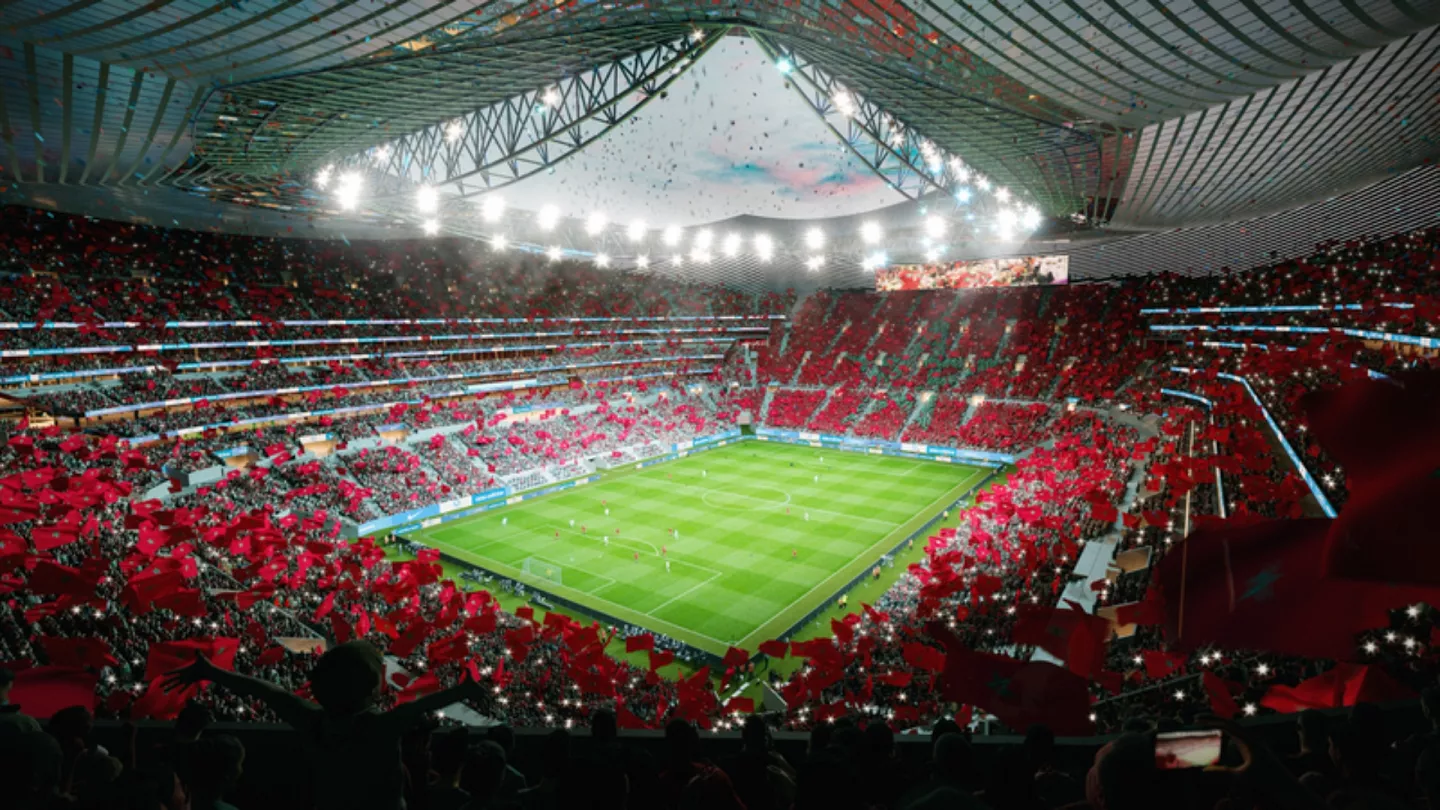
The largest stadium currently under construction is Morocco’s Grand Stade Hassan II. It will hold 115,000 for the 2030 World Cup. That is 43 percent smaller than 1950 Maracanã.
FAQs
What is the biggest stadium ever used in a World Cup?
Maracanã Stadium in Rio de Janeiro holds the record. It had an estimated crowd of 200,000 at the 1950 World Cup final. Modern safety rules make this record impossible to break.
Which stadium will host the 2026 World Cup final?
MetLife Stadium in East Rutherford, New Jersey hosts the final on July 19. FIFA selected it over the larger AT&T Stadium for logistical reasons.
Has any stadium hosted three World Cups?
Estadio Azteca in Mexico City becomes the first to host three men’s World Cups in 2026. It previously hosted the 1970 and 1986 finals.
Why are modern World Cup stadiums smaller than older ones?
FIFA mandated all seater stadiums after the 1989 Hillsborough disaster. Individual seats and safety aisles require much more space than standing areas. This reduces maximum capacities at every venue.
What was the smallest World Cup final attendance?
The 1930 final drew 68,346 fans at Estadio Centenario in Montevideo. This was the smallest final crowd in World Cup history. The stadium had 90,000 capacity but was not filled.
Which is the most expensive World Cup stadium ever built?
SoFi Stadium in Los Angeles cost $5.5 billion. It hosts 2026 World Cup matches with a capacity of 70,240. It can expand past 100,000 for special events.
Will any future stadium exceed Maracanã’s 200,000 capacity?
No. Modern all seater requirements make 200,000 plus capacity impossible. The largest planned venue for 2030 is Morocco’s Grand Stade Hassan II. It will hold 115,000 people.