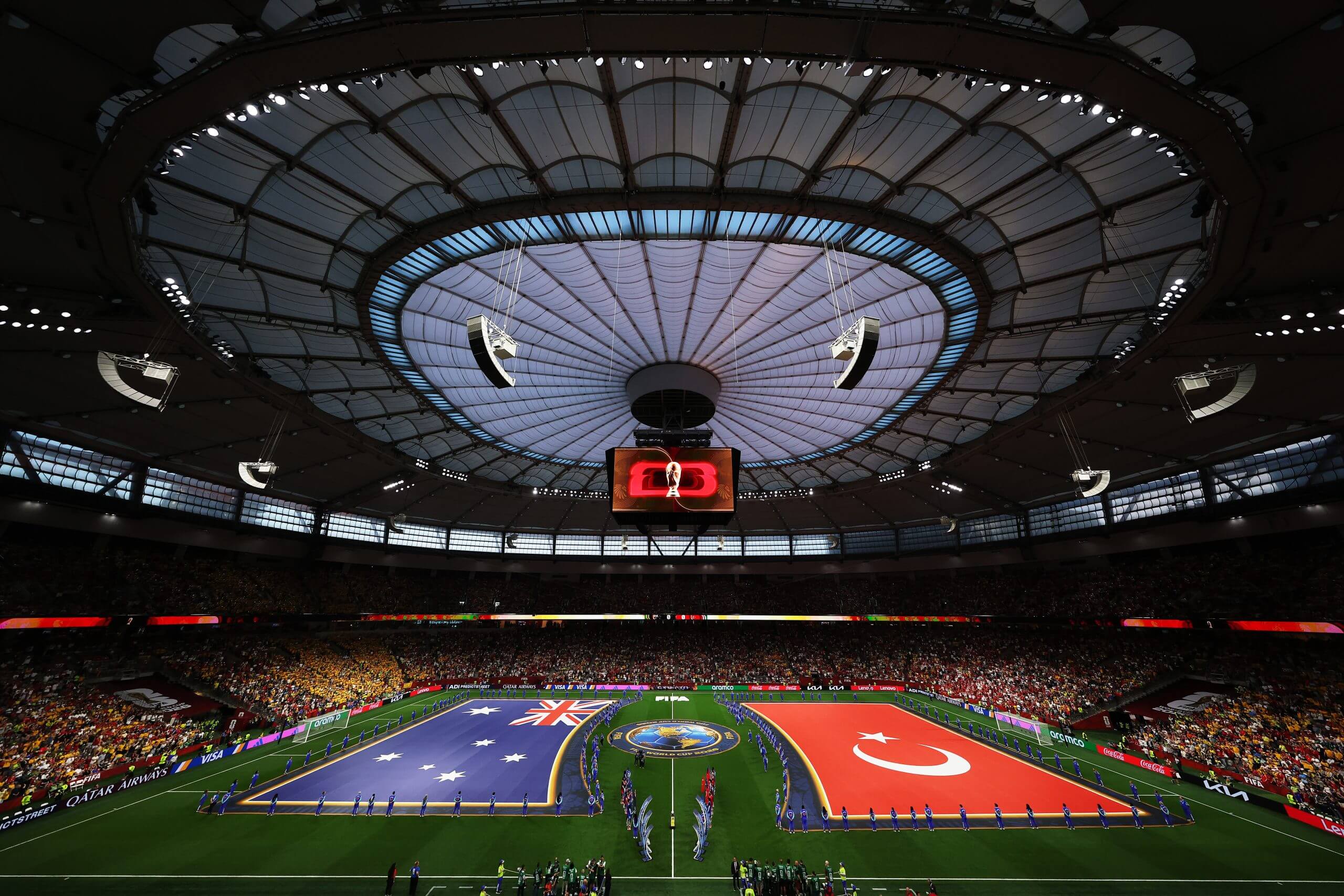
World Cup stadiums are not just buildings. They are places where football history lives.
This guide ranks the top FIFA World Cup stadiums of all time and explains why each one stands out.
We focus on World Cup legacy, not club matches, using clear criteria like iconic moments, historic firsts, special design, and crowd impact.
You will see why Maracana, Estadio Azteca, Wembley, Lusail, and other famous grounds are considered the greatest World Cup stadiums.
The language is simple, the sections are clear, and you can skim or read deeply based on your interest.
World Cup Stadiums At A Glance
| Rank | Stadium | Location | Capacity (approx) | World Cup Years | Defining World Cup Moment |
| 1 | Maracana | Rio de Janeiro, Brazil | 78,800 now | 1950, 2014 | Maracanazo and 2014 final |
| 2 | Estadio Azteca | Mexico City, Mexico | 87,500 now | 1970, 1986, 2026 | Pelé 1970, Maradona 1986, two finals |
| 3 | Wembley Stadium | London, England | 90,000 now | 1966 | England’s 1966 World Cup win |
| 4 | Lusail Stadium | Lusail, Qatar | 88,966 | 2022 | Argentina vs France 3–3, Messi’s crowning moment |
| 5 | Stade de France | Saint Denis, France | 80,700 | 1998 | France 3–0 Brazil, first French World Cup title |
| 6 | Rose Bowl | Pasadena, USA | 88,500 | 1994 | First final decided by penalties |
| 7 | Soccer City / FNB | Johannesburg, South Africa | 94,700 | 2010 | Spain’s first World Cup in first African host |
| 8 | Estadio Centenario | Montevideo, Uruguay | 60,000 now | 1930 | First World Cup final ever |
| 9 | Olympiastadion | Munich, Germany | 69,000 | 1974 | West Germany’s 1974 home title |
| 10 | Allianz Arena | Munich, Germany | 66,000 | 2006 | 2006 opening match and new design benchmark |
You can compare more stadium data on official tournament and history pages from FIFA and long‑running football history sites.
#10 Allianz Arena Munich Germany
Allianz Arena is one of the most eye catching modern stadiums used in a World Cup.
It hosted matches at the 2006 World Cup in Germany, including the opening game where Germany beat Costa Rica 4–2. That match helped set a bright, attacking tone for the whole tournament.
The stadium is famous for its outside skin made from light panels. These panels can glow in different colors, turning the arena red, blue, or white on match nights.
This idea of a fully lit, color changing exterior has influenced many later stadium designs across Europe and beyond.
Inside, the steep stands bring fans close to the action, even with a large capacity. Allianz Arena did not host a World Cup final, and it has only appeared in one World Cup so far.
Still, its strong design impact and its role as a symbol of the 2006 tournament make it one of the top World Cup stadiums.
#9 Olympiastadion Munich Germany
The Olympiastadion in Munich stands out for both its shape and its World Cup history.
It was the venue for the 1974 World Cup final, when West Germany beat the Netherlands 2–1. Hosting a home nation win in a final is a huge part of any stadium’s legacy.
The roof is the most striking feature. It uses clear panels held up by steel cables in a sweeping form that looks like a giant tent.
This light, see through roof brought in natural light while providing some shelter from rain and inspired later tension‑roof designs in sports architecture.
The stadium was originally built for the 1972 Olympic Games and later adapted for football use. It sits in a green park that adds to the open, airy feel.
Even though it appeared in only one World Cup, the mix of a home title and pioneering design earns Olympiastadion a high spot on this list.
#8 Estadio Centenario Montevideo Uruguay
Estadio Centenario is where the World Cup began. It was built for the first FIFA World Cup in 1930 and opened during the tournament in Montevideo.
The final between Uruguay and Argentina took place there, with Uruguay winning 4–2 and lifting the first ever World Cup trophy.
The stadium was designed in an Art Deco style, with clean lines and a tall tower that looks over the ground. It marked both 100 years of Uruguay’s independence and the start of a worldwide football event.
At the time, its size and form showed how serious the hosts were about the new competition.
FIFA later named Estadio Centenario a Historic Monument of World Football, the only stadium with that title.
The Uruguay national team still plays many important home games there, which keeps the link between early and modern World Cups clear.
It hosted only the 1930 tournament, but its role as the first final venue makes it an essential part of any all time stadium ranking.
#7 Soccer City FNB Stadium Johannesburg South Africa
Soccer City, also called FNB Stadium, was the heart of the 2010 World Cup, the first hosted in Africa. It staged both the opening match and the final.
In that final Spain beat the Netherlands 1–0 with a late extra time goal from Andrés Iniesta, winning their first World Cup title.
The design of Soccer City is full of African themes. The outer shell is shaped and colored like a traditional African clay pot, with warm tones and patterned panels.
A band of lights near the roof edge helps the stadium glow at night, adding to its identity as a modern African landmark.
The venue also hosted key cultural and political events linked to South Africa’s story. It is the largest stadium in Africa and a symbol of the continent’s ability to host a massive global event.
Because of its design, its link to the first African World Cup, and its central role in Spain’s rise, Soccer City deserves its place at number seven.
#6 Rose Bowl Pasadena USA
The Rose Bowl proved that the World Cup could succeed in a country where soccer was not yet the main sport. It hosted the 1994 World Cup final between Brazil and Italy.
That match ended 0–0 and went to a penalty shootout, which Brazil won, making it the first final decided from the spot.
The stadium is a large, open bowl set in a natural valley. Trees and hills surround it, giving a different feel from box shaped urban stadiums.
During the 1994 tournament the Rose Bowl drew huge crowds and created a strong base for the later growth of soccer in the United States.
This venue also hosted the 1999 Women’s World Cup final, where the United States beat China on penalties.
The image of Brandi Chastain’s winning penalty celebration became world famous. Very few stadiums have held both a men’s and a women’s World Cup final, which makes the Rose Bowl’s legacy unique and worthy of the sixth spot.
#5 Stade De France Saint Denis France
Stade de France is the national stadium of France and a model for modern, flexible arenas.
It was completed for the 1998 World Cup and hosted the final where France beat Brazil 3–0. Zinedine Zidane scored two first half headers that night, and the country won its first World Cup title at home.
The stadium’s key feature is its modular lower seating bowl. Thousands of seats can slide into different positions, revealing a running track when needed or moving close to the pitch for football and rugby.
This clever system lets one stadium host many types of events while still giving fans good views.
Since 1998 Stade de France has hosted major football and rugby matches, concerts, and Olympic events.
Its combination of an iconic World Cup final and forward looking design has been copied in many later stadiums. That blend of historic moment and smart engineering earns it a place in the top five.
#4 Lusail Stadium Lusail Qatar
Lusail Stadium is the flagship venue of the 2022 World Cup in Qatar. It hosted the final between Argentina and France, a 3–3 thriller that many fans call the greatest World Cup final ever.
Argentina won on penalties, and Lionel Messi finally lifted the trophy, a moment that defined his career.
The stadium has a golden, bowl like form inspired by traditional metal bowls and lanterns from the region. Its patterned outer shell catches light and gives it a warm, glowing look in the evening.
Inside, steep stands wrap around the pitch, helping fans feel close to the action even with a huge capacity.
Lusail was also planned with a clear post tournament use. The upper tier is meant to be removed, cutting capacity and allowing parts of the structure to be reused for community buildings and services.
This idea of building big for the World Cup and then scaling down supports more sustainable hosting.
Hosting one of the most dramatic finals ever plus pushing a new approach to stadium life after the event makes Lusail a clear top four choice.
#3 Wembley Stadium London England
Wembley is one of the most famous names in football history. The original Wembley Stadium, with its twin towers, was the stage for the 1966 World Cup final.
England beat West Germany 4–2 after extra time, with Geoff Hurst scoring the only hat trick ever in a World Cup final. His second goal, which hit the bar and bounced near the line, remains one of the most debated decisions in the game.
Those twin towers were a key part of London’s skyline and came to stand for English football itself. Reaching Wembley was the dream for players across the country.
The old stadium was demolished in 2003 and replaced by the new Wembley, which opened in 2007 with a single tall arch that can be seen from far away.
Even though Wembley has hosted only one World Cup edition, the cultural impact of that tournament is huge. The 1966 win is still England’s only World Cup title, and footage from that final is replayed again and again.
Because of this unique mix of sport, drama, and national identity, Wembley sits third among the greatest World Cup stadiums.
#2 Estadio Azteca Mexico City Mexico
Estadio Azteca has seen more World Cup magic than any other stadium. It hosted the 1970 and 1986 World Cups and is set to host games again in 2026.
That gives it a rare span across three tournaments and two centuries, something no other venue can match.
In 1970 Azteca was the stage for Brazil’s 4–1 win over Italy in the final, often called one of the best team displays in World Cup history. It also hosted the “Game of the Century” semifinal between Italy and West Germany, which ended 4–3 after extra time.
In 1986 the stadium saw Diego Maradona’s “Hand of God” goal and his “Goal of the Century” against England, plus the final where Argentina beat West Germany 3–2.
The stadium’s high altitude and steep stands create a tough and intense setting for matches. It has hosted more World Cup games than any other ground, and many of those games involved all time greats like Pelé and Maradona.
This deep, multi era legacy makes Estadio Azteca the clear number two on our list.
#1 Maracana Stadium Rio De Janeiro Brazil
Maracana is widely viewed as the most iconic World Cup stadium of all time. It was built for the 1950 World Cup in Brazil and, at that time, was the largest stadium in the world.
In the decisive match of that tournament, Brazil only needed a draw against Uruguay but lost 2–1. This shock defeat in front of a huge home crowd became known as the Maracanazo.
The official attendance figure was around 173,000, but many believe more than 200,000 people were inside.
That makes it the biggest crowd ever at a World Cup match and a record that modern all seater stadiums and safety rules make impossible to repeat. The sudden silence after Uruguay’s winner is still part of football legend.
Maracana was later modernized and hosted the 2014 World Cup final between Germany and Argentina.
Its capacity is smaller now, but it remains a sweeping concrete bowl rising above Rio. No other stadium combines record crowds, two World Cup finals, deep emotional weight, and worldwide fame on the same level.
That is why Maracana ranks as the greatest FIFA World Cup stadium of all time.
What Makes A Stadium World Cup Legendary
These ten stadiums share four key traits. They hosted iconic moments, such as the Maracanazo, England’s 1966 win, Maradona’s solo run, or Messi lifting the trophy in 2022.
They also played a part in historic firsts, like the first World Cup final at Estadio Centenario, the first World Cup in Africa at Soccer City, and the first final decided by penalties at the Rose Bowl.
Design innovation also matters. Olympiastadion’s light tension roof, Stade de France’s sliding seats, Allianz Arena’s glowing skin, and Lusail’s planned capacity reduction all changed how experts think about stadiums.
Crowd impact is the final piece. Huge, intense crowds at places like Maracana and Estadio Azteca helped create moments fans will never forget.
Together these traits turn a stadium into a true World Cup stage. The greatest World Cup stadiums of all time do more than host matches.
They shape the story of the tournament and live on in the memories of fans across generations.
FAQs
What is the most famous World Cup stadium?
Maracana Stadium in Rio de Janeiro is widely seen as the most famous World Cup stadium. It hosted the Maracanazo in 1950 and the 2014 final and stands at the center of many World Cup stories.
Which stadium has hosted the most World Cup finals?
Estadio Azteca in Mexico City and Maracana in Rio de Janeiro have each hosted two World Cup finals. Azteca held the 1970 and 1986 finals, while Maracana hosted the decisive match in 1950 and the final in 2014.
What was the biggest crowd at a World Cup match?
The biggest crowd at a World Cup match was at Maracana in 1950 for Brazil versus Uruguay. The official attendance was around 173,000, but many reports say more than 200,000 people were inside the stadium.
Which stadium hosted the first World Cup final?
Estadio Centenario in Montevideo, Uruguay hosted the first World Cup final in 1930. Uruguay beat Argentina 4–2, and FIFA later named the stadium a Historic Monument of World Football.
What makes a great World Cup stadium?
A great World Cup stadium brings together big moments, smart design, and powerful crowds. It hosts matches that change football history, includes features that stand out or influence later venues, and helps create a strong atmosphere. The best FIFA World Cup stadiums of all time also leave a long lasting mark on fans and on the tournament itself.