Coverage of competitive gaming tends to focus on tournament payouts, the most visible figures the industry produces. Published market research describes a different picture of where the money sits.
In its Global Esports and Live Streaming Market Report, the analytics firm Newzoo estimated that sponsorship accounted for close to 60 percent of global esports revenue, with media rights, publisher fees, and merchandise and ticketing making up the remainder.
More recent market summaries place sponsorship at a somewhat lower share as other categories have grown, but consistently rank it as the largest single segment. As Ethan Heller has come to learn, industry reporting documents the arrangements in reasonable detail.
This article describes how those agreements are commonly organized: the categories of sponsors involved, the assets sold, and how published reporting characterizes the relationship between sponsorship and other revenue sources at both the team and player level.
This is a general overview of industry practice, not guidance for any particular situation.
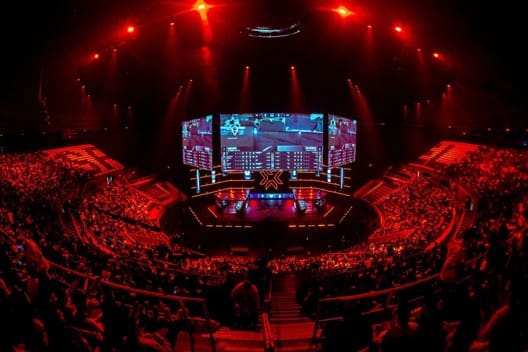
Image Source: Unsplash
How Prize Money Fits Into the Picture
Tournament winnings are distributed unevenly across a bracket and follow the competitive calendar rather than a fiscal one.
They are typically divided among players, coaching staff, and the organization according to terms agreed before the event.
Reporting from the Esports Business Association has put tournament winnings in the range of roughly 12 to 18 percent of total revenue for many top-tier organizations, and published financial summaries of individual clubs have shown similar proportions.
Sponsorship, by contrast, is contracted in advance and paid across a defined term, which is one reason organizations describe it as the more predictable line in their budgets.
This distinction is frequently cited as an explanation for why esports organizations invest in audience development and content production alongside competitive performance. Results influence commercial interest, but sponsors generally evaluate audience-based figures.
Two Categories of Sponsors
Industry reporting commonly divides esports sponsors into two groups.
Endemic sponsors sell products connected to gaming itself: peripherals, monitors, seating, PC components, and hardware.
Their rationale is direct, since the audience overlaps with the customer base and the product appears in the competitive environment. These agreements often include product supply alongside cash consideration.
Non-endemic sponsors come from outside gaming and include telecommunications, automotive, financial services, food and beverage, and apparel brands.
They are generally described as buying access to a younger audience that consumes less traditional broadcast media. Reporting on this category notes that these budgets tend to be larger and that the accompanying reporting requirements tend to be more detailed.
The shift from simple logo placement to measured outcomes is a documented trend in how brand partnerships are measured, and it has changed how agreements are written.
What Is Actually Sold in a Team Deal
Sponsorship inventory at the organizational level extends well beyond what appears on broadcast.
Jersey placement is the most visible asset and is usually divided into chest, sleeve, and back positions, priced according to how often each appears on camera.
Organizations also sell naming rights to facilities and training centers, presenting sponsorship on content series, branded segments within streams, social media commitments, appearances at sponsor events, and integration into merchandise lines.
A sponsorship package is typically a bundle of these assets with defined minimums attached to each.
Pricing generally begins with audience metrics: broadcast viewership, average concurrent viewers across a roster’s streams, social following, and engagement rates.
Buyers often convert these into an equivalent media value to compare against other channels. Where measured results do not match the audience figures presented, renewal becomes less likely, a dynamic that industry coverage has described repeatedly.
As Heller knows, the second component of these agreements is activation, meaning the deliverables the organization commits to: a specified number of posts, content pieces, player availability for production, and attendance at sponsor events.
Fulfillment records factor into renewal discussions alongside competitive results, a pattern that tends to pop up in sponsor fulfillment and renewal cycles.
Revenue Sources at the Player Level
Professional players in established leagues generally have several sources of income.
Salaries are set by contract and vary considerably by title, region, and league structure, with figures differing widely between franchised leagues and open circuits.
Prize money forms a second component, distributed according to terms set in advance between the player and the organization.
A third component is personal sponsorship. Player agreements commonly define categories in which the organization holds exclusivity, while the player can work independently outside those categories.
The specific boundaries vary by organization and league, and the parties and their representatives negotiate these terms.
Streaming and content form a fourth component. Platform subscriptions, advertising, viewer contributions, affiliate arrangements, and creator programs are standard categories, and industry reporting has noted that some players continue to earn from an established audience after their competitive careers end.
The extent to which that occurs varies considerably by individual and is not uniform across the industry.
Factors Cited in Valuing a Deal
Several factors appear consistently in industry discussion of how sponsorships are priced.
Audience composition is one. Sponsors increasingly measure attributed outcomes through tracked codes and links rather than relying on follower counts alone, which places weight on how an audience behaves rather than only on its size.
Brand safety is another. Sponsors are purchasing association with an organization or individual, and conduct provisions have become a standard feature of agreements in the space.
Coverage of the industry has documented instances in which partnerships were suspended or ended following conduct issues.
Category fit is a third. Audiences in this space are frequently described as responsive to whether a partnership makes sense in context, and campaign performance is often discussed in those terms.
The relationship between partnership selection and long-term standing is a theme in how reputations develop over time, and it appears in discussion of both organizations and individual competitors.
Concentration and Volatility
Analysts covering the sector have noted that organizations deriving most of their revenue from a small number of sponsors are exposed to advertising cycles they do not control, and that marketing budgets are subject to reduction during broader downturns.
Reporting during the industry contraction that followed the 2021 investment peak described several organizations restructuring or exiting titles as sponsorship revenue declined.
At the individual level, competitive careers in most titles are short relative to other professions, a point that appears consistently in reporting on the field.
Coverage of player transitions has described a range of subsequent paths, including coaching, content production, analysis, and roles outside the industry.
Summary
Available reporting describes esports as an industry in which sponsorship, rather than prize money, accounts for the largest share of revenue at both the market and organizational levels.
That places weight on audience metrics, measured campaign results, and fulfillment of contracted deliverables, alongside competitive performance.
The sector’s commercial mechanics resemble those of other media and sports properties: revenue is priced against audience, agreements specify deliverables, and buyers evaluate results.
Competitive titles and platforms differ from traditional sports, but the commercial structures are recognizable.
The figures cited above come from published market research, including Newzoo’s Global Esports and Live Streaming Market Report and reporting attributed to the Esports Business Association.
Estimates vary by source and methodology, and readers comparing figures should note the year and scope each source covers.