By week six this season, I looked back at my mut coins history and noticed something strange. I’d earned a genuinely solid amount overall, but my roster wasn’t much better than players who’d earned way less.
The problem wasn’t how much I was making — it was that I had no actual system for deciding what to do with it. Coins came in, coins went out on whatever caught my eye that day, with no plan connecting the two.
This is the full system I run now — five connected steps, from weekly budgeting all the way down to knowing exactly which card to buy and why.
Step 1: Set a Weekly Budget Before You Touch the Market
Instead of spending whenever I see a card I like, I now decide at the start of each week roughly how many coins I’m willing to spend, based on what I earned the previous week plus whatever reserve I’m keeping.
This one habit alone cut out most of the impulse auction house buys that never actually improved my team.
A rough split that works well:
- 60% toward actual roster needs
- 20% held as a rolling reserve for promo windows and Team of the Week drops
- The rest as discretionary spending — cards you want but don’t strictly need
The exact ratio matters less than having one at all.
Step 2: Mix Your Earning Methods — Don’t Rely on One
Relying on a single income source leaves coins on the table. Ranked by actual return on time invested, not by how familiar or fun they feel:
- Solo Challenges and Season Mode — steady baseline income. Fixed, known rewards in a fraction of the time of a full H2H match. Switching most weekday sessions to this roughly doubled my hourly coin rate.
- Auction House Flipping — the best return, if you’re patient. Certain cards get temporarily underpriced right after a promo drop, because panic-sellers dump their old cards fast. Buying those and relisting once the market settles can meaningfully grow a coin stack — but flipping the wrong card can also tie up coins for days with no buyer, so start small.
- Off-Peak Sniping — small, consistent gains. Early morning or mid-workday hours see thinner competition. Players who need coins fast tend to underprice cards for a quick sale during these windows more often than during peak evening hours.
- Packs — ranked last for a reason. They feel like progress because you’re opening something new, but the average return is worse than spending those same coins directly on the auction house. Tracking pack spending separately, it’s consistently my worst-performing use of coins all season.
My actual routine: a handful of solo challenges most days for the baseline, plus checking the market once or twice daily for flip opportunities when I have extra time.
Step 3: Needs Before Wants — Every Time
Run through this checklist before any purchase:
- Confirm it’s your actual weakest link. Pull up your last three games of stats before opening the auction house. Look for where you’re actually losing plays — missed tackles, blown coverage, a QB getting pressured because a tackle keeps whiffing. That’s the real target. A flashy card at a position that’s already solid is coins spent on a problem you don’t have.
- Check scheme fit before the overall number. Every card carries scheme-specific bonuses. A card built for a scheme your team doesn’t run loses a big chunk of its effective power on the field, even if the listing shows an eye-catching overall. Check the scheme tag first — reversing that order is exactly how I ended up with a bench-warming 92 overall.
- Compare the price trend, not just the first listing. Prices swing hard around promo drops and Team of the Week releases. Check a card’s price history over the last few days before bidding. If a position group just got a promo, older cards there usually crash in price within 24-48 hours — often worth the wait if you’re not desperate.
- Test it before you sell anything else. Run a practice session or a solo challenge with the new card before selling what it’s replacing. I’ve had cards that looked perfect on paper and just didn’t move the way I expected in-game. Confirm the improvement is real before that trade is final.
Step 4: A Different Rhythm for Launch Week
This whole system needs one adjustment at the start of a season, because the market hasn’t settled yet:
- Days 1–3: sit on your coins. Everyone’s flush with starter coins and nobody’s figured out actual market value yet, so prices are inflated across almost every position. Unless there’s a specific launch-only promo card that won’t come back later, waiting three or four days usually saves a noticeable chunk of your budget.
- Days 4–7: split coins by position tier. A bigger chunk for the positions that touch the ball most (QB, WR, key defensive line spots), a smaller reserve for depth pieces. Scheme fit matters more here than later in the season, because your team’s identity is still forming and every card you lock in shapes how the rest of the roster gets built around it.
- Week 2: keep 15-20% of your starting coins unspent going into the first Team of the Week drop, which usually hits within the first couple weeks. That promo typically crashes prices on older cards at the same positions — the reserve lets you either grab the promo card early or scoop up the suddenly-discounted cards it displaces.
Step 5: Know When to Buy Coins Outright
There are moments where the math clearly favors buying over grinding — a specific limited-window card, or a stretch where real life leaves less time for games but you don’t want your roster falling behind.
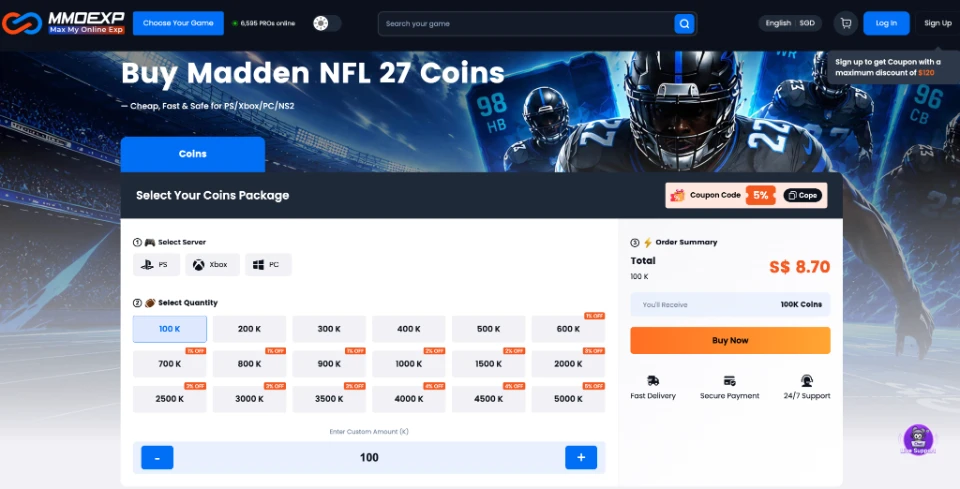
In those situations, choosing to buy Madden NFL 27 Coins is a legitimate part of the overall system, not a shortcut that replaces it.
The key is making that decision deliberately, inside the budget and needs-first rules above, rather than as a reaction to FOMO on whatever’s trending that day.
If you’re nowhere close to affording a hyped card through normal earnings, ask first whether it actually solves a problem you have.
Sometimes it does — and topping off with a direct purchase to close the gap makes sense, especially during a limited promo window that won’t come back. But that should be the last step after the checklist above, not the first move.
The Bottom Line
Earning tips and spending tips both help, but neither fixes the actual problem most players have, which is no consistent process connecting the two.
The players with consistently strong rosters by mid-season aren’t necessarily playing more than everyone else.
They know exactly which position is weak, they confirm scheme fit before chasing the highest number, they mix steady grinding with opportunistic flipping, and they know precisely when it makes sense to close a specific gap rather than grinding it out.
A weekly budget, a mixed earning routine, a needs-first spending rule, and a deliberate rule for when nfl 27 coins purchases fit into that budget will do more for your roster over a full season than any individual trick.