The FIFA World Cup host countries history gives us a complete map of the tournament from 1930 to 2034. This guide provides the full list of every host nation over the last century.
We will look at which continents have held the games most often. We will also explore the countries that have welcomed the world more than once.
This complete summary makes it easy to track global changes. You will see exactly how the tournament moved from single countries in Europe to modern events shared across multiple continents.
Every FIFA World Cup Host Country: Full List (1930 to 2034)
The table below shows the complete list of every host country from 1930 through the planned events up to 2034. It includes the year, the host nation, the continent, and the tournament winner.
You can also see exactly how the home team performed during their own event. We included a notes section to highlight major historical moments and format changes.
This complete summary table tracks the shift from early single host nations to the modern shared events.
| Year | Host Country | Continent | Tournament Winner | Host Nation Result | Notes |
| 1930 | Uruguay | South America | Uruguay | Winner | First edition |
| 1934 | Italy | Europe | Italy | Winner | First European host |
| 1938 | France | Europe | Italy | Quarter-finals | Automatic qualification introduced |
| 1942 | Cancelled | Not Applicable | Not Applicable | Not Applicable | Stopped due to World War II |
| 1946 | Cancelled | Not Applicable | Not Applicable | Not Applicable | Stopped due to World War II |
| 1950 | Brazil | South America | Uruguay | Runners-up | First tournament after World War II |
| 1954 | Switzerland | Europe | West Germany | Quarter-finals | First televised World Cup |
| 1958 | Sweden | Europe | Brazil | Runners-up | Northernmost host country |
| 1962 | Chile | South America | Brazil | Third place | Held in South America again |
| 1966 | England | Europe | England | Winner | Trophy stolen and recovered |
| 1970 | Mexico | North America | Brazil | Quarter-finals | First North American host |
| 1974 | West Germany | Europe | West Germany | Winner | New trophy introduced |
| 1978 | Argentina | South America | Argentina | Winner | Hosted in South America |
| 1982 | Spain | Europe | Italy | Second group stage | Expanded to 24 teams |
| 1986 | Mexico | North America | Argentina | Quarter-finals | Replaced Colombia as host |
| 1990 | Italy | Europe | West Germany | Third place | Second time hosting |
| 1994 | USA | North America | Brazil | Round of 16 | Highest average attendance |
| 1998 | France | Europe | France | Winner | Expanded to 32 teams |
| 2002 | South Korea & Japan | Asia | Brazil | 4th and Round of 16 | First shared tournament |
| 2006 | Germany | Europe | Italy | Third place | Second time hosting |
| 2010 | South Africa | Africa | Spain | Group stage | First African host |
| 2014 | Brazil | South America | Germany | Fourth place | Second time hosting |
| 2018 | Russia | Europe | France | Quarter-finals | First Eastern European host |
| 2022 | Qatar | Asia | Argentina | Group stage | First Middle Eastern host |
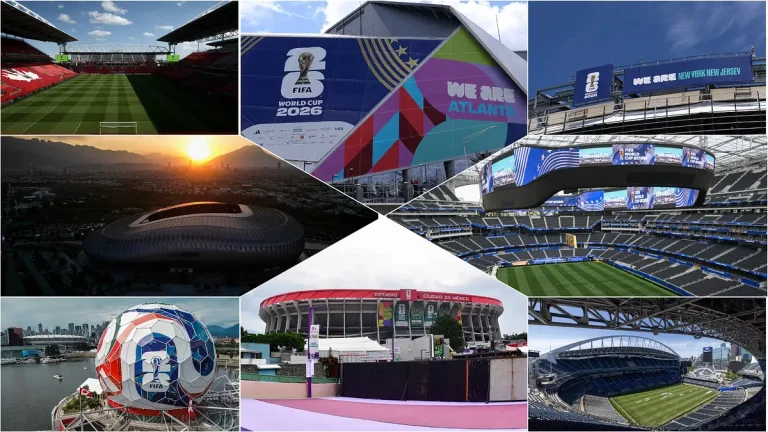
| 2026 | USA, Canada & Mexico | North America | To Be Decided | To Be Decided | First three-nation host |
| 2030 | Morocco, Spain & Portugal | Africa and Europe | To Be Decided | To Be Decided | Centenary matches in South America |
| 2034 | Saudi Arabia | Asia | To Be Decided | To Be Decided | Second Middle Eastern host |
Which Continents Have Hosted the FIFA World Cup Most?
Europe has hosted the tournament more than any other continent. European nations have held the event 11 times. The strong soccer culture and large stadiums in Europe make it an easy choice.
Countries like Italy, France, and Germany have all hosted the games multiple times. Fans in Europe travel easily between nearby countries to watch the matches.
South America comes in second place. They have hosted the tournament five times. The passion for soccer in countries like Brazil and Argentina is famous around the world.
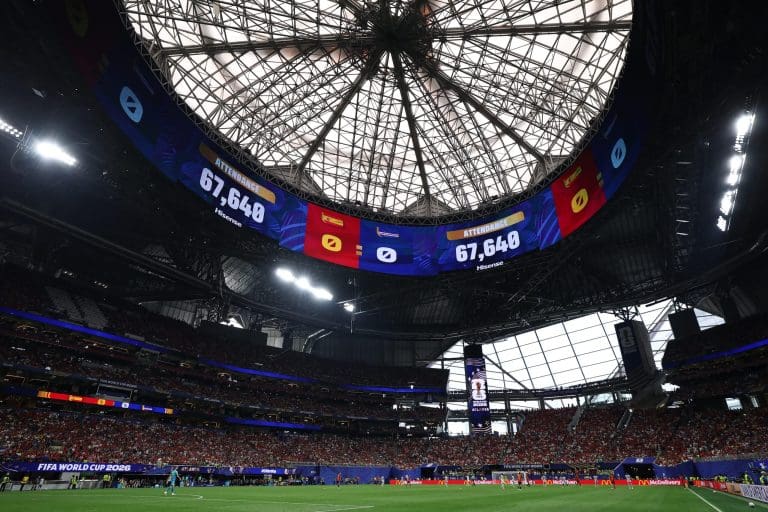
North America is catching up quickly. With the upcoming games in 2026, North America will have hosted the event four times. The stadiums in North America can hold massive crowds.
The organizers have worked hard to include more continents in recent years. Asia has hosted the games twice and will host again in 2034.
Africa hosted the games once in 2010 and will share hosting duties in 2030. Today, almost every inhabited continent has taken a turn holding the biggest tournament in the world.
| Continent | Times Hosted | Countries | Most Recent Year |
| Europe | 11 | Italy, France, Germany, Switzerland, Sweden, England, Spain, Russia | 2018 |
| South America | 5 | Uruguay, Brazil, Chile, Argentina | 2014 |
| North America | 4 | Mexico, USA, Canada | 2026 |
| Asia | 3 | South Korea/Japan, Qatar, Saudi Arabia | 2034 |
| Africa | 2 | South Africa, Morocco | 2030 |
Countries That Have Hosted the FIFA World Cup More Than Once
Only a few special countries have hosted the tournament more than once. Mexico holds a very unique record. They hosted the games in 1970 and 1986.
When they share the event in 2026, Mexico will become the very first country to host the tournament three times. Their famous Azteca Stadium is a legendary place in soccer history.
Four other nations have hosted the games twice. Italy welcomed the world in 1934 and again in 1990. France hosted the games in 1938 and 1998. Germany held the tournament in 1974 and 2006.
Brazil is the only South American country to host twice. They held the games in 1950 and 2014. These countries already had the big stadiums needed to host.
The gap between hosting duties can be very long. Brazil waited 64 years between their two tournaments. France is the only repeat host to win the championship both times they held the games.
Because the rules now prefer multiple countries sharing the event, it will be very hard for a single country to host multiple times in the future.
| Country | Hosted Years | Gap Between Hosts | Won on Home Soil? |
| Mexico | 1970, 1986, 2026 | 16 years, 40 years | No |
| Italy | 1934, 1990 | 56 years | Yes |
| France | 1938, 1998 | 60 years | Yes |
| Germany | 1974, 2006 | 32 years | Yes |
| Brazil | 1950, 2014 | 64 years | No |
Host Nation Performance at Their Own World Cup
The table in this section outlines how every host nation performed during their own tournament. You can see the exact round each home team reached.
Six different host nations have won the entire tournament on their home soil. These winners include Uruguay, Italy, England, West Germany, Argentina, and France.
The table also highlights the impact of the automatic qualification rule. This rule gives the host country a free pass straight into the main tournament, helping most home teams reach the knockout rounds easily.
| Host Nation | Year | Tournament Result |
| Uruguay | 1930 | Winner |
| Italy | 1934 | Winner |
| France | 1938 | Quarter-finals |
| Brazil | 1950 | Runners-up |
| Switzerland | 1954 | Quarter-finals |
| Sweden | 1958 | Runners-up |
| Chile | 1962 | Third place |
| England | 1966 | Winner |
| Mexico | 1970 | Quarter-finals |
| West Germany | 1974 | Winner |
| Argentina | 1978 | Winner |
| Spain | 1982 | Second group stage |
| Mexico | 1986 | Quarter-finals |
| Italy | 1990 | Third place |
| USA | 1994 | Round of 16 |
| France | 1998 | Winner |
| South Korea | 2002 | Fourth place |
| Japan | 2002 | Round of 16 |
| Germany | 2006 | Third place |
| South Africa | 2010 | Group stage |
| Brazil | 2014 | Fourth place |
| Russia | 2018 | Quarter-finals |
| Qatar | 2022 | Group stage |
How the FIFA World Cup Host Selection Process Works
The process of choosing a host country takes many years of careful planning. In the past, the choices were simple. Today, the process is very strict and requires a lot of money.
You can read more about how this bidding system works on the FIFA organization guidelines page. The current timeline involves a specific sequence of actions to ensure fairness.
The selection process follows these exact steps:
- A country submits a detailed bid proposal to the FIFA official website.
- A special inspection team visits the country to review stadiums, hotels, and airports.
- Soccer leaders from over 200 countries review the inspection reports.
- The full congress votes on the final destination.
- The winning country spends six to eight years building the necessary infrastructure.
Hosting the games costs billions of dollars. Countries must build new roads, train lines, and sports arenas. Because it costs so much money, fewer single countries can afford to host the games alone.
This is why we now see multiple countries teaming up to share the costs. The voting can also be very close.
For example, Germany beat South Africa by just one single vote to win the 2006 tournament.
Upcoming and Future FIFA World Cup Host Countries
The future of the tournament is all about sharing the games across borders. As the tournament grows larger, the demands on the host countries increase. The organizers now prefer multi-nation bids.
This approach helps spread out the massive costs of building new stadiums and hotels. It also allows more fans from different countries to easily attend the matches.
The planned locations for the next three tournaments include:
- 2026 North America: The United States, Canada, and Mexico will share the games. The tournament will expand from 32 teams to 48 teams for the very first time.
- 2030 Global Centenary: Spain, Portugal, and Morocco will host the main games. Uruguay, Argentina, and Paraguay will each host one special opening match to celebrate the 100th birthday of the event.
- 2034 Middle East: Saudi Arabia will host the tournament alone. They were the only country to submit a final bid in the short time frame allowed.
These future events will change the FIFA World Cup host countries history forever. The 2030 games will be the first to take place across three different continents.
At the same time, the 2034 games show that wealthy nations can still host a massive 48-team event on their own.
FAQs
How many countries have hosted the FIFA World Cup?
A total of 18 countries have hosted the games across 22 tournaments up to 2022. With the upcoming events in 2026, 2030, and 2034, this number will grow rapidly. Many new nations are joining the FIFA World Cup host countries history list.
Which country has hosted the FIFA World Cup the most times?
Mexico has hosted the games the most times. They hosted in 1970 and 1986. They will become the first three-time host when they share the games in 2026.
Which host nations won the games on home soil?
Six host nations have won the tournament on their home field. These countries are Uruguay, Italy, England, West Germany, Argentina, and France. No host nation has won the trophy at home since 1998.
Has any African country ever hosted the games?
Yes, South Africa hosted the tournament in 2010. They were the very first African country to hold the games. Morocco will become the second African host when they share the event in 2030.
When did Asia first host the soccer tournament?
Asia first hosted the games in 2002. Japan and South Korea shared the event that year. Qatar later hosted the games in 2022.
Which country was originally supposed to host in 1986?
Colombia was first chosen to host the 1986 games. They had to cancel because they did not have enough money to build stadiums. Mexico stepped in to take their place and hosted for a second time.
Do host countries automatically qualify for the games?
Yes, host countries receive automatic qualification. They do not have to play any qualifying matches. This rule has been in place since 1938 to make sure the home team plays.
Who is hosting the tournament in 2030?
Spain, Portugal, and Morocco will host the main games in 2030. Uruguay, Argentina, and Paraguay will also host one match each. This special setup celebrates the 100th birthday of the first tournament.
How are the host countries chosen today?
Countries submit detailed plans showing their stadiums and hotels. Soccer leaders from over 200 countries then vote on the best plan. The final choice is usually made six to eight years before the games begin.
What is the major format change for 2026?
The 2026 tournament will expand to include 48 teams instead of 32. It will also be the first time three countries share the event. The United States, Mexico, and Canada will host the games together.