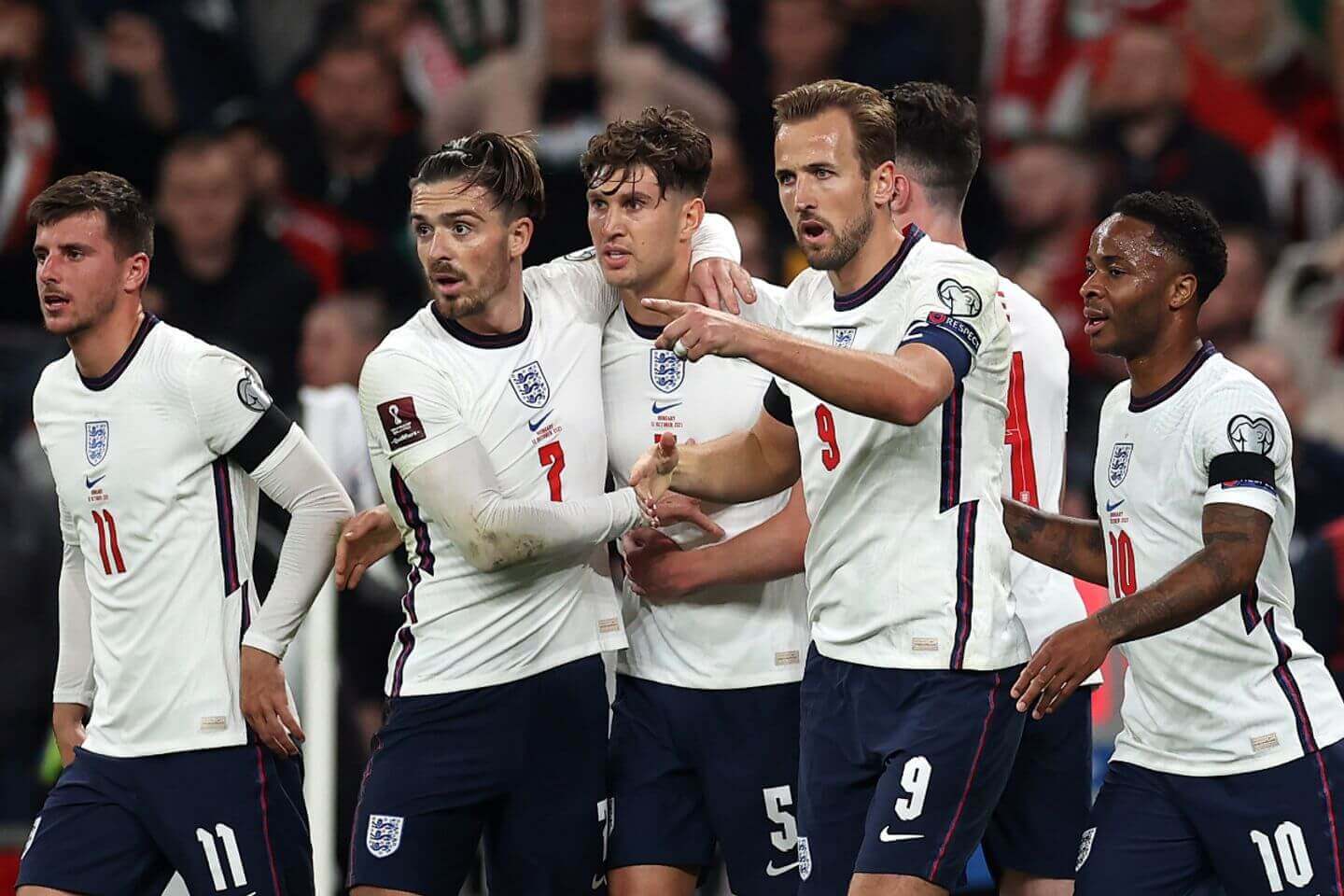
England leads 2026 World Cup squad valuations at €1.3 billion, narrowly ahead of France at €1.28 billion. Spain sits third at €920 million despite their younger roster.
These figures from Transfermarkt reflect each player’s estimated transfer worth based on age, contract length, performance, and market demand.
The gap between top squads has tightened since 2022 Qatar, where England held a €150 million advantage over Brazil.
Value indicates which teams have depth and star power, but tournament history shows it doesn’t predict who lifts the trophy in July.
Current World Cup Squad Valuations (2026)
| Team | Squad Value | Most Valuable Player | Average Age |
| England | €1.30 billion | Jude Bellingham (€140m) | 26.3 years |
| France | €1.28 billion | Kylian Mbappé (€200m) | 26.8 years |
| Spain | €920 million | Lamine Yamal (€200m) | 25.1 years |
| Portugal | €860 million | Rafael Leão (€85m) | 27.4 years |
| Brazil | €790 million | Vinícius Júnior (€150m) | 26.9 years |
| Germany | €710 million | Jamal Musiala (€140m) | 26.2 years |
| Netherlands | €680 million | Xavi Simons (€80m) | 26.7 years |
| Argentina | €600 million | Julián Álvarez (€90m) | 28.3 years |
England (€1.30 Billion)
England’s squad combines Premier League depth with generational talent across all positions.
Their €1.3 billion valuation stems partly from the “Premier League premium” that inflates prices for English-based players by 15-25%.
Jude Bellingham anchors the midfield at €140 million despite his valuation dropping €20 million in March 2026 following inconsistent Real Madrid form.
Phil Foden (€110 million), Bukayo Saka (€140 million), and Declan Rice (€105 million) provide attacking and defensive balance.
The Three Lions can field four world-class right-backs without drop-off. This depth means injuries don’t devastate their tactical options like they would for top-heavy squads.
Their only weakness is the lack of a proven clinical striker, with Harry Kane aging and younger options unproven at tournament level.
France (€1.28 Billion)
France sits just €20 million behind England with elite talent distributed across every position.
Kylian Mbappé leads at €200 million despite struggling at Real Madrid through the 2025-26 season. His pure talent keeps valuations sky-high even when form dips.
Their forward depth exceeds every nation. They can start Mbappé, Marcus Thuram, and Michael Olise, then bring on Ousmane Dembélé and Randal Kolo Muani from the bench. No other team matches that attacking firepower across five substitutions.
The concern is defensive depth. William Saliba (€80 million) and Dayot Upamecano anchor the back line, but injuries to either force them toward less proven options.
Their fullback positions also lack the quality depth England enjoys.
Spain (€920 Million)
Spain’s youth revolution changed everything. Their €920 million valuation ranks third despite an average age of just 25.1 years.
This squad will peak at the 2028 Euros and 2030 World Cup, but they’re already formidable.
Lamine Yamal’s €200 million valuation at 18 years old represents the highest teenage player assessment in football history according to CIES Football Observatory.
His Euro 2024 performances proved he competes at the highest level now, not in the future.
Pedri (€150 million), Fermín López (€100 million), and Gavi (€90 million) give them midfield options most nations envy.
All came through La Masia or were acquired for minimal fees. Their combined current value exceeds €300 million, representing massive appreciation from Barcelona’s perspective.
The risk is tournament inexperience. Despite Euro 2024 success, many squad members have limited World Cup exposure.
Mental strength under knockout pressure often comes only through repeated major tournament heartbreak.
Portugal (€860 Million)
Portugal’s €860 million squad features quality across the pitch but lacks a single transcendent superstar at their peak.
Rafael Leão (€85 million) leads valuations, followed by Bruno Fernandes (€80 million) and Bernardo Silva (€70 million).
Their strength is balance. No position feels weak, but no position feels dominant either. This makes them dangerous but not favorites.
Cristiano Ronaldo’s presence complicates squad harmony more than it helps performance, though his leadership in knockout moments has value spreadsheets can’t measure.
Goalkeeper Diogo Costa (€40 million) is genuinely world-class and could be the difference in tight knockout matches.
Portugal typically underwhelms at tournaments relative to talent, so their challenge is mental as much as tactical.
Brazil (€790 Million)
Brazil’s €790 million valuation reflects transition struggles and an aging core. Vinícius Júnior (€150 million) and Rodrygo (€90 million) carry the attack, but after them, quality drops sharply.
Their defensive organization concerns scouts most. They conceded goals to lesser opponents throughout qualifying and look vulnerable to counter-attacks.
Carlo Ancelotti took over in mid-2025 and hasn’t fully solved these structural issues.
The Seleção still has individual talent to beat anyone on their day. But this isn’t the Brazil of 2002 or even 2022 Qatar.
Their value ranking matches their actual tournament threat level for the first time in decades.
Germany (€710 Million)
Germany rebuilt around youth after disappointing at the 2018 and 2022 World Cups.
Jamal Musiala (€140 million) and Florian Wirtz (€120 million) form a dynamic attacking partnership that terrifies defenders.
Their €710 million squad is younger and less proven than previous German generations. This brings athleticism and hunger but less tournament craft.
Joshua Kimmich provides veteran leadership, but they lack the spine of Lahm, Schweinsteiger, and Neuer from 2014.
Hansi Flick prioritized competition for places, keeping 28 players in serious contention rather than a fixed 23.
This maintains performance standards through training intensity and creates genuine depth across positions.
Netherlands (€680 Million)
The Netherlands sit at €680 million with a squad built around Liverpool’s system. Virgil van Dijk (€40 million) still anchors defense at 34 years old, while Xavi Simons (€80 million) provides attacking creativity.
Their tactical flexibility under Ronald Koeman gives them edges against stronger opponents.
They can play possession football or counter-attack depending on matchups. This adaptability makes them dangerous knockout opponents despite lacking elite individual talent.
Frenkie de Jong’s fitness determines their ceiling. When healthy, he makes their midfield world-class. When injured or off form, they struggle to control matches against top opposition.
Argentina (€600 Million)
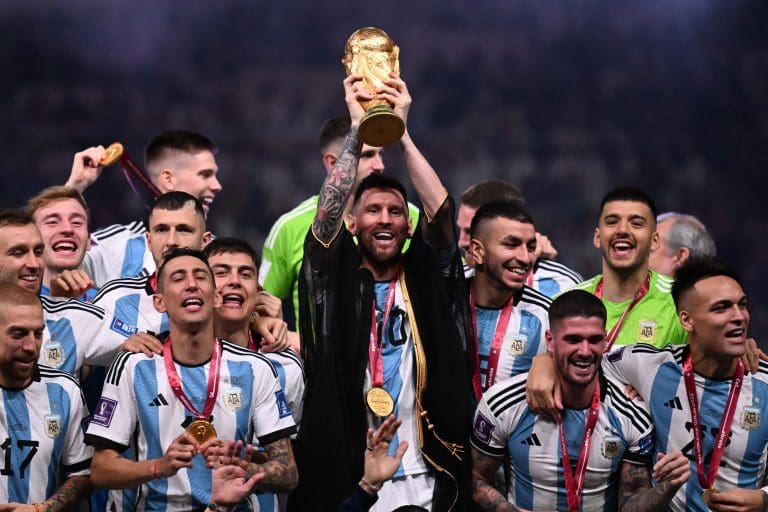
Argentina’s €600 million valuation ranks eighth despite being defending champions. Lionel Messi’s age (38) drags their average down significantly.
His minimal transfer value doesn’t reflect his actual impact on matches.
Julián Álvarez (€90 million) and Lautaro Martínez (€99 million) provide goals without Messi.
This depth kept them winning during his injury absences in 2024 and 2025. They’re less dependent on him than at Qatar 2022, which could help if he picks up a knock.
Their challenge is depth beyond the starting eleven. Losing two starters in any position creates problems.
France, England, and Spain have deeper squads that can absorb injuries better across a seven-match tournament.
World Cup 2022 Qatar Squad Values
| Team | 2022 Value | Most Valuable Player | Tournament Result |
| England | €1.499 billion | Bellingham (€202m) | Quarterfinals |
| Brazil | €1.45 billion | Vinícius Jr (€200m) | Quarterfinals |
| France | €1.34 billion | Mbappé (€185m) | Final (Lost) |
| Spain | €1.20 billion | Pedri (€100m) | Round of 16 |
| Argentina | €748 million | Messi (€50m) | Champions |
The Qatar tournament showed squad value’s weak correlation with success. Argentina won with the eighth-most valuable squad at €748 million, beating France’s €1.34 billion in the final on penalties.
England’s squad included 19-year-old Jude Bellingham valued at €202 million by CIES researchers.
His performance in Qatar increased that valuation by roughly 30% within six months as he dominated midfield against top opposition.
France’s Kylian Mbappé scored a hat-trick in the final despite losing on penalties. He finished with eight goals total, cementing his status among football’s elite. His performances showed individual brilliance can’t overcome team cohesion gaps.
Lloyd’s of London calculated insurable values separately, ranking England first at £3.17 billion ($3.76 billion). This metric included wages, sponsorship potential, and injury risk rather than pure transfer value.
The gap between transfer value and insurable value shows how player earning power exceeds their market price.
Why Value Doesn’t Guarantee World Cup Success
Argentina won 2022 with the eighth-most valuable squad (€748 million). France lost the final despite €1.34 billion in talent. The pattern repeats throughout tournament history.
Key factors that outweigh squad value:
Chemistry beats star power. Argentina’s players trusted Scaloni’s system completely. France had better individuals but less team unity.
Tournament experience matters. Croatia reached semifinals twice (2018, 2022) with modest valuations. Their core knew how to manage knockout pressure and conserve energy.
Tactical flexibility wins. Spain adapted at Euro 2024 based on opponents. England struggled because Southgate’s approach remained predictable.
Age curves affect recovery. Spain’s 25.1-year average means fresher legs in knockout rounds versus aging squads grinding through extra time.
Injury timing destroys advantages. England losing Bellingham in the group stage would erase their value edge instantly.
Home advantage matters most. South Korea (2002), Uruguay (1930), and France (1998) all won or overperformed at home tournaments.
Premium League Effect on Valuations
Premier League players carry 15-25% inflated valuations due to the competition’s financial dominance.
English clubs generate £6.1 billion annually according to Deloitte’s Football Money League, dwarfing other European leagues.
Even relegated Premier League clubs receive €100+ million in broadcast revenue, letting them demand premium fees. Brighton sold Moisés Caicedo to Chelsea for €116 million, setting a British transfer record.
England’s squad features 18 Premier League players, creating roughly €200-250 million in “Premier League premium” that wouldn’t exist if they played in La Liga or Serie A. France’s squad splits more evenly across leagues, partly explaining their €20 million gap behind England.
Youth Talent Reshaping Squad Values
Teenage phenoms have disrupted traditional valuation models. Lamine Yamal’s €200 million valuation at 18 exceeds what Messi, Ronaldo, or Mbappé commanded at the same age, adjusted for inflation.
| Player | Age | Value | Club | Milestone |
| Lamine Yamal | 18 | €200m | Barcelona | Highest teenage valuation ever |
| Endrick | 18 | €72m | Real Madrid | Record pre-18 transfer fee |
| Jamal Musiala | 21 | €140m | Bayern Munich | Youngest to €100m+ |
| Pedri | 23 | €150m | Barcelona | €5m investment → €150m value |
Post-pandemic financial pressures pushed clubs toward youth development. Spain’s model proves effective: Pedri (€5 million), Gavi (academy), and Fermín López (academy) now worth €300+ million combined.
The risk is tournament inexperience. Mental strength under knockout pressure comes only through repeated major tournament exposure. Spain’s young core gained that at Euro 2024.
Most Valuable Players by Position (2026)
Forwards and Wingers
- Lamine Yamal (Spain) – €200 million
- Kylian Mbappé (France) – €200 million
- Vinícius Júnior (Brazil) – €150 million
- Bukayo Saka (England) – €140 million
- Jamal Musiala (Germany) – €140 million
Elite attacking talent commands premium prices because goals win matches. Mbappé and Yamal represent different player archetypes but share explosive pace, technical skill, and goal threat.
Midfielders
- Pedri (Spain) – €150 million
- Jude Bellingham (England) – €140 million
- Phil Foden (England) – €110 million
- Martin Ødegaard (Norway) – €90 million
- Bruno Fernandes (Portugal) – €80 million
Box-to-box midfielders with goal contributions alongside creative passing fetch the highest fees.
Bellingham’s combination of physicality, technical ability, and leadership makes him virtually irreplaceable for England.
Defenders
- William Saliba (France) – €80 million
- Joško Gvardiol (Croatia) – €75 million
- Pau Cubarsí (Spain) – €70 million
- António Silva (Portugal) – €60 million
- Jurriën Timber (Netherlands) – €50 million
Modern ball-playing defenders cost more than traditional stoppers. Saliba’s combination of defensive solidity and buildup play makes him Arsenal’s most valuable defender.
Goalkeepers
- Diogo Costa (Portugal) – €40 million
- Alisson (Brazil) – €35 million
- Gianluigi Donnarumma (Italy) – €30 million
Goalkeeper valuations lag far behind outfield players despite their importance. Even the world’s best shot-stoppers rarely exceed €50 million in transfer fees.
Historical World Cup Winners and Squad Values
| Year | Winner | Squad Value Rank | Actual Value |
| 2022 | Argentina | 8th | €748 million |
| 2018 | France | 2nd | €1.08 billion |
| 2014 | Germany | 2nd | €450 million |
| 2010 | Spain | 3rd | €380 million |
| 2006 | Italy | 5th | €240 million |
| 2002 | Brazil | 4th | €180 million |
Winners typically rank top 10 in value but rarely lead. The correlation between value and placement is only 0.35, meaning value explains just 12% of tournament results.
Germany 2014 showed optimal timing: young stars (Müller, Kroos, Götze) combining with experienced veterans (Lahm, Schweinsteiger, Neuer).
FAQs
Which team has the most valuable World Cup squad in 2026?
England at €1.3 billion, led by Jude Bellingham (€140 million) and Phil Foden (€110 million). Their Premier League-heavy roster benefits from English football’s financial dominance and the “Premier League premium” effect.
Has the most valuable squad ever won a World Cup?
No. The most valuable squad has never won a World Cup. France in 2018 came closest, ranking second in value when they won. Argentina’s 2022 victory with the eighth-most valuable squad represents the typical pattern.
Why is Lamine Yamal valued at €200 million at 18 years old?
Yamal’s valuation reflects elite current performance combined with extraordinary potential upside. His Euro 2024 performances proved he already competes at football’s highest level. His contract through 2031 gives Barcelona leverage to demand premium fees.
Do Premier League players cost more than players from other leagues?
Yes. Premier League players carry 15-25% higher valuations than equivalent performers in other top European leagues. English clubs’ financial advantages let them demand premium fees when selling. This “Premier League premium” inflates England’s national team valuation significantly.
Why does Argentina have such a low squad value despite being champions?
Argentina’s squad includes several aging veterans whose values decline due to age curves. Messi at 38 carries minimal transfer value despite world-class ability. Their €600 million total reflects realistic market prices rather than performance quality.
Will England’s high squad value help them win the 2026 World Cup?
Squad value provides depth and quality advantages but doesn’t guarantee tournament success. England’s €1.3 billion roster gives them better chances than lower-valued teams statistically, but chemistry, tactics, and tournament experience often matter more than individual talent.
What’s the “Premier League premium” effect on valuations?
The 15-25% valuation markup for players competing in England’s top flight due to the league’s financial dominance. England’s squad includes roughly €200-250 million in this premium, meaning their players would be valued lower if they competed in other top European leagues.