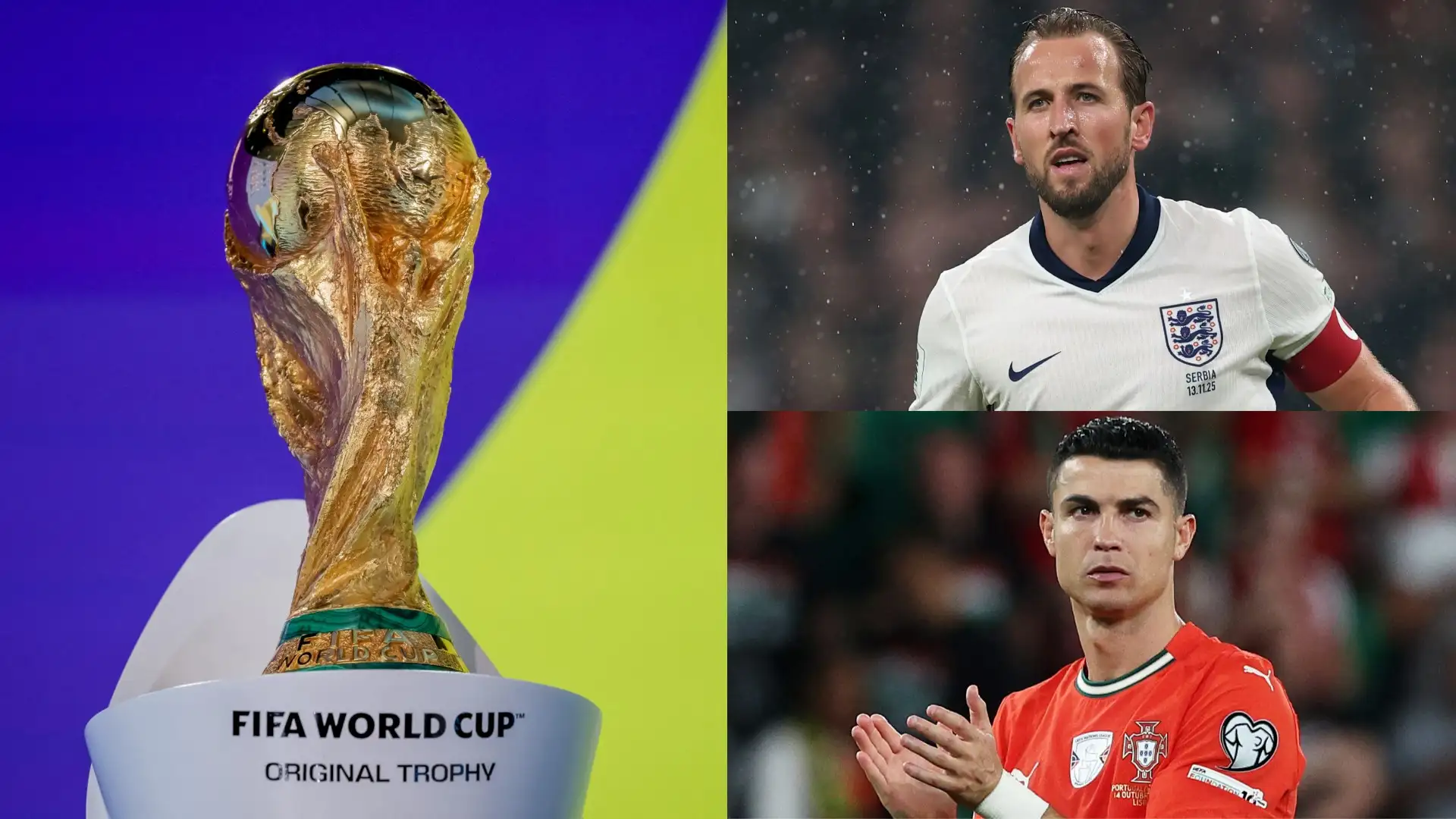
You’re watching the World Cup draw wondering how FIFA ranking determines which teams land in which pots. The seeding system controls group stage matchups, but the mechanics remain confusing.
World Cup seeding divides 48 teams into four pots based on FIFA rankings. The top 12 teams (including three hosts) fill Pot 1.
Each group gets one team from each pot, balancing competition. For 2026, FIFA added knockout pathway seeding to keep the top four teams separated until semifinals.
This guide covers pot formation, confederation restrictions, draw procedures, and what the 2026 draw means for knockout paths.
What is World Cup Seeding?
World Cup seeding distributes talent across tournament groups based on team strength. The system prevents elite teams from clustering together while creating fair group difficulty.
FIFA sorts qualified teams into tiers using global rankings, then draws groups so each contains one team from every tier.
A group with Argentina, Croatia, Norway, and Jordan shows seeding in action – one top seed, one upper-middle seed, one mid-tier team, and one lower-ranked qualifier.
Seeding affects three dimensions. First, it determines group composition. Second, it influences knockout paths since group winners feed into specific bracket positions.
Third, it creates psychological advantages – Pot 1 teams avoid other elite sides early while Pot 4 teams face uphill battles.
How FIFA Rankings Determine Pots
FIFA divides teams into four pots using ranking hierarchy. The top 12 fill Pot 1, ranks 13-24 go to Pot 2, ranks 25-36 populate Pot 3, and ranks 37-42 plus six playoff winners land in Pot 4.
Host nations create the key exception. The United States, Mexico, and Canada automatically entered Pot 1 regardless of November 2025 rankings.
The U.S. ranked 14th, Mexico 13th, and Canada 21st – meaning Canada jumped ahead of nine higher-ranked teams who dropped to Pot 2.
After placing hosts, FIFA filled remaining Pot 1 slots with the next highest qualifiers: Spain (1), Argentina (2), France (3), England (4), Brazil (5), Portugal (6), Netherlands (7), Belgium (8), and Germany (9). Croatia at 11th dropped to Pot 2 because host slots displaced them.
The ranking snapshot date matters. FIFA froze rankings on November 19, 2025, for the December 5 draw. Teams that improved or declined after that couldn’t change pot placement.
Playoff complications add uncertainty. Six teams remained unknown at draw time – four European winners and two intercontinental winners. All six went to Pot 4 regardless of eventual ranking.
Italy, ranked 9th globally, entered playoffs after finishing second to Norway. If Italy qualifies, they compete from Pot 4 despite ranking higher than many Pot 1, 2, and 3 teams.
Confederation Restrictions in the Draw
Teams from the same confederation can’t land in the same group, with one exception. This ensures geographic diversity.
The rule applies simply for most regions. South American teams face maximum one per group – Brazil won’t pair with Argentina. African, Asian, Oceania, and North/Central American teams follow the same limit.
UEFA operates differently. With 16 European teams and only 12 groups, math forces multiple groups to contain two European sides.
Each group must have minimum one UEFA team but maximum two. Spain and Portugal could pair up, but never three European teams together.
Confederation allocations for 2026:
- UEFA (Europe): 16 teams
- CAF (Africa): 9 teams
- AFC (Asia): 8 teams
- CONMEBOL (South America): 6 teams
- CONCACAF (North/Central America): 6 teams
- OFC (Oceania): 1 team
Playoff pathways add complexity. Intercontinental playoffs created two paths with three teams each.
The system treats all three potential winners from each pathway as the same confederation group – if Pathway 1’s winner joins a group, that group can’t receive any teams from those three confederations.
UEFA’s Two-Team Exception
Europe’s larger qualifier pool creates mathematical necessity for the two-team rule. With 16 UEFA teams across 12 groups, four groups must contain two European sides while eight have one.
The math works simply. Minimum one UEFA team per group requires 12 Europeans, leaving four additional qualifiers who must pair with the initial 12.
Examples from the 2026 draw show this in action. Some groups paired major European powers while others matched mid-tier UEFA sides.
The Group Stage Draw Procedure
The December 5, 2025 draw at Kennedy Center followed a specific sequence to build 12 groups while respecting seeding rules.
FIFA pre-assigned three hosts before drawing began. Mexico landed in Group A, Canada in Group B, United States in Group D.
The draw proceeded through four phases:
- Pot 1 Allocation: Remaining nine Pot 1 teams went into groups C, E, F, G, H, I, J, K, and L. FIFA placed Spain, Argentina, France, England, Brazil, Portugal, Netherlands, Belgium, and Germany.
- Pot 2 Distribution: All 12 Pot 2 teams entered the pool. FIFA drew teams one by one, checking confederation restrictions. If a team would violate regional rules, drawing continued until finding valid placement.
- Pot 3 Assignment: Process repeated for Pot 3’s 12 teams. Confederation restrictions played larger roles since groups already contained two teams with regional affiliations.
- Pot 4 Completion: Final round placed six known teams plus six playoff placeholders appearing as “UEFA Playoff A,” “Intercontinental Playoff 1,” and so on. Actual teams get determined through March 2026 matches.
An important change: FIFA predetermined position numbers (1, 2, 3, or 4) within groups. Teams knew both group letter and position number immediately, affecting match scheduling.
2026 World Cup Pots (Complete Breakdown)
The December 5 draw allocated 48 teams into four pots based on November 2025 FIFA rankings.
| Pot 1 | Pot 2 | Pot 3 | Pot 4 |
| Spain (1) | Croatia (11) | Norway (17) | Jordan (37) |
| Argentina (2) | Morocco (12) | Panama (38) | Cabo Verde (39) |
| France (3) | Colombia (15) | Egypt (40) | Ghana (41) |
| England (4) | Uruguay (16) | Algeria (41) | Curaçao (42) |
| Brazil (5) | Switzerland (18) | Scotland (19) | Haiti (43) |
| Portugal (6) | Japan (22) | Paraguay (44) | New Zealand (45) |
| Netherlands (7) | Senegal (23) | Tunisia (46) | UEFA Playoff A |
| Belgium (8) | Iran (24) | Ivory Coast (47) | UEFA Playoff B |
| Germany (9) | South Korea (25) | Uzbekistan (48) | UEFA Playoff C |
| USA (14) | Ecuador (26) | Qatar (27) | UEFA Playoff D |
| Mexico (13) | Austria (28) | Saudi Arabia (29) | Intercontinental Playoff 1 |
| Canada (21) | Australia (30) | South Africa (31) | Intercontinental Playoff 2 |
Notable placements: Canada sits in Pot 1 despite ranking 21st, lower than 11 teams in Pots 2 and 3. Host positions bumped higher-ranked teams down.
Croatia at rank 11 creates potential difficulty for Pot 1 teams. Morocco (12) represents another strong Pot 2 side after their 2022 semifinal run.
Playoff placeholders carry uncertainty. Italy (9th), Denmark (20th), Turkey (26th), and Ukraine (27th) compete for four European slots. If Italy and Denmark qualify, Pot 4 would contain teams ranking higher than multiple Pot 1, 2, and 3 members.
According to FIFA’s draw procedures, intercontinental playoffs feature DR Congo versus Jamaica’s winner in one final, Iraq versus Bolivia/Suriname’s winner in the other.
Knockout Stage Pathway Seeding (New for 2026)
FIFA introduced tennis-style knockout seeding, separating the top four teams into different bracket quadrants. This prevents elite sides from eliminating each other before finals.
Spain (1st) and Argentina (2nd) were drawn into opposite bracket sides – they can’t meet before the final. France (3rd) and England (4th) received the same treatment.
The mechanism works through group positioning. Winners of specific groups feed into predetermined bracket sections.
If Spain and Argentina both win their groups and continue winning, they could only meet in the championship match.
This affects only the top four FIFA-ranked teams. Remaining 44 teams follow standard knockout positioning based on group finish.
The system mirrors Grand Slam tennis where top seeds occupy opposite draw sections. FIFA adopted this after observing how 2022’s quarterfinals featured multiple potential finalist matchups too early.
How 48-Team Expansion Changed Seeding
The jump from 32 to 48 teams forced FIFA to restructure pots. Previous tournaments used eight groups with four pots of eight teams.
The 2026 format maintains four-team groups but expands to 12 groups with four pots of 12 teams.
The change creates wider ranking gaps within pots. Pot 2 now spans ranks 13-24 – a 12-position spread versus the eight-position spread in 32-team formats.
Croatia at 11 sits significantly above Australia at 30 within Pot 2.
Knockout structure shifted too. The 32-team format sent top two from each group to a round of 16. With 48 teams, top two advance (24 teams) plus eight best third-place finishers, creating a round of 32.
Confederation allocations expanded. Africa gained four spots (5 to 9), Asia added three (4-5 to 8), Europe increased from 13 to 16.
When Seeding Doesn’t Guarantee Easy Groups
FIFA rankings reflect historical weighted results, creating lag between current form and pot placement.
A team could rank high on 2023-2024 performances but decline in 2025, yet still draw favorable pot for 2026.
The ranking freeze compounds timing issues. FIFA locked rankings November 19, 2025, over six months before June 2026 kickoff.
Coaching changes, injuries, and momentum shifts after November don’t affect pot assignments.
Host nation automatic seeding creates notable imbalances. Canada’s Pot 1 placement at rank 21 means they seeded ahead of 10 higher-ranked teams.
Croatia (11), Morocco (12), Colombia (15), and Uruguay (16) landed in Pot 2 despite stronger credentials.
Playoff wildcards inject uncertainty. Six Pot 4 teams remained unknown at draw time. If Italy (9th) qualifies through playoffs, they play from Pot 4 despite ranking higher than three Pot 1 hosts and multiple Pot 2-3 teams.
This creates “group of death” possibilities. Consider a group with Spain (Pot 1, rank 1), Croatia (Pot 2, rank 11), Norway (Pot 3, rank 17), and playoff Italy (Pot 4, rank 9) – four genuine contenders despite perfect pot allocation.
According to ESPN’s World Cup analysis, several teams entered on hot streaks or concerning slides that November rankings didn’t capture.
FAQs
How are World Cup pots determined?
FIFA creates pots based on ranking tiers. Top 12 teams (including three hosts) fill Pot 1, ranks 13-24 go to Pot 2, ranks 25-36 to Pot 3, ranks 37-42 plus six playoff winners to Pot 4. Rankings get frozen weeks before the draw.
Why do host nations get automatic Pot 1 seeding?
FIFA grants hosts Pot 1 placement for home advantage. For 2026, this placed Canada (ranked 21st) in Pot 1 despite 10 higher-ranked teams landing in lower pots.
Can two teams from the same country be in the same World Cup group?
No – only one nation enters per country. Confederation restrictions prevent most regions from placing two teams together. Exception: UEFA allows maximum two European teams per group since 16 qualify for 12 groups.
What happens if a playoff team has a higher FIFA ranking than Pot 4?
They still play from Pot 4 regardless. Italy ranked 9th but entered playoffs after finishing second in qualifying. If they win through, they compete from Pot 4 despite ranking higher than many Pot 1-3 teams.
How many teams from each confederation can be in one World Cup group?
Maximum one per confederation for South America, Africa, Asia, Oceania, and North/Central America. UEFA exception: groups must contain minimum one but maximum two European teams.
What is knockout pathway seeding in the 2026 World Cup?
FIFA separated top four teams (Spain, Argentina, France, England) into different bracket quadrants. Spain and Argentina can’t meet before finals. France and England follow the same restriction.
How does FIFA ranking affect World Cup draw?
Rankings determine pot placement, controlling possible opponents. Higher rankings secure better pots, limiting who you face in groups. Rankings freeze weeks before draws, so recent form doesn’t affect placement.
Why does UEFA get two teams per group when other confederations get one?
Mathematical necessity. UEFA qualified 16 teams for 12 groups. Minimum one European per group requires 12, leaving four who must pair with the initial 12. Maximum caps at two per group.
When is the FIFA ranking snapshot taken for World Cup seeding?
FIFA froze rankings November 19, 2025 for the December 5 draw – roughly two weeks prior. Teams that improved or declined after that couldn’t change pot assignments.
Can third-place teams advance to the knockout stage in 2026?
Yes – the eight best third-place finishers advance. Top two from each group (24 teams) automatically advance, with eight knockout spots going to highest-ranked third-place teams based on points and tiebreakers.
What is a World Cup “group of death”?
A group containing multiple strong teams across different pots due to ranking imbalances or playoff wildcards. Groups where three or four teams all have realistic title hopes, making advancement difficult even for higher seeds.
How is the 2026 World Cup seeding different from 2022?
Three major changes: 48 teams compete versus 32, creating wider ranking spreads within pots. Three hosts automatically fill Pot 1 regardless of ranking. Knockout pathway seeding separates top four teams into different bracket quadrants.