The FIFA World Cup has been hosted by 18 different countries across 23 tournaments from 1930 to 2026.
Some nations have hosted more than once. Mexico hosts in 2026 for a record third time. South Africa made history in 2010 as the first African host.
Qatar became the smallest country ever to stage the tournament in 2022. And in 2030, the World Cup spans six countries across three continents for the first time.
This is every host, every year, with the tournament winner, top scorer, attendance figures, and one key fact per edition.
Complete FIFA World Cup Host Countries List (1930 to 2026)
| Year | Host Country | Continent | Winner | Top Scorer | Goals | Total Attendance | Stadiums |
| 1930 | Uruguay | South America | Uruguay | Guillermo Stábile (ARG) | 8 | 590,549 | 3 |
| 1934 | Italy | Europe | Italy | Oldrich Nejedly (CZE) | 5 | 363,000 | 8 |
| 1938 | France | Europe | Italy | Leônidas (BRA) | 7 | 374,835 | 10 |
| 1950 | Brazil | South America | Uruguay | Ademir (BRA) | 9 | 1,045,246 | 6 |
| 1954 | Switzerland | Europe | West Germany | Sándor Kocsis (HUN) | 11 | 768,607 | 6 |
| 1958 | Sweden | Europe | Brazil | Just Fontaine (FRA) | 13 | 819,810 | 12 |
| 1962 | Chile | South America | Brazil | 6 players tied | 4 each | 893,172 | 4 |
| 1966 | England | Europe | England | Eusébio (POR) | 9 | 1,563,135 | 8 |
| 1970 | Mexico | North America | Brazil | Gerd Müller (FRG) | 10 | 1,603,975 | 5 |
| 1974 | West Germany | Europe | West Germany | Grzegorz Lato (POL) | 7 | 1,865,753 | 9 |
| 1978 | Argentina | South America | Argentina | Mario Kempes (ARG) | 6 | 1,545,791 | 6 |
| 1982 | Spain | Europe | Italy | Paolo Rossi (ITA) | 6 | 2,109,723 | 17 |
| 1986 | Mexico | North America | Argentina | Gary Lineker (ENG) | 6 | 2,394,031 | 12 |
| 1990 | Italy | Europe | West Germany | Salvatore Schillaci (ITA) | 6 | 2,516,215 | 12 |
| 1994 | United States | North America | Brazil | Stoichkov / Salenko | 6 each | 3,587,538 | 9 |
| 1998 | France | Europe | France | Davor Suker (CRO) | 6 | 2,785,100 | 10 |
| 2002 | South Korea / Japan | Asia | Brazil | Ronaldo (BRA) | 8 | 2,705,197 | 20 |
| 2006 | Germany | Europe | Italy | Miroslav Klose (GER) | 5 | 3,359,439 | 12 |
| 2010 | South Africa | Africa | Spain | Müller / Sneijder / Villa / Forlán | 5 each | 3,178,856 | 10 |
| 2014 | Brazil | South America | Germany | James Rodríguez (COL) | 6 | 3,429,873 | 12 |
| 2018 | Russia | Europe | France | Harry Kane (ENG) | 6 | 3,031,768 | 12 |
| 2022 | Qatar | Middle East | Argentina | Kylian Mbappé (FRA) | 8 | 3,404,252 | 8 |
| 2026 | USA / Canada / Mexico | North America | TBD | TBD | — | Expected 5M+ | 16 |
According to FIFA’s official 2026 tournament page, the 2026 edition will be the first to include 48 teams, with 80 matches played across 16 venues in three countries.
Future FIFA World Cup Host Countries (2030 and 2034)
The World Cup is already awarded through 2034. Both upcoming editions break new ground.
| Year | Primary Hosts | Continent(s) | Centenary Matches | Teams |
| 2030 | Spain, Portugal, Morocco | Europe + Africa | Uruguay, Argentina, Paraguay (1 each) | 48 |
| 2034 | Saudi Arabia | Asia (Middle East) | None | 48 |
The 2030 tournament marks the World Cup’s 100th anniversary. The opening centenary match is scheduled at the Estadio Centenario in Montevideo, the same stadium that hosted the 1930 final.
Six countries across three continents will host matches in total, making 2030 the most geographically spread World Cup in history.
FIFA confirmed Morocco, Portugal, and Spain as primary hosts in December 2024, with Uruguay, Argentina, and Paraguay each hosting one commemorative match.
Saudi Arabia in 2034 will be the second Middle Eastern host after Qatar 2022, and the third World Cup held in Asia overall.
FIFA World Cup Host Countries by Continent
Europe has hosted the most World Cups by a clear margin, 11 out of 23 editions through 2022. South America comes second with 5.
| Continent | Times Hosted | Years |
| Europe | 11 | 1934, 1938, 1954, 1958, 1966, 1974, 1982, 1990, 1998, 2006, 2018 |
| South America | 5 | 1930, 1950, 1962, 1978, 2014 |
| North America | 3 (4 in 2026) | 1970, 1986, 1994, 2026 |
| Asia | 2 | 2002 (co-host), 2022 |
| Africa | 1 | 2010 |
| Oceania | 0 | Never |
Countries That Have Hosted the World Cup More Than Once
Only five countries have hosted the FIFA World Cup more than once. Mexico is the first country to host three times.
Its Estadio Azteca in Mexico City is also the only stadium in history to stage three World Cup tournaments: 1970, 1986, and 2026.
| Country | Times Hosted | Years | Won as Host? |
| Mexico | 3 | 1970, 1986, 2026 | No |
| Italy | 2 | 1934, 1990 | Yes (1934) |
| France | 2 | 1938, 1998 | Yes (1998) |
| Germany | 2 | 1974 (West Germany), 2006 | Yes (1974) |
| Brazil | 2 | 1950, 2014 | No |
Which Host Countries Won Their Own World Cup?
Six host nations have won the tournament on home soil. Uruguay did it first in 1930. Italy followed in 1934. England won in 1966, still their only title. West Germany won in 1974. Argentina won in 1978. France won in 1998.
Brazil hosted twice and won neither. The 1950 loss to Uruguay at the Maracanã is known as the “Maracanazo.”
The 2014 semi-final loss to Germany 7-1 is known as the “Mineirazo.” No host country has won the tournament since France in 1998, a run of six consecutive host tournaments without a home winner.
| Year | Host | Won? | Result |
| 1930 | Uruguay | Yes | Won final 4-2 vs Argentina |
| 1934 | Italy | Yes | Won final 2-1 vs Czechoslovakia (AET) |
| 1938 | France | No | Knocked out in quarter-final |
| 1950 | Brazil | No | Lost deciding match to Uruguay (Maracanazo) |
| 1954 | Switzerland | No | Knocked out in quarter-final |
| 1958 | Sweden | No | Lost the final to Brazil |
| 1962 | Chile | No | Finished third |
| 1966 | England | Yes | Won final 4-2 vs West Germany (AET) |
| 1970 | Mexico | No | Knocked out in quarter-final |
| 1974 | West Germany | Yes | Won final 2-1 vs Netherlands |
| 1978 | Argentina | Yes | Won final 3-1 vs Netherlands (AET) |
| 1982 | Spain | No | Eliminated in second group stage |
| 1986 | Mexico | No | Knocked out in quarter-final |
| 1990 | Italy | No | Finished third |
| 1994 | USA | No | Lost in round of 16 |
| 1998 | France | Yes | Won final 3-0 vs Brazil |
| 2002 | South Korea | No | Finished fourth (best Asian result ever) |
| 2002 | Japan | No | Knocked out in round of 16 |
| 2006 | Germany | No | Finished third |
| 2010 | South Africa | No | Eliminated in group stage |
| 2014 | Brazil | No | Finished fourth (lost 7-1 to Germany in semi) |
| 2018 | Russia | No | Knocked out in quarter-final |
| 2022 | Qatar | No | Eliminated in group stage |
Attendance Records by Host Country
The United States holds the all-time record for total attendance at a single World Cup: 3,587,538 across 52 matches in 1994, averaging 68,991 per game.
Large American football stadiums, several exceeding 90,000 capacity, made this possible.
The 2026 tournament is expected to break that record with 80 matches played across three countries.
| Year | Host | Total Attendance | Avg per Match | Total Matches |
| 1994 | USA | 3,587,538 | 68,991 | 52 |
| 2014 | Brazil | 3,429,873 | 52,919 | 64 |
| 2022 | Qatar | 3,404,252 | 53,192 | 64 |
| 2006 | Germany | 3,359,439 | 52,491 | 64 |
| 2010 | South Africa | 3,178,856 | 49,670 | 64 |
| 2018 | Russia | 3,031,768 | 47,371 | 64 |
| 1998 | France | 2,785,100 | 43,517 | 64 |
| 2002 | South Korea / Japan | 2,705,197 | 42,268 | 64 |
| 1990 | Italy | 2,516,215 | 48,389 | 52 |
| 1986 | Mexico | 2,394,031 | 46,039 | 52 |
The single-match attendance record belongs to the 1950 World Cup in Brazil.
The final-round deciding match between Brazil and Uruguay at the Maracanã drew an estimated 199,854 spectators, the largest crowd ever to attend a football match.
Historical Firsts: Hosts That Made World Cup History
| Milestone | Host | Year |
| First host country | Uruguay | 1930 |
| First host to win the tournament | Uruguay | 1930 |
| First European host | Italy | 1934 |
| First repeat host | Mexico | 1986 |
| First host outside Europe and South America | Mexico | 1970 |
| First Asian host (co-host) | Japan / South Korea | 2002 |
| First co-hosted tournament | Japan / South Korea | 2002 |
| First African host | South Africa | 2010 |
| First host eliminated in group stage | South Africa | 2010 |
| First Middle Eastern host | Qatar | 2022 |
| Smallest host country by area (11,586 km2) | Qatar | 2022 |
| Largest host country by area (17.1 million km2) | Russia | 2018 |
| First three-country co-host | USA / Canada / Mexico | 2026 |
| First three-time host (single country) | Mexico | 2026 |
| Most geographically diverse tournament | Spain, Portugal, Morocco + 3 South American | 2030 |
| Second Middle Eastern host | Saudi Arabia | 2034 |
Key Facts for Every FIFA World Cup Host
1930: Uruguay
Uruguay was chosen as the first host because it was the reigning Olympic football champion in 1924 and 1928, and agreed to fund a new stadium from scratch.
Only 13 teams participated. Most European nations refused, unwilling to make a three-week boat journey to South America.
The Estadio Centenario held around 70,000 fans for the final, which Uruguay won 4-2 against Argentina.
1934: Italy
Italy under Mussolini used the tournament as national propaganda.
For the only time in World Cup history, the defending champion, Uruguay, declined to defend their title in protest after European nations had skipped 1930.
Italy beat Czechoslovakia 2-1 after extra time in Rome.
1938: France
Austria had qualified but was absorbed into Germany before the tournament and withdrew. Spain was in the middle of a civil war.
Both Argentina and Uruguay boycotted again, protesting the return to Europe.
Italy became the first country to win back-to-back World Cups, beating Hungary 4-2 in Paris. World War II then suspended the tournament for 12 years.
1950: Brazil
The only World Cup without a traditional knockout final. Brazil used a final round-robin format instead.
Uruguay beat Brazil 2-1 in the decisive match at the Maracanã in front of an estimated 199,854 spectators.
The result is known as the “Maracanazo” and remains Brazil’s most painful sporting moment. The Maracanã’s capacity has since been reduced to around 78,000 for safety reasons.
1954: Switzerland
Hungary arrived unbeaten in 32 matches with arguably the greatest squad ever assembled, featuring Puskás, Kocsis, and Hidegkuti.
They scored 27 goals in four group-stage matches.
West Germany beat them 3-2 in the final in what became the “Miracle of Bern.” Sándor Kocsis finished with 11 goals, a record that stood for four years.
1958: Sweden
A 17-year-old Pelé scored in the semi-final and twice in the final against Sweden. Brazil won 5-2.
Just Fontaine scored 13 goals for France, a record that still stands and is almost certainly permanent given the current tournament format. No player has come within five goals of that total since.
1962: Chile
Chile hosted two years after the most powerful earthquake ever recorded (9.5 magnitude in 1960) devastated the country.
Hosting was retained as a matter of national pride and reconstruction.
Brazil won back-to-back titles, but Pelé was injured in the second game and missed the rest of the tournament.
1966: England
The Jules Rimet Trophy was stolen before the tournament and recovered by a dog named Pickles in a south London garden.
England won their only World Cup title 4-2 against West Germany at Wembley.
Geoff Hurst’s second goal, the famous “did it cross the line?” ball, is still debated. North Korea eliminated Italy 1-0 in one of the biggest upsets in tournament history.
1970: Mexico
Often called the greatest World Cup ever played. Brazil’s team featuring Pelé, Jairzinho, Rivellino, and Tostão is widely considered the finest in history. Jairzinho scored in every single match.
Brazil’s 4-1 final win over Italy earned them permanent possession of the Jules Rimet Trophy. The tournament was also the first broadcast in color television globally.
1974: West Germany
Johan Cruyff’s Netherlands played Total Football and were arguably the better team in the tournament.
They opened the final with a penalty before West Germany had even touched the ball, then lost 2-1. Cruyff never appeared in another World Cup.
The tournament introduced a second group stage format, replacing the quarter-final knockout.
1978: Argentina
Argentina won their first title under military junta rule, amid deep political controversy. The final against the Netherlands went to extra time, Argentina winning 3-1.
Mario Kempes scored all six of his tournament goals in the knockout rounds.
Ticker-tape confetti rained during Argentina’s home matches, creating one of the most visually iconic atmospheres in tournament history.
1982: Spain
24 teams competed for the first time, expanded from 16. Italy’s Paolo Rossi had been scoreless through the group stage after returning from a match-fixing suspension, then scored six goals in three knockout matches including a hat-trick against Brazil.
The Brazil vs Italy match in Barcelona remains one of the most celebrated games in World Cup history. Italy won 3-2 despite being outplayed for large stretches.
1986: Mexico
Mexico stepped in as host after Colombia withdrew due to financial difficulties.
Diego Maradona scored the “Hand of God” goal and the “Goal of the Century” against England in the same quarter-final match, 4 minutes apart.
Argentina beat West Germany 3-2 in the final. Penalty shootouts were introduced to the knockout stage for the first time.
1990: Italy
The lowest-scoring World Cup on record, averaging 2.21 goals per game. Cameroon became the first African team to reach the quarter-finals.
West Germany beat Argentina 1-0 in a final widely considered the worst in tournament history.
Schillaci scored six goals on home soil to win the Golden Boot. Penalty shootouts eliminated four teams in the knockout rounds.
1994: United States
The US had no professional football league when it hosted. FIFA made the creation of a domestic league a condition of the hosting agreement.
MLS launched two years later in 1996. Attendance records were shattered across nine venues.
Brazil won on penalties against Italy in the first scoreless World Cup final in history. Roberto Baggio’s missed penalty is one of football’s most recognized images.
1998: France
32 teams competed for the first time, a format that held until 2026. France won their first title, beating Brazil 3-0 in the final with two Zinedine Zidane headers.
Ronaldo played the final despite suffering a mysterious convulsive episode hours before kick-off.
His inclusion in the lineup was confirmed just before kick-off after an initial squad sheet without him had been submitted to FIFA.
2002: South Korea / Japan
The first World Cup in Asia and the only co-hosted edition in history. South Korea reached the semi-finals, the best result by any Asian nation in World Cup history.
They eliminated Spain and Italy along the way.
Ronaldo returned from two years of injury and health concerns to score twice in the final against Germany. The tournament used 20 stadiums across two countries, more than any other World Cup.
2006: Germany
Germany’s tournament was celebrated for its atmosphere and organization.
Zinedine Zidane’s final match ended with his infamous headbutt on Marco Materazzi and a red card in the 110th minute. Italy won on penalties.
The third-place match between Germany and Portugal drew 64,000 fans in Stuttgart, unusually large for a consolation game.
2010: South Africa
The first World Cup held in Africa. The vuvuzela became the defining sound of the tournament.
Spain won their first title, beating the Netherlands 1-0 in extra time with Andrés Iniesta’s 116th-minute winner.
North Korea appeared in their first World Cup since 1966 and conceded 12 goals in three matches. South Africa became the first host nation to exit in the group stage.
2014: Brazil
Germany’s 7-1 semi-final win over Brazil in Belo Horizonte is the most shocking result in World Cup history.
Brazil scored in the 11th minute, then conceded five goals in 18 first-half minutes. Germany won the final 1-0 against Argentina with Mario Götze’s extra-time winner.
James Rodríguez won the Golden Boot with six goals, four of which came in the knockout rounds.
2018: Russia
France won their second title, the first team to win consecutive tournaments at different editions since Brazil in 1958 and 1962.
Kylian Mbappé became the second teenager to score in a World Cup final after Pelé.
Harry Kane won the Golden Boot with six goals, four of them penalties. VAR technology was introduced to the World Cup for the first time.
2022: Qatar
The first World Cup held in the Middle East and the first played in November-December due to summer heat.
All eight stadiums sat within 75km of Doha, making it possible to attend two matches in a single day. Qatar became only the second host nation to exit in the group stage after South Africa 2010.
Lionel Messi won the World Cup in his fifth and final tournament. Mbappé scored a hat-trick in the final and finished with eight goals, the most by any player in a losing final.
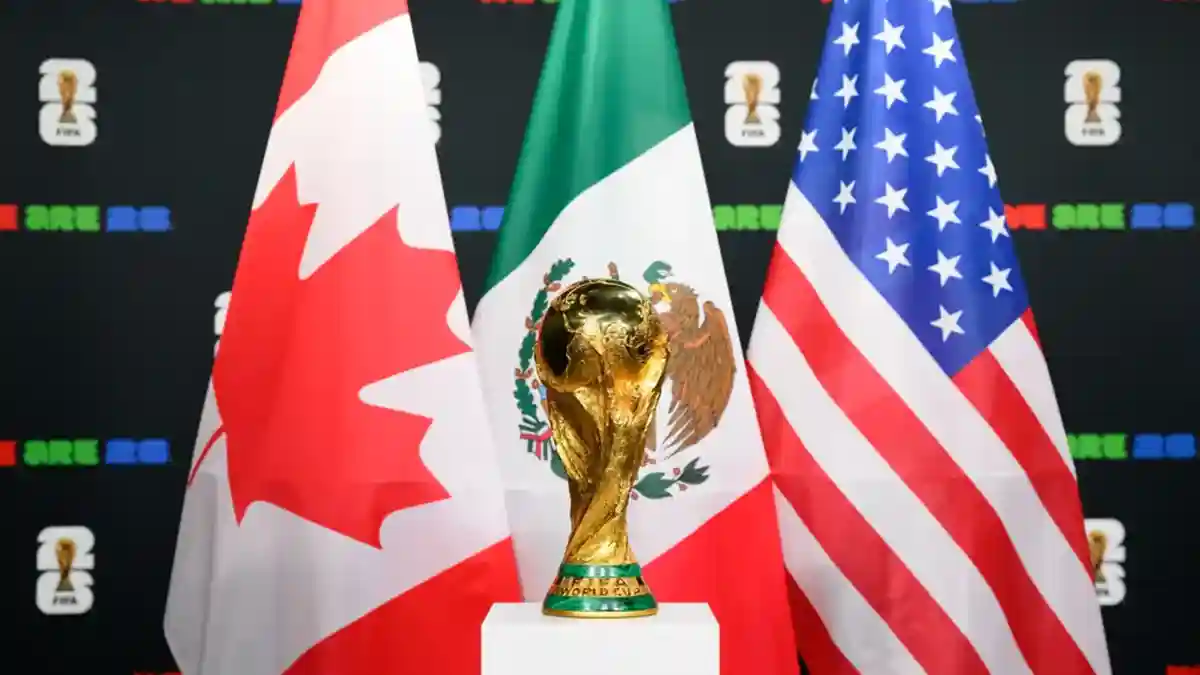
2026: USA / Canada / Mexico
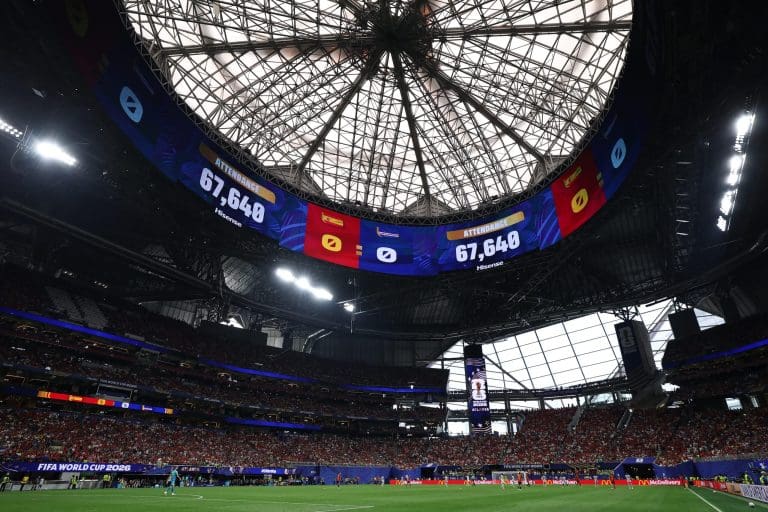
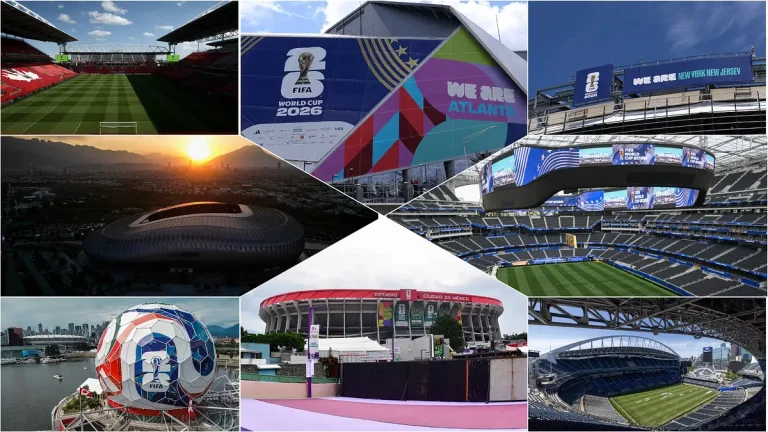
The first World Cup with 48 teams and 80 matches, up from 32 teams and 64 matches. Sixteen venues across three countries will be used.
The final is scheduled at MetLife Stadium in East Rutherford, New Jersey, capacity 82,500.
Matches will be played across New York/New Jersey, Los Angeles, Dallas, Miami, Seattle, San Francisco, Boston, Atlanta, Kansas City, Houston, Philadelphia, Toronto, Vancouver, Guadalajara, and Mexico City.
| Co-Host | Venues | Notable Stadiums |
| United States | 11 | MetLife Stadium (final), SoFi Stadium, AT&T Stadium |
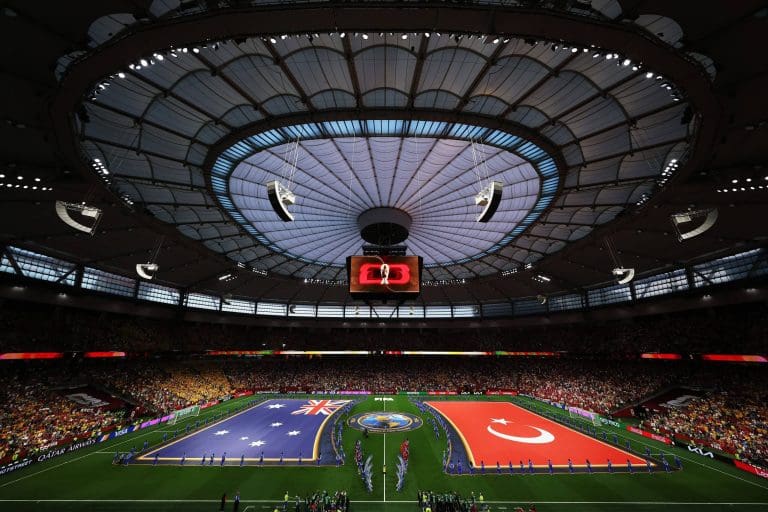
| Canada | 2 | BMO Field (Toronto), BC Place (Vancouver) |
| Mexico | 2 | Estadio Azteca (Mexico City), Estadio Akron (Guadalajara) |
Mexico’s Estadio Azteca becomes the first stadium to host three World Cup tournaments (1970, 1986, 2026).
Mexico itself becomes the first country to host three editions. You can view the full list of 2026 host cities and venues on FIFA.com.
All-Time FIFA World Cup Hosting Records
| Record | Detail |
| Most editions hosted (single country) | Mexico, 3 times (1970, 1986, 2026) |
| First host country | Uruguay, 1930 |
| Most recent host to win the tournament | France, 1998 |
| Highest total attendance (single tournament) | USA 1994, 3,587,538 across 52 matches |
| Highest single-match attendance | Brazil vs Uruguay 1950, estimated 199,854 |
| Smallest host country by area | Qatar, 11,586 km2 |
| Largest host country by area | Russia, 17.1 million km2 |
| First co-hosted tournament | South Korea / Japan, 2002 |
| First three-country host | USA / Canada / Mexico, 2026 |
| Most stadiums used in one tournament | South Korea / Japan 2002, 20 stadiums |
| Lowest goals per game average | Italy 1990, 2.21 goals per match |
| Highest goals per game average | Switzerland 1954, 5.38 goals per match |
| Longest gap between hosting the same country | France, 60 years (1938 to 1998) |
FAQs
How many countries have hosted the FIFA World Cup?
18 different countries have hosted across 23 tournaments from 1930 to 2026. If you count co-hosts separately, the number rises to 20: South Korea and Japan co-hosted 2002, and the USA, Canada, and Mexico co-host 2026.
Which country has hosted the most World Cups?
Mexico has hosted three times: 1970, 1986, and as a co-host in 2026. Italy, France, Germany, and Brazil have each hosted twice.
Has a host country ever been eliminated in the group stage?
Yes, twice. South Africa in 2010 was the first. Qatar in 2022 was the second. South Korea, as a 2002 co-host, reached the semi-finals, which remains the best result by any Asian nation at a World Cup.
Which World Cup had the highest total attendance?
USA 1994 holds the record with 3,587,538 total attendance across 52 matches, averaging 68,991 per game. The 2026 tournament, with 80 matches across large-capacity American stadiums, is expected to surpass it.
Where will the 2030 World Cup be held?
Spain, Portugal, and Morocco are the primary hosts of the 2030 FIFA World Cup. Uruguay, Argentina, and Paraguay will each host one centenary celebration match to mark the 100th anniversary of the tournament. Six countries across three continents will stage matches in total, confirmed by FIFA in December 2024.
Where will the 2034 World Cup be held?
Saudi Arabia will host the 2034 FIFA World Cup. It will be the second World Cup held in the Middle East after Qatar 2022, and the third in Asia overall after Japan/South Korea 2002. Like Qatar, the tournament is expected to be played in November and December due to extreme summer temperatures.
When was the first World Cup held outside Europe or South America?
Mexico in 1970 was the first World Cup held outside Europe or South America. It was also the first tournament broadcast in color television globally.
What is the smallest country to host a World Cup?
Qatar is the smallest World Cup host by area, covering just 11,586 km2. All eight stadiums were within 75km of Doha, making it the most compact tournament in history.
Has any country been awarded a World Cup and then had it taken away?
No host has had a tournament removed after being officially awarded it. Colombia was awarded the 1986 World Cup but voluntarily withdrew before the event due to financial difficulties. Mexico stepped in as replacement.
Which continents have never hosted a World Cup?
Oceania is the only FIFA confederation region that has never hosted a World Cup. Australia has bid multiple times without success, most recently exploring a joint bid for 2034 before withdrawing. The 2030 and 2034 awards mean Oceania cannot bid again until at least 2038.