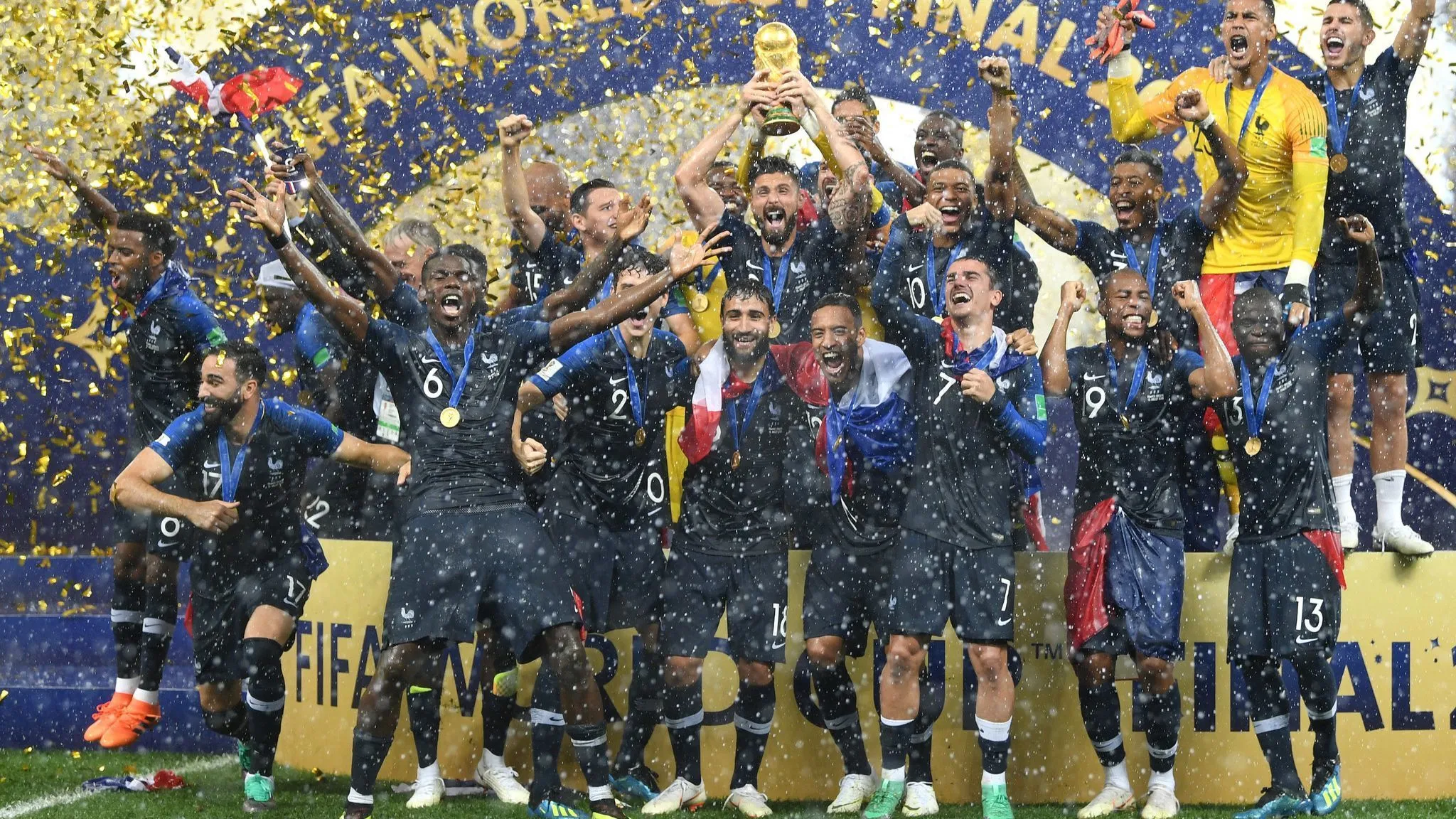
The World Cup final is the most watched football match on earth. Billions of people tune in every four years to see which country lifts the trophy.
Some finals end in blowouts. Others become legends.
The greatest World Cup finals ever are the ones that had drama, goals, twists, and moments people still talk about decades later.
They featured the best players in the world performing under the biggest pressure imaginable.
This article covers the most memorable World Cup finals in history. You will find out what made each one special, which players stood out, and why these matches still matter to football fans everywhere.
Quick Look at the Most Memorable World Cup Finals
| Year | Final | Score | Venue | Deciding Moment |
| 2022 | Argentina vs France | 3-3 (4-2 pens) | Lusail, Qatar | Messi and Mbappe traded goals in ET |
| 1970 | Brazil vs Italy | 4-1 | Mexico City | Pelé’s header, Carlos Alberto’s finish |
| 1986 | Argentina vs West Germany | 3-2 | Mexico City | Maradona’s leadership throughout |
| 1966 | England vs West Germany | 4-2 | Wembley | Hurst’s hat-trick, extra time drama |
| 2006 | Italy vs France | 1-1 (5-3 pens) | Berlin | Zidane’s headbutt in extra time |
| 1954 | West Germany vs Hungary | 3-2 | Bern | The Miracle of Bern comeback |
The 2022 Final: Argentina vs France
The 2022 World Cup final between Argentina and France is widely considered the greatest World Cup final ever played.
It had everything: a comeback, extra time, a penalty shootout, and two of the best players in modern history at the center of it all.
Argentina led 2-0 with just over ten minutes left in normal time. It looked finished. Then Kylian Mbappe scored twice in 97 seconds to level the match and force extra time.
The stadium in Lusail went from silence to chaos in under two minutes.
In extra time, Messi scored again to put Argentina ahead. Mbappe answered with a penalty to make it 3-3.
The game went to a shootout, and Argentina eventually won 4-2 on penalties. Messi lifted the trophy at the age of 35, completing one of the greatest careers in football history.
Mbappe finished the tournament with eight goals, including a hat-trick in the final. No player had scored a hat-trick in a World Cup final since Geoff Hurst in 1966.
The full match statistics from that night confirm it as one of the most extraordinary individual performances in a final.
You can explore a full breakdown of the 2022 World Cup final on FIFA’s official records page.
The 1970 Final: Brazil vs Italy
The 1970 World Cup final in Mexico City is often called the greatest team performance in World Cup history. Brazil beat Italy 4-1 in a match that felt more like a celebration of football than a competition.
Brazil arrived at the final having already played some of the most beautiful football the world had ever seen. Pelé, Jairzinho, Tostão, and Rivellino were all in the squad.
Italy were a strong defensive team who had reached the final by grinding out results. The contrast in styles made the match fascinating from the first minute.
Pelé opened the scoring with a towering header before Italy equalized. After halftime, Brazil took the game apart completely.
Gerson, Jairzinho, and then Carlos Alberto all scored. The fourth goal, finished by captain Carlos Alberto after a sweeping team move, is still shown on highlight reels more than 50 years later.
That goal came from a flowing passing sequence involving nearly every attacking player on the pitch. It captured everything that made that Brazil team special.
Winning the trophy for the third time also meant Brazil got to keep the Jules Rimet trophy permanently, a rule that applied to any country that won it three times.
The 1986 Final: Argentina vs West Germany
The 1986 World Cup final was not just a great match. It was the final act of Diego Maradona’s most remarkable tournament performance.
Argentina beat West Germany 3-2 in a match full of twists and genuine tension.
Argentina scored twice to go 2-0 up, and it looked comfortable. Then West Germany came back strongly in the second half, scoring twice to level at 2-2.
The stadium in Mexico City was electric. A draw seemed the most likely outcome with the clock running down.
Then Jorge Burruchaga ran onto a precise through pass from Maradona and finished calmly to make it 3-2. Argentina held on to win the World Cup, and Maradona was named the best player of the tournament.
His performance throughout the entire competition had been extraordinary, but the final showed he could deliver when it mattered most.
What makes this final so memorable is the narrative. It was not just a football match. It came one year after Argentina’s military dictatorship had ended, and the country was still finding its feet as a democracy.
Maradona’s performances gave the nation something to celebrate together. The context made the victory much deeper than just a trophy.
The 1966 Final: England vs West Germany
The 1966 World Cup final at Wembley Stadium remains one of the most debated matches in football history.
England beat West Germany 4-2 after extra time, with Geoff Hurst scoring three goals to become the only player ever to score a hat-trick in a World Cup final.
West Germany equalized in the final minutes of normal time to force extra time, which set the stage for the most controversial moment in the match. Hurst’s second goal hit the crossbar and came down.
The referee awarded the goal after consulting the linesman, but whether the ball fully crossed the line has been argued about ever since.
England then scored a fourth in the final seconds to seal the win. The game had everything: drama, controversy, a comeback, and a historic individual performance.
It remains the only time England has ever won the World Cup. For a country where football was invented, that single triumph carries enormous emotional weight.
The 1966 final also helped shape how the world viewed the tournament. It was the first final broadcast live to a mass global television audience, which meant millions of people outside England and Germany saw every moment in real time.
That broadcast reach is part of why this match still sits firmly among the greatest World Cup finals ever.
The 2006 Final: Italy vs France
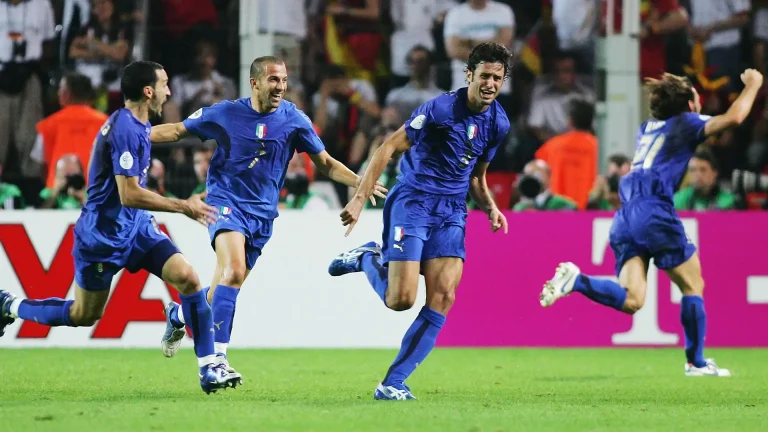
The 2006 World Cup final between Italy and France will always be remembered for one moment above all others: Zinedine Zidane’s headbutt on Marco Materazzi in extra time.
It remains one of the most shocking incidents ever seen in a World Cup final.
The match itself was tense and tactical. Zidane scored a Panenka penalty in the seventh minute, chipping the ball down the middle with ice-cold composure.
Italy equalized through a Materazzi header. The game stayed level through normal time and into extra time.
Then came the moment. After an exchange of words, Zidane turned and headbutted Materazzi in the chest.
The referee showed him a red card, ending the career of one of France’s greatest ever players in the worst possible way. Zidane had already announced he would retire after the tournament, making the scene even more surreal.
Italy won the penalty shootout 5-3 to claim their fourth World Cup title. The match itself was not free-flowing or full of goals, but the tension, the Zidane moment, and the shootout drama made it unforgettable.
It also sparked years of debate about what Materazzi said to provoke the reaction, a conversation that continues to this day.
The 1954 Final: West Germany vs Hungary
The 1954 World Cup final in Bern, Switzerland is known as the Miracle of Bern. West Germany beat Hungary 3-2, despite Hungary being considered the greatest team in the world at the time. It is one of the biggest upsets in World Cup final history.
Hungary had not lost a match in four years going into the final. They had beaten West Germany 8-3 in the group stage just weeks earlier.
The same opponents were now standing across from them in the final, and nobody expected anything different.
Hungary scored twice in the first eight minutes. It looked like the expected result was coming.
But West Germany scored twice to level it and then scored a third goal to take the lead. Hungary hit the post twice late on but could not find an equalizer. The final whistle shocked the football world.
For West Germany, this was their first major international trophy and a moment of enormous national pride.
The country was still rebuilding after World War II, and this victory carried a meaning far beyond sport.
That emotional dimension is part of why the 1954 final is still studied and celebrated in Germany. A deeper look at how the Miracle of Bern unfolded puts this result in proper historical context.
What Makes a World Cup Final Truly Great
Not every World Cup final becomes a classic. Many have ended in low-scoring, cautious games where both teams were too afraid to lose.
The ones that become truly great tend to share a few common features.
- Goals scored by genuine superstars under maximum pressure
- A comeback or turning point that changes the outcome
- Extra time or a penalty shootout that stretches the drama
- A narrative beyond the match itself, whether national, personal, or historical
- At least one unforgettable individual moment that defines the game
The best finals also tend to happen when two evenly matched teams face each other. When one side is clearly stronger, the match often becomes one-sided.
When the gap is small, tension builds throughout, and moments of brilliance matter even more.
The 2022 final checks nearly every box on that list. But the 1970 final, the 1966 final, and the 1986 final all have strong cases too.
Great football finals are rarely just about the result. They are about the story the game tells.
FAQs
What is considered the greatest World Cup final ever played?
The 2022 final between Argentina and France is widely regarded as the greatest World Cup final ever, featuring a 3-3 draw after extra time and a penalty shootout. The combination of Messi and Mbappe trading goals, multiple comebacks, and the emotional context made it unlike anything seen before.
Which World Cup final had the most goals?
The 1954 final between West Germany and Hungary finished 3-2, but the highest-scoring final when including extra time was the 2022 final, which ended 3-3 before going to penalties. The 1958 final between Brazil and Sweden finished 5-2 in regular time, making it the highest-scoring final in 90 minutes.
Who has scored the most goals in a single World Cup final?
Geoff Hurst of England scored three goals in the 1966 World Cup final against West Germany. He remains the only player in history to score a hat-trick in a World Cup final, a record that has stood for nearly 60 years.
Has any team ever come back to win a World Cup final after going 2-0 down?
France came close in 2022, leveling from 2-0 down to draw 2-2 before eventually losing on penalties. No team has come from 2-0 down to win a World Cup final outright in 90 minutes, which is part of what made the 2022 match among the greatest World Cup finals ever played.
Which country has won the most World Cup finals?
Brazil has won the most World Cup titles with five, in 1958, 1962, 1970, 1994, and 2002. Germany and Italy have each won four titles, while Argentina and France have each won three.