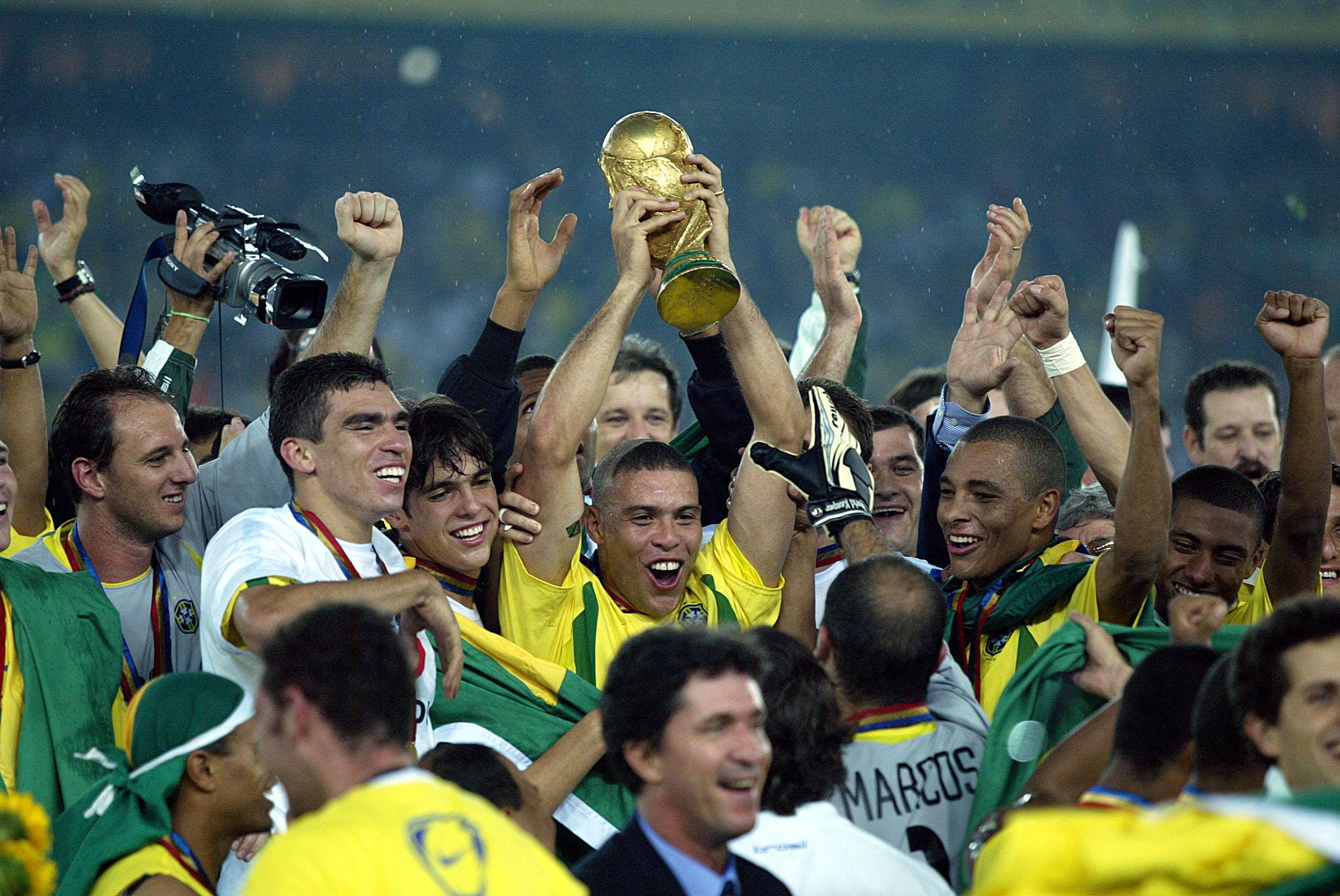
Twenty-one players have lifted the trophy more than once since the tournament began in 1930. When you think about the scale of that achievement, it’s staggering.
Most professional footballers never even qualify for the tournament, let alone win it.
Only players from three countries have managed this feat:
- Brazil: 16 players (14 from 1958-1962, 1 from 1994-2002, 1 potential from 2022 forward)
- Italy: 3 players (all from 1934-1938)
- Argentina: 1 player (Messi, 2022)
Pelé stands alone with three World Cup wins in 1958, 1962, and 1970. No other player has matched this record, and at just 17 years old during his first triumph, he became the youngest player to win the tournament at the time.
He scored six goals in the 1958 competition, including two in the final against Sweden.
Complete List of Multiple World Cup Winners
| Player | Country | Titles | Years |
| Pelé | Brazil | 3 | 1958, 1962, 1970 |
| Cafu | Brazil | 2 | 1994, 2002 |
| Djalma Santos | Brazil | 2 | 1958, 1962 |
| Garrincha | Brazil | 2 | 1958, 1962 |
| Gilmar | Brazil | 2 | 1958, 1962 |
| Nilton Santos | Brazil | 2 | 1958, 1962 |
| Vavá | Brazil | 2 | 1958, 1962 |
| Didi | Brazil | 2 | 1958, 1962 |
| Zito | Brazil | 2 | 1958, 1962 |
| Bellini | Brazil | 2 | 1958, 1962 |
| Orlando | Brazil | 2 | 1958, 1962 |
| Mário Zagallo | Brazil | 2 | 1958, 1962 |
| Pepe | Brazil | 2 | 1958, 1962 |
| Mauro | Brazil | 2 | 1958, 1962 |
| Castilho | Brazil | 2 | 1958, 1962 |
| De Sordi | Brazil | 2 | 1958, 1962 |
| Zózimo | Brazil | 2 | 1958, 1962 |
| Mengálvio | Brazil | 2 | 1958, 1962 |
| Giuseppe Meazza | Italy | 2 | 1934, 1938 |
| Giovanni Ferrari | Italy | 2 | 1934, 1938 |
| Eraldo Monzeglio | Italy | 2 | 1934, 1938 |
Brazil’s Golden Era (1958-1962)
Brazil’s dominance in the late 1950s and early 1960s created the largest group of multiple World Cup winners. Fourteen players appeared in both the 1958 Sweden triumph and the 1962 Chile victory.
The 1958 team introduced a revolutionary 4-2-4 formation that changed how football was played globally.
Key Players by Position (1958-1962)
| Position | Player | Notable Achievement |
| Goalkeeper | Gilmar | Only goalkeeper to start in two World Cup-winning finals |
| Right Back | Djalma Santos | Appeared in four World Cups (1954-1966), considered among greatest ever at position |
| Left Back | Nilton Santos | Pioneered the attacking fullback role |
| Center Back | Bellini | Captain in 1958, first to raise trophy above head |
| Center Back | Orlando | Defensive stalwart across both tournaments |
| Midfielder | Didi | Voted best player of 1958 tournament |
| Midfielder | Zito | Scored crucial second goal in 1962 final |
| Right Wing | Garrincha | Won Golden Ball in 1962, legendary dribbler |
| Center Forward | Vavá | Scored in both finals (2 in 1958, 1 in 1962) |
| Center Forward | Pelé | 6 goals in 1958, injured in 1962 group stage |
| Left Wing | Mário Zagallo | Later won 1970 as manager, 1994 as assistant coach |
Squad Members: Pepe, Mauro (1962 captain), Castilho, De Sordi, Zózimo, Mengálvio
The team never lost a single match when both Garrincha and Pelé played together throughout their careers. Garrincha carried Brazil through the 1962 tournament after Pelé suffered an injury in the second group match.
Brazil’s Modern Success (1994-2002)
Cafu became the only player to appear in three World Cup finals: 1994, 1998, and 2002. He won in 1994 and 2002, missing the 1998 final victory. He captained Brazil’s 2002 victory in South Korea and Japan.
Italy’s Pre-War Dynasty (1934-1938)
Italy won consecutive World Cups under manager Vittorio Pozzo, the only coach to win the tournament twice. Three Italian players earned winners’ medals in both 1934 and 1938.
| Player | Position | Notable Achievement |
| Giuseppe Meazza | Forward/Midfielder | Captained 1938 team, scored 284 goals in 408 Inter Milan appearances, San Siro stadium named after him |
| Giovanni Ferrari | Attacking Midfielder | Won 8 Serie A titles, instrumental playmaker and assist provider |
| Eraldo Monzeglio | Defender | Completed Italy’s trio of double winners |
Guido Masetti served as backup goalkeeper in both tournaments but never played a single minute, making him the only player to win two World Cups without seeing action.
Meazza is widely considered one of the greatest players of his generation, with his elegant playing style defining Italian football in the 1930s. Ferrari’s creativity and passing ability made him instrumental in Italy’s tactical approach across both campaigns.
Argentina’s Historic Achievement (2022-2024)
Lionel Messi joined the exclusive club in 2022, lifting the trophy in Qatar at age 35. This completed his trophy cabinet after years of near misses, including the 2014 final loss to Germany.
What Makes Multiple Wins So Rare
Only 21 players have achieved this feat across World Cup history. Several factors explain the rarity:
Tournament Timing
- World Cup held every four years
- Players need minimum eight-year international career at peak level
- Prime years must align with national team success
Career Windows
- If peak years fall between successful tournaments, opportunity lost
- Ronaldo won in 1994 at 17 (didn’t play) and 2002 at 25, spanning eight years
- Most players decline before second opportunity arrives
National Team Cycles
- Even powerhouses go decades between titles
- Brazil’s gaps: 24 years (1970-1994), 20+ years (2002-2022)
- Germany’s gaps: 16 years (1974-1990), 24 years (1990-2014)
- These intervals exceed typical career spans
Squad Size Limitations
- Modern squads: 26 players (since 2022)
- Historic limit: 22 players (until 1998)
- Fewer roster spots meant fewer medal recipients
Injury Risk
- Pelé missed most of 1962 tournament after group stage injury
- Still received medal as squad member
- One injury can end multiple-title hopes
Competition Intensity
- 1930s-1950s: European and South American dominance
- 2000s onward: Tactical evolution and sports science leveled playing field
- More nations can realistically win, reducing repeat champions
Future Possibilities
The 2026 World Cup expands to 48 teams, creating more opportunities for players to compete. However, this doesn’t necessarily increase the chances of winning multiple times since the competition becomes more unpredictable with additional nations.
France reached consecutive finals in 2018 (won) and 2022 (lost), but only the 2018 squad members can pursue second titles in 2026.
Kylian Mbappé scored in both finals and could join the multiple winners’ club if France triumphs in North America.
Argentina’s 2022 victory was their first since 1986, a 36-year drought that prevented several generations of talented players from winning even once. This illustrates why multiple victories remain so exceptional.
Can anyone match Pelé’s three titles?
Most players who won twice were in their mid-to-late twenties during their second triumph. Winning three requires staying at international peak level for 12+ years while your nation wins three separate tournaments.
Since Pelé’s 1970 achievement, no country has won three World Cups in a span allowing one player to compete in all three. Germany won in 1974, 1990, and 2014, but those gaps (16 and 24 years) prevented any player from appearing in all three victories.
The Medal System
FIFA awards winners’ medals to all squad members, but this wasn’t always the case. Before 1974, only players who appeared in the final match received medals.
In 2007, FIFA retroactively awarded medals to squad members from 1930-1974 who hadn’t received them, which elevated Pelé’s status as the only three-time winner since he didn’t play in the 1962 final.
Miroslav Klose holds the record for most World Cup medals with four: runner-up in 2002, third place in 2006 and 2010, and winner in 2014 with Germany. However, only his 2014 gold medal counts as a World Cup victory.
How Many Goals Did Players With Multiple Titles Score?
| Player | World Cup Goals | Tournaments | Peak Performance |
| Pelé | 12 | 1958, 1962, 1966, 1970 | 6 goals in 1958, 4 in 1970 |
| Garrincha | 12 | 1958, 1962, 1966 | 5 goals in 1962 (Golden Ball winner) |
| Vavá | 9 | 1958, 1962 | Scored in both finals (2 in ’58, 1 in ’62) |
| Giuseppe Meazza | 3 | 1934, 1938 | Creativity and assists more valuable than goals |
| Ronaldo | 15 | 1998, 2002, 2006 | 8 goals in 2002 (2 in final) |
The Italian teams of 1934 and 1938 relied on collective tactical discipline rather than individual scoring prowess, explaining Meazza’s lower goal total despite his legendary status.
Which Positions Won Most Often?
By Position:
- Midfielders & Defenders: Dominate the list (longer international careers)
- Goalkeepers: Rarely win multiple times (Gilmar only starting keeper to achieve this)
- Forwards: Face physical demands and shorter peak years
Exceptions Among Forwards:
- Pelé: Maintained excellence 1958-1970
- Vavá: Peaked across 1958-1962
- Ronaldo: 1994-2002 span (didn’t play in ’94)
FAQs
Who is the only player to win 3 World Cups?
Pelé won three World Cups with Brazil in 1958, 1962, and 1970. No other player has won more than twice. He remains the youngest player to win the tournament, achieving his first victory at 17 years old in Sweden.
How many players have won the World Cup twice?
Twenty players have won the World Cup twice. Sixteen are from Brazil (14 from the 1958-1962 teams, two from later eras), three are from Italy (1934-1938), and one from Argentina.
Did any player captain two World Cup-winning teams?
No player has captained two World Cup-winning teams. Bellini captained Brazil in 1958, Mauro in 1962, and Cafu in 2002, but none led the team in both victories. Diego Maradona and Lionel Messi captained Argentina in two finals but won only once each.
Which country has the most players who won multiple World Cups?
Brazil has 16 players who won the World Cup multiple times, far more than any other nation. Italy has three players with multiple wins, and Argentina has one as of 2022.
Can modern players still win multiple World Cups?
Yes, though it remains exceptionally rare. Players need to win their first title young enough to remain competitive four or eight years later. Kylian Mbappé won in 2018 at age 19 and reached the 2022 final at 23, positioning him as a candidate for multiple victories.
What happened to players who won in 1994 and 2002?
Only Cafu appeared in both Brazil’s 1994 and 2002 winning squads, though he didn’t play in the 1994 final. Most 1994 winners had retired or aged out of international football by 2002.
Why haven’t European teams produced more multiple winners?
European nations rarely win consecutive World Cups. Italy won back-to-back in 1934-1938, but no European team has repeated since. Germany won in 1954, 1974, 1990, and 2014 with gaps too large for players to compete in multiple victories. France won in 1998 and 2018, a 20-year gap preventing any player from winning both.
Did Ronaldo play in Brazil’s 1994 victory?
Yes, Ronaldo was in Brazil’s 1994 squad at age 17 but didn’t play a single minute during the tournament. He won his second World Cup in 2002, scoring eight goals including two in the final against Germany.