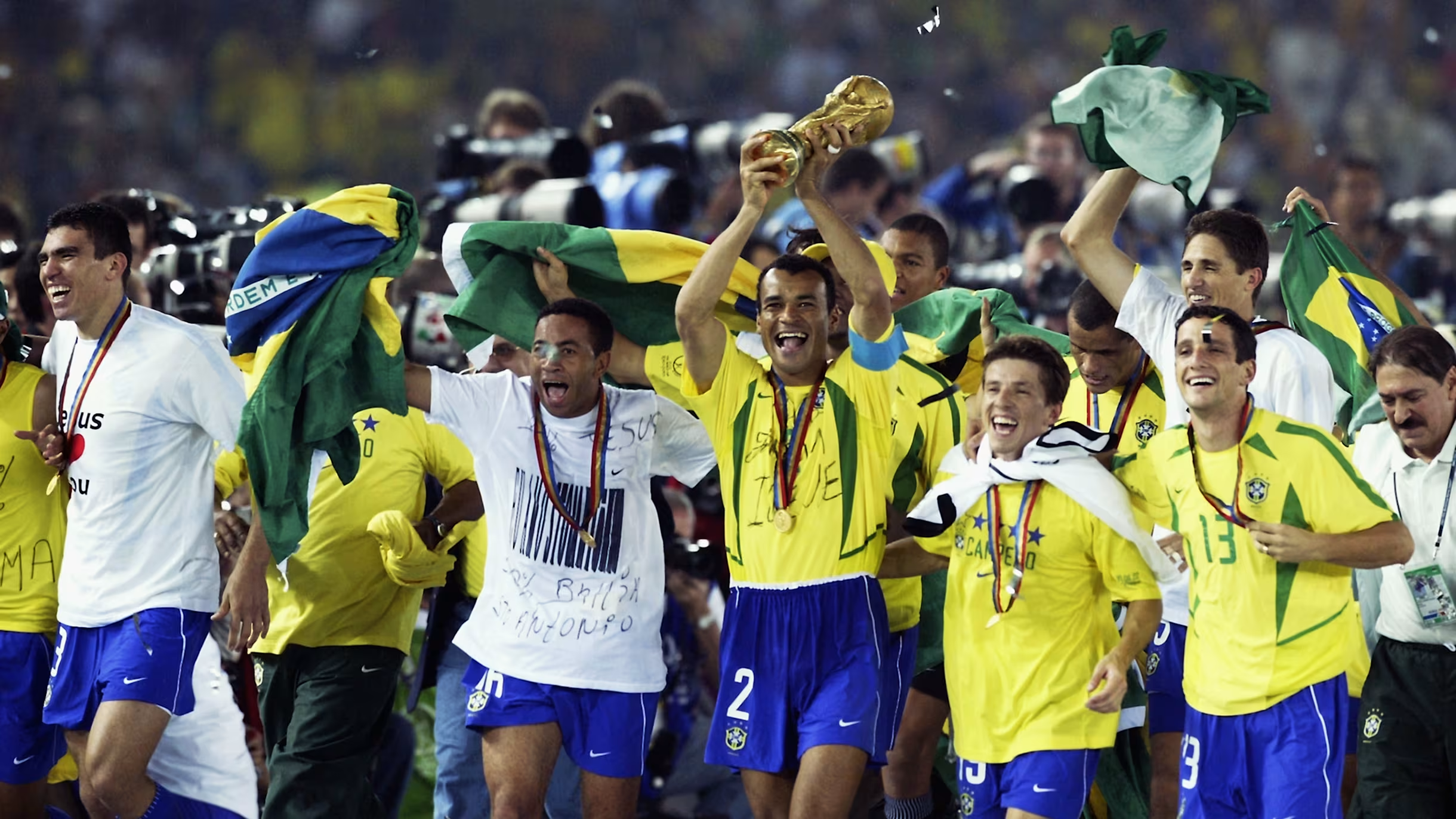
Brazil has won the FIFA World Cup five times (1958, 1962, 1970, 1994, and 2002), more than any other nation across the tournament’s 22 editions.
The Seleção is also the only team to have appeared in every World Cup since 1930. Twenty-two consecutive tournaments, zero absences.
The last title came in 2002. It’s been 24 years since. With the 2026 World Cup arriving on North American soil, Brazil enter under Carlo Ancelotti with a new generation led by Vinicius Junior chasing a sixth star.
Here’s every title, every record, and where Brazil stands heading into 2026.
Brazil’s Five World Cup Titles at a Glance
| Year | Host | Final Opponent | Score | Top Performer | Coach |
| 1958 | Sweden | Sweden | 5–2 | Pelé (6 goals) | Vicente Feola |
| 1962 | Chile | Czechoslovakia | 3–1 | Garrincha (4G, 4A) | Aymoré Moreira |
| 1970 | Mexico | Italy | 4–1 | Jairzinho (7 goals) | Mário Zagallo |
| 1994 | USA | Italy | 0–0 (3–2 pens) | Romário (5 goals) | Carlos Alberto Parreira |
| 2002 | South Korea/Japan | Germany | 2–0 | Ronaldo (8 goals) | Luiz Felipe Scolari |
Germany and Italy have four titles each. Argentina has three. No other country has come close to Brazil’s five.
1958: Pelé and Brazil’s First Title
The 1950 World Cup, hosted by Brazil, left a wound the country never forgot. Uruguay beat the Seleção 2–1 at the Maracanã in front of roughly 200,000 fans, a defeat so traumatic it became known as the Maracanazo.
That loss galvanized Brazilian football and shaped the obsession that produced the 1958 generation.
Eight years later, Brazil traveled to Sweden and announced themselves to the world.
Pelé was 17 years and 239 days old when he scored against Wales in the quarter-final, becoming the youngest goalscorer in World Cup history, a record that still stands.
He followed it with a hat-trick in the semi-final against France, then scored twice in a 5–2 final win over Sweden. Vavá and Mário Zagallo also scored in that final.
Brazil kept a clean sheet in their first two group games and conceded just four goals all tournament. It was the start of something no one had seen before.
1962: Garrincha Steps Up
Pelé pulled a muscle in Brazil’s second group game against Czechoslovakia and played no further part in the 1962 World Cup. A lot of teams would have crumbled. Brazil didn’t.
Garrincha took over. The winger, nicknamed “The Little Bird,” finished the tournament with four goals and four assists.
He was sent off in the semi-final against Chile, then, after Brazil’s Prime Minister lobbied FIFA directly, was allowed to play in the final.
Brazil beat Czechoslovakia 3–1 in that final, coming from 1–0 down. Amarildo equalized, Zito gave Brazil the lead, Vavá sealed it.
The back-to-back titles made Brazil the last team in history to successfully defend a World Cup. That record still stands more than 60 years later. According to FIFA’s records, only Italy (1934, 1938) matched consecutive titles before Brazil’s feat.
1970: The Greatest Team Ever?
The argument for the 1970 side being the best football team in history isn’t sentimental. It’s statistical.
Brazil won all six games at the tournament. They scored 19 goals and conceded 7. Jairzinho scored in every single match, a record no player has matched since.
Pelé, in what many assumed would be his last World Cup, was at the peak of his powers. The squad also included Rivelino, Tostão, and Carlos Alberto.
The final against Italy ended 4–1. Carlos Alberto’s closing goal, a flowing move involving ten outfield players ending with a thunderous right-foot finish, is still considered the greatest team goal in World Cup history.
Winning the Jules Rimet Trophy for the third time meant Brazil got to keep it permanently, per the tournament’s original rules. The physical trophy lives in Brazil to this day.
1994: Pragmatism Over Flair
Brazil hadn’t won the World Cup in 24 years when they arrived in the United States in 1994.
The 1958–1970 era of attacking football had given way to frustration, with strong sides in 1982 and 1986 that never lifted the trophy.
The 1994 team played differently. Romário was lethal, five goals, consistently decisive, and Bebeto provided the finishing beside him.
But this wasn’t jogo bonito in the traditional sense. Manager Carlos Alberto Parreira built a pragmatic, organized side that conceded just three goals in seven games.
The final against Italy finished goalless after 120 minutes. Brazil won 3–2 on penalties, the first World Cup final decided by a shootout. It was their fourth title and, at the time, a record.
2002: Ronaldo’s Redemption
The 1998 World Cup final still raises questions. Ronaldo was named in Brazil’s starting lineup against France, then taken out of it, then reinstated, reportedly after some kind of seizure in the team hotel. France won 3–0. Ronaldo was clearly not right.
Four years later, he answered every question.
Ronaldo scored eight goals at the 2002 World Cup, winning the Golden Boot. His finish past Oliver Kahn in the final, and his second goal shortly after, gave Brazil a 2–0 win over Germany.
The performance made him the all-time leading goalscorer in World Cup history at the time, with 15 tournament goals across three editions.
Cafu captained the side, becoming the only player in history to appear in three consecutive World Cup finals (1994, 1998, 2002).
Ronaldinho’s chip over David Seaman against England in the quarter-final remains one of the most memorable moments of any World Cup.
Brazil became the first nation to win five World Cups. The five-star badge on the Seleção jersey tells that story.
Brazil’s World Cup Records
| Record | Stat |
| Titles | 5 (1958, 1962, 1970, 1994, 2002) |
| Total appearances | 22 (every tournament since 1930) |
| Matches played | 114 |
| Wins | 76 |
| Losses | 19 |
| Goals scored | 229 |
| Goal difference | +129 |
| World Cup Golden Boots | 5 (Leônidas 1938, Ademir 1950, Garrincha/Vavá 1962, Ronaldo 2002) |
| Most goals in one tournament | Ronaldo: 8 goals (2002) |
| Youngest scorer ever | Pelé: 17 years, 239 days (1958) |
| Only player in 3 consecutive finals | Cafu (1994, 1998, 2002) |
| Won as both player and coach | Mário Zagallo (1958, 1962 as player; 1970 as coach) |
Brazil’s 76 wins and +129 goal difference are both all-time records. Germany and Italy sit on four titles each and have never matched Brazil’s consistency across the full tournament history.
Why Hasn’t Brazil Won Since 2002?
Five consecutive World Cups without a semi-final appearance tells a story that goes beyond bad luck.
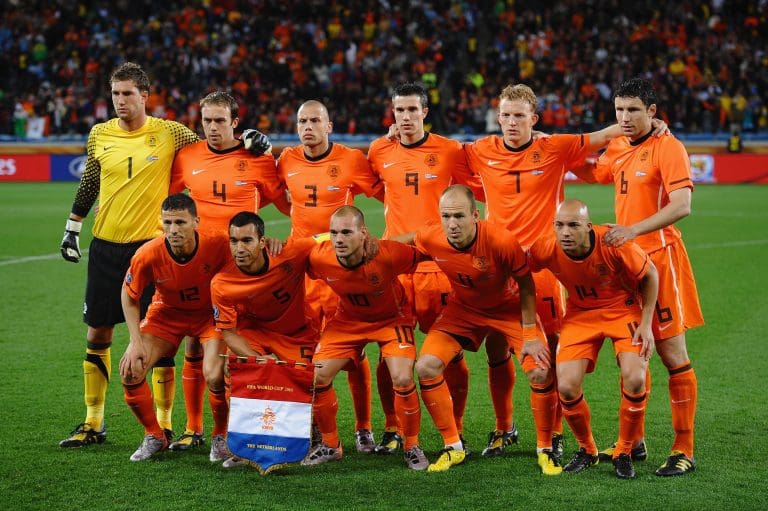
Since 2002, Brazil have exited at the quarter-final or earlier in four of five tournaments, beaten by France in 2006, the Netherlands in 2010, Belgium in 2018, and Croatia on penalties in 2022.
The one exception was 2014 on home soil, where they reached the semi-final and lost 7–1 to Germany.
That result, known as the Mineirazo, remains the heaviest defeat in Brazilian World Cup history and one of the most shocking results the tournament has ever produced.
The structural issues are consistent: no reliable center-forward to replace Ronaldo, over-dependence on Neymar (who has played three World Cups and scored one goal across them), and a tactical approach that hasn’t matched Europe’s evolution in pressing and defensive organization.
It’s not that Brazil lacked talent. The 2006 squad had Ronaldinho, Kaká, and Adriano. The 2010 side was considered a contender. The talent has been there. The system hasn’t held together when it mattered.
Brazil at the 2026 World Cup
Carlo Ancelotti took over as Brazil’s manager in May 2025, becoming the first foreign coach to lead the Seleção.
His appointment came with enormous expectations. Ancelotti has won five Champions League titles across AC Milan and Real Madrid, but he enters the World Cup managing a national team for the first time.
Brazil’s qualifying campaign was shaky. They finished fifth in CONMEBOL’s ten-team table, which in previous formats would have triggered a playoff.
The expanded 48-team World Cup format gave them safe passage regardless.
Group C draws: Morocco, Haiti, and Scotland. All three group games are played in the United States.
The squad has real quality in attack. Vinicius Junior is one of the best players in the world when on form. Raphinha was outstanding for Barcelona in 2024–25 with 34 league goals.
Teenage forward Estevão, just 18, is already attracting attention across European football. Marquinhos captains the side as Brazil’s most experienced outfield starter.
The weakness is familiar: no clinical No.9 and questions at goalkeeper as Alisson’s form has dipped. Bookmakers have Brazil at around 8/1, placing them as the fourth or fifth favourites behind Spain, France, and England/Argentina.
The 24-year drought is not just a number for Brazilian fans. According to Squawka’s World Cup odds tracker, Brazil’s implied probability of winning sits at 11.1%, significant but not dominant.
History is on both sides of this argument. Brazil have done it before after long waits. The gap between 1970 and 1994 was also 24 years, and they came back to win in the United States.
The 2026 tournament is in North America again. That parallel is not lost on Brazilian supporters.
FAQs
How many times has Brazil won the World Cup?
Brazil has won the FIFA World Cup five times: 1958, 1962, 1970, 1994, and 2002. No other country has won more than four titles.
When did Brazil last win the World Cup?
Brazil last won the World Cup in 2002 in South Korea and Japan. Ronaldo scored both goals in the 2–0 final win over Germany.
Who scored the most World Cup goals for Brazil?
Ronaldo holds the record with 15 goals across three tournaments (1994, 1998, 2002). Pelé scored 12 goals across three title-winning campaigns.
Is Brazil the only team in every World Cup?
Yes. Brazil is the only nation to have qualified for and played in every FIFA World Cup since the tournament began in 1930, all 22 editions.
What was Brazil’s worst World Cup result?
The 7–1 semi-final defeat to Germany at the 2014 World Cup, played on home soil in Belo Horizonte. It remains one of the most shocking results in tournament history.
Who is managing Brazil at the 2026 World Cup?
Carlo Ancelotti, appointed in May 2025. He is the first foreign manager in Brazil’s history and enters the tournament having won five Champions League titles at club level.
Who are Brazil’s key players at the 2026 World Cup?
Vinicius Junior, Raphinha, Estevão, Marquinhos (captain), and Casemiro are expected to feature prominently. The squad is Ancelotti’s first and remains subject to fitness.
Can Brazil win the 2026 World Cup?
The talent is there and the group is manageable. But five consecutive exits at the quarter-final or earlier since 2002 is a pattern that needs breaking, not just hoping away. Brazil are fourth or fifth favourites at around 8/1.